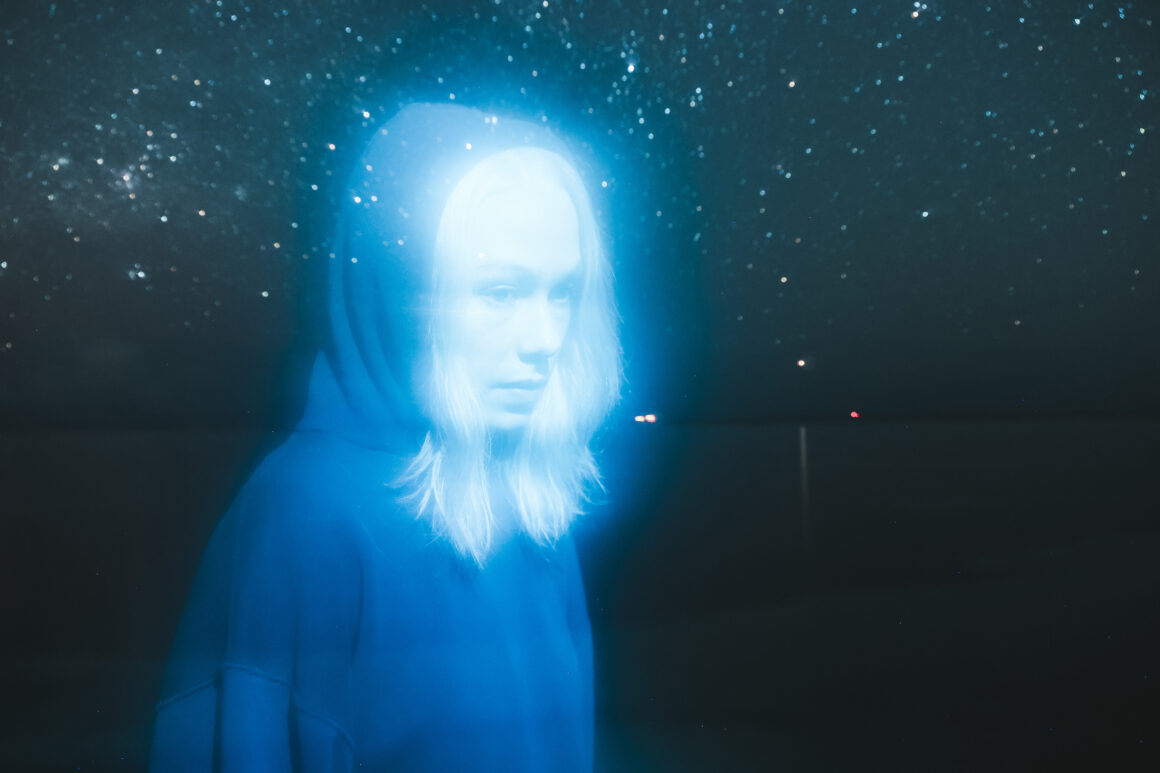
»Always have and always will«, she explained. She finds it hard to breathe, she dreams of drowning, she talks to friends about suicidal thoughts. Every chord leads to an even more heart-wrenching one, and her voice has an extremely sorrowful tone anyway. Deep melancholy as her fundamental aesthetic.
On her new masterpiece Lost Weekend Phoebe Bridgers once again shines with profound sadness, yet manages to reflect on it differently – and even see a light at the end of the tunnel: »I have no secrets, only feelings, and I know those go away«. The standout track on the album is ‘Haunted’, which evolves from a melancholic folk ballad (featuring a weeping violin) into a self-assured emotional outburst (with a pulsating groove). »No, I am not afraid«, Bridgers sings loudly. Growth, friends. And confidence.
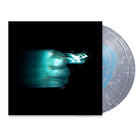
Lost Weekend HHV European Exclusive Enceladus Geysers Vinyl Edition
But let’s take a step back. Right from the start, Phoebe Bridgers has been the most powerful conveyor of emotion in contemporary indie rock. This is because, on the one hand, she displayed a radical directness in this regard, whilst at the same time combining her melancholy with eloquent humour. The American artist balanced the obvious sentimentality of songs like »Scott Street« with modern wit, making them seem more interesting and less simplistic. Bridgers was able to encapsulate the feeling that the world is passing you by whilst you’re left behind in clever lines:»I asked you, how is playing drums? / You said, It’s too much shit to carry / And what about the band? / You said, They’re all gettin‘ married«.You smile; you empathise.
She struck a chord, capturing the mood of an internet generation for whom melancholy was increasingly becoming part of everyday life. As we heard more and more about young people’s mental health issues – about depression and a lack of therapy places – Phoebe Bridgers sang for us. At the same time, ever since her ultra-catchy breakthrough single »Motion Sickness« she’d had a certain pop star vibe that other singer-songwriters of her calibre lacked. Bridgers had no trouble collaborating with Taylor Swift, for example. Thus, Bridgers became the patron of a sub-genre that went on to become the most prominent sound in indie rock – and increasingly found its way into mainstream pop.
One record to rule them all
In 2020, her acclaimed second album Punisher was released, which can be described as the most influential indie release of the last six years. In certain corners of the pop world, the current decade has, in a sense, been overshadowed by this record; countless acts have attempted to create a similar album – brimming with tragedy and humour, pop and folk, emo and stadium rock – but have (for the most part) failed. Punisher established Phoebe Bridgers as the most important indie artist in the US – an approachable soul-stirrer straddling pop and the heart-wrenching ballads of Elliott Smith.
Her profile also grew as a member of the indie supergroup Boygenius: Together with the equally melancholic, charming and brilliant singer-songwriters Julien Baker and Lucy Dacus, Phoebe Bridgers formed a highly regarded trio that imbued the three singers’ shared sense of melancholy with a contagious spirit of togetherness; their collaborative album The Record, released in 2023, skilfully blended the musicians’ similar, complementary approaches to songwriting.
Expectations for a new album were correspondingly high. Six years after her last solo album, Punisher, Phoebe Bridgers is back with Lost Weekend – and, naturally, the first word in the opening track is »crying«. Obviously. It quickly becomes clear, however, that Bridgers is still an outstanding lyricist and has lost none of her original talent. Quite the contrary. The full opening line of ‘The Outside’ goes: »Crying in a suit and tie, but you should see the other guy«. There it is again, that wry smile. Punchlines ring out from every corner, standing out time and again. The balance between sadness and humour remains intact.
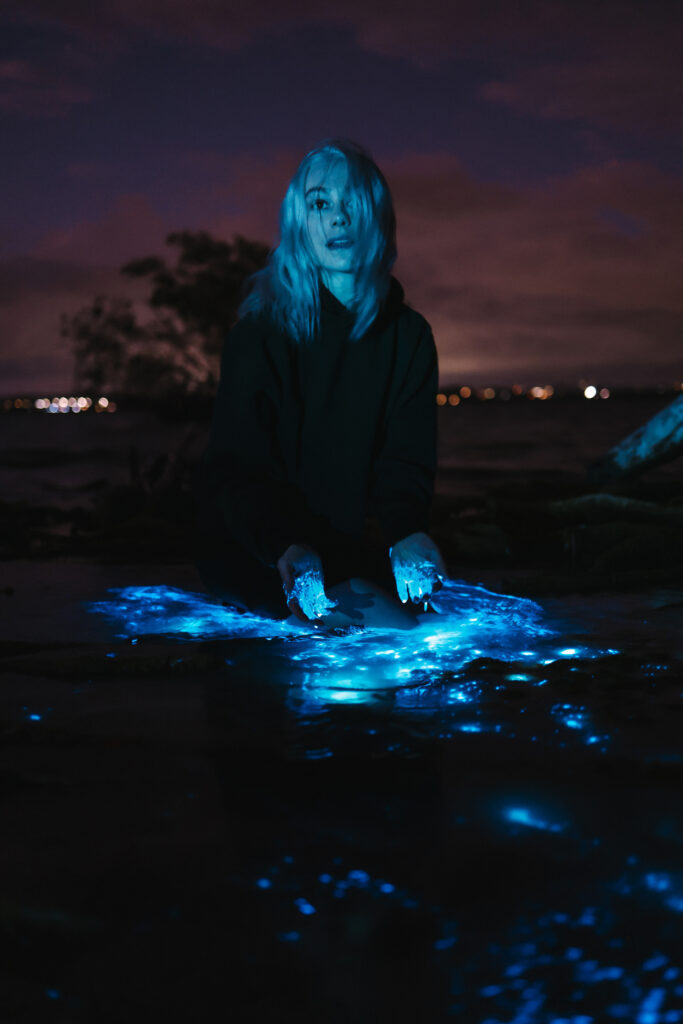
How intimate can a song be?
What’s different: the robotic vocoder effects on her voice, which are clearly reminiscent of Bon Iver (and his album 22, A Million) as well as James Blake (and his early work); it’s as if Bridgers is deliberately trying not to be recognised. Electronic experimentation is more prominent on Lost Weekend than ever before – possibly a result of her collaboration with the progressive indie singer-songwriter Alex G, whose influence is evident throughout the album, and who also likes to end his folk songs with jarring digital outbursts.
These alienating effects fit with the thematic focus of Lost Weekend: the record can be described as a classic ‘post-fame’ album, on which Phoebe Bridgers would prefer to be unknown again and reminisces about more innocent times. One particularly unambiguous song consists solely of the following words: ‘Never going back again, the way it used to be is not the way that it is’; in the standout track ‘As Above’, she sings about watching a film about travelling back in time – and how it moved her emotionally, presumably because she knew that such a return is impossible. The past plays a huge role here and is explored in an extremely autobiographical way. The death of her father is also a central theme.
The album never becomes overly simplistic when dealing with such themes. What’s more: it’s not all about suffering – there’s some rocking going on too. Even the lead single »Lost Boys« was grandiose. A perfect song with an ingenious melodic progression, a shimmering arrangement and enigmatic lyrics. The album’s highlight, »Bobby«, is every bit as good: heavy drums, Mike Kinsella from the emo band American Football playing guitar arpeggios, accompanied by digital effects, banjo and screaming. The reason here is by no means anger or dissatisfaction, but love (yay!). Ever since Bridgers split up with the actor Paul Mescal – which is also what ‘Lost Weekend’ is about – she’s been with the comedian/filmmaker/musician Bo Burnham, who is the subject of »Bobby«. Fittingly, the songwriter confesses her love for him in a particularly humorous way: she says she only has two friends anyway, but she’d even kill them for Burnham; he’s such a great lover, she sings, that she doesn’t even need her vibrator anymore. »Now I don’t know if I can make it tonight. But what are you doing the rest of my life, Bobby?«.
Every song on Lost Weekend poses the question of just how intimate a song can be whilst still sounding monumental; the album’s sweeping structure is equally overwhelming. Ambient interludes, power ballads, a beautiful duet moment with Cameron Winter in »I Can’t Wait«. Amidst all this commotion, Phoebe Bridgers does indeed sound lost, albeit in the best possible sense: it is not Bridgers who is at the wheel here, but life, death, and love. She’s being tossed about, has only limited control, and that is, after all, what a lost weekend ultimately entails: a loss of control. Phoebe Bridgers is lost, and so are we. But don’t worry, nothing can happen to us: »You won’t have to believe in magic«, sings our guide towards the end of this fantastic masterpiece. »Leave it to me, and I’ll make it happen.«
This text was originally written in German. The English version is a close rendering of the original, deliberately preserving its wording and structure. Some idioms, tonal nuances and shades of irony may therefore not carry over entirely naturally into English.