
In current parlance, Lisbon would probably be described as a hub – which in this case means heavy gentrification, an abundance of laptop cafés, and a loss of cultural substance brought about by overstretched capacities.
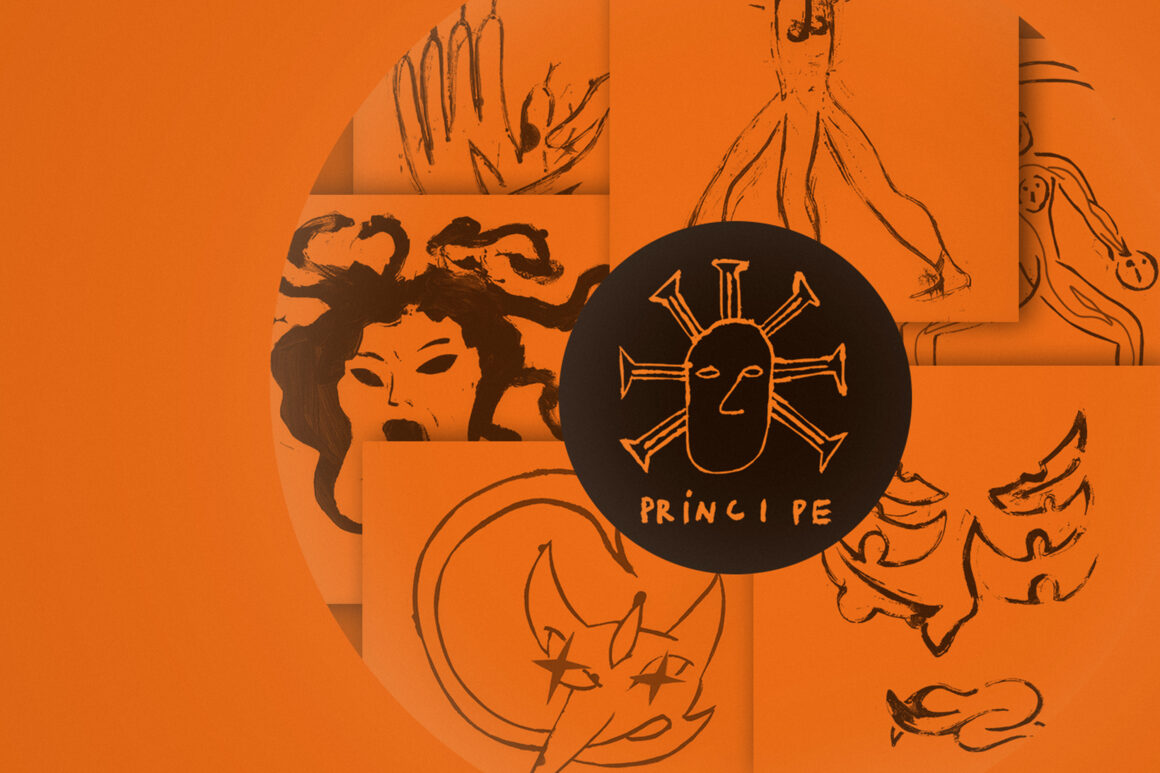
Príncipe Discos stands for a different Lisbon. One that foregrounds the city’s eventful dance-music history and ignores short-lived trends. It is fair to say that Príncipe has made it its task to create a platform for music beyond the familiar techno-house continuum – and in particular to engage with Afro-diasporic styles shaped by Portugal’s colonial history.
The label has practised this philosophy since its first release in 2011. Founding figure DJ Marfox’s Eu Sei Quem Sou EP can be taken as a blueprint for the Príncipe sound. A lot happens across its three tracks – and then some. Short, clipped vocal chops reverberate much like those in footwork tracks by DJ Nate; sharp, skewed synths trigger a state of alertness. Between the kicks, there is always room for yet more percussion, organic and inorganic alike.
Since the pandemic at the latest, styles such as kuduro, originally from Angola, or gqom from South Africa, as well as labels like Uganda’s Nyege Nyege, have established themselves as an aesthetic counterweight to eurocentric four-to-the-floor rule. Fifteen years ago, however, when Príncipe Discos began its work, creating a platform for literally marginal music from Lisbon’s outer districts was still a pioneering act.
Origins that remain audible
To specialise in genres shaped by colonial history requires sensitivity. It requires even greater sensitivity when that colonial history is not reflected in one’s own family line. That was the case with Príncipe’s four white founders. »At first, the artists would say things like: ›We’ve never seen these guys before, and now they turn up here to take our music‹«, Márcio Matos told Pitchfork six years ago. The label first had to show the artists that it was genuinely working for them.
Whatever the founders’ intentions, that initial mistrust did not come from nowhere. Music history is full of cases of cultural exploitation and the whitewashing of styles rooted in the heritage of Afro communities – from rock’n’roll, rap, techno and house to more recent forms as well. Dance music from the Global South has by now become politics, fetish and market all at once. Music is granted discursive relevance purely on the basis of its origin; it is discussed and fetishised accordingly. Too often, precisely these mechanisms reproduce old patterns and fail to do justice to the music itself. What falls away is a critical engagement with what is actually being heard: the sound and its composition. In the case of Príncipe Discos, the opposite applies.

Kissom

Rodeado de Batida
Diferenciado

Capítulo Experimental
The work the label has been doing for a decade and a half is not merely »important«, as affluent left-wing bubbles so often like to put it; it is simply good, and artistically beyond doubt. DJ Lycox’s 2024 album Guetto Love, for instance, captures the Príncipe sound across the length of an album in contemporary form: »Edson no Uíge« offers a guitar melancholy akin to that of Mr Raoul K. The title track indulges in a self-assuredly schmaltzy romanticism without slipping into musical cliché, while »Pedale Ku El« and »Continua a Mexe« are exactly the kind of overlaps of disparate signals, rhythms and noises through which the label turned sensory overload into an innovative stylistic device.
In any case, the word »Guetto« is among the most common in Príncipe Discos titles. That, too, can easily be read as a statement – and as a reminder of who Lisbon actually belongs to. Not the gentrifiers, but those who have filled the city with life for generations.