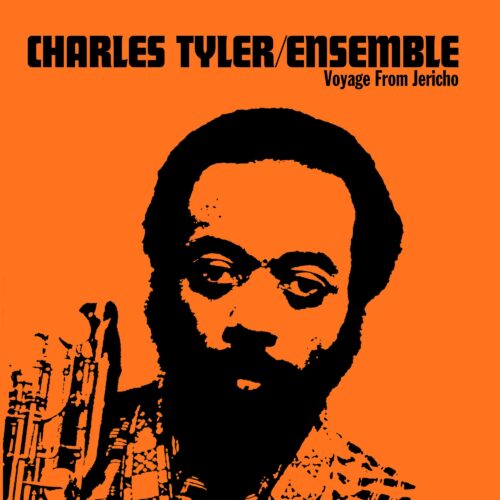
If we’re honest, we came for Ronnie Boykins on bass. He has that depth in his playing – fingers in the mud, spirit in the cosmos. You can hear it here, right from track two. »Return To The East« is a title one instinctively trusts; it’s well known that whenever jazz casts a glance eastwards, it rarely does itself any harm – more often than not, it does itself good. Boykins lays down the ostinato, the groove settles in, and with each passing minute you’re less inclined to leave it. But what unfolds above it – yes. Earl Cross on trumpet, Charles Tyler on baritone, Arthur Blythe on alto saxophone. Of course the horns want out. Of course they blow the piece wide open. Yet they do not splinter; they locate a shared place. A monumental track.
The album Voyage From Jericho as a whole is a world-beater, Tyler’s drive pretty much irresistible, with nothing to hide beside the great free jazz records of its time. Yet on its original release it remained comparatively unseen and unheard. The Cleveland scene Tyler emerged from was not widely recognised; Albert Ayler – also from Cleveland, and with whom Tyler played in the mid-60s – and Ornette Coleman dominated the conversation. Audiences likely had enough to digest in their work alone.
All the better, then, that this fare is being served up again fifty years on – and presented with care. In a 26-page essay, historian Cisco Bradley contextualises the record, tracing Tyler’s path through the 1970s, the New York underground, the avant-garde – the whole trajectory. We leave with an essential jazz album in hand.