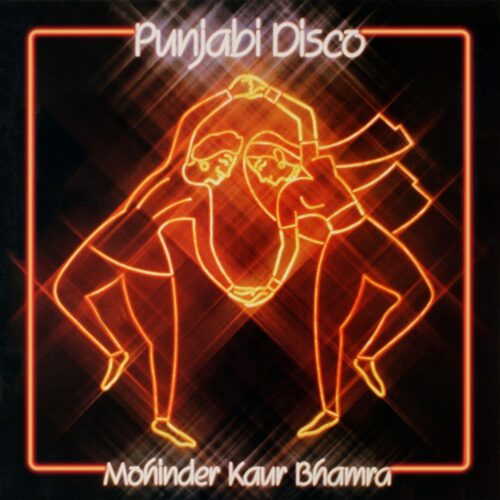
Mohinder Kaur Bhamra turned the dancefloor into a site of female self-determination. With Punjabi Disco, released in London in 1982, she fused disco rhythms, siren-like synths and the pulse of Punjabi folk – an early statement of electronic emancipation. Together with Roxy Music bassist Rick Kenton, she programmed drum machines and synthesisers that infused the Western dancefloor with South Asian tonalities. At a time when women in the community mostly performed among themselves, Bhamra encouraged them to share the stage with men – and to understand the dancefloor as a space of equality.
Her sound was both raw and iridescent: basslines from London’s club scene collided with dhol rhythms and ornamental vocal runs. The result was a hybrid that not only pushed disco forward but anticipated the bhangra fusions to come – long before the Asian Underground entered global pop consciousness. Punjabi Disco emerged from a desire for freedom and equal footing. Today, the album returns in a new edition, expanded with remixes by Psychemagik and others, underscoring how vividly its ideas persist – a reminder that the dancefloor remains a place where social movements find form. What began in the early eighties as a call for visibility now sounds like a precursor to a global pop culture in which diversity and self-determination are fundamental.