
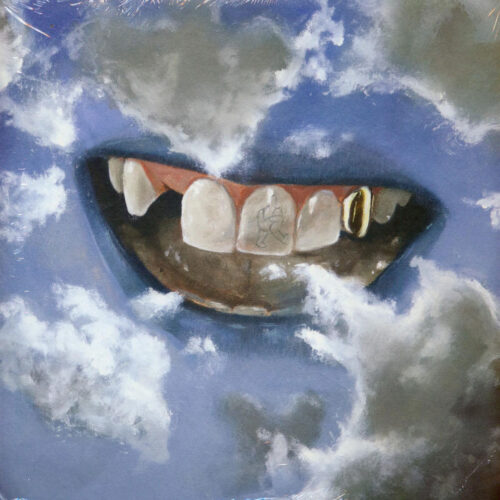
The Oracle has a literary model: Samuel Beckett. In his 1973 theatre play »Not I«, an actor with a black-painted face stands on a completely dark stage. Only the mouth – a mouth without a body – is visible, delivering a »stream-of-consciousness« monologue. »Not I« is a distressing play that stages the movements of the mind as an experience of terror. Lea Bertucci seems to reference this piece not only through her choice of cover art. The Oracle also lyrically emulates Beckett’s fragmentary chain of associations. At the same time, the New York–based composer’s acousmatic album is unmistakably embedded in the present-day situation of the United States. »They have come for our neighbors«, Bertucci lets us know with a distorted voice on the closing track — which, as she explains in an Instagram post, is »a response to the ICE kidnappings«.
Yet this is not political actionism. The Oracle is a quiet, if unsettling, drone album — entirely unsuited as a call to action. Its power lies instead in making the psychic effects of authoritarianism audible and tangible. The Oracle is coagulated fear: it captures the feeling of »doomscrolling«, of being exposed to a chain of horrors that reach us anonymously and disembodied. Beckett could be proud.
The Oracle

