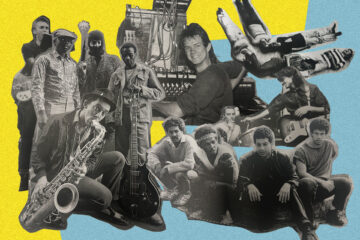
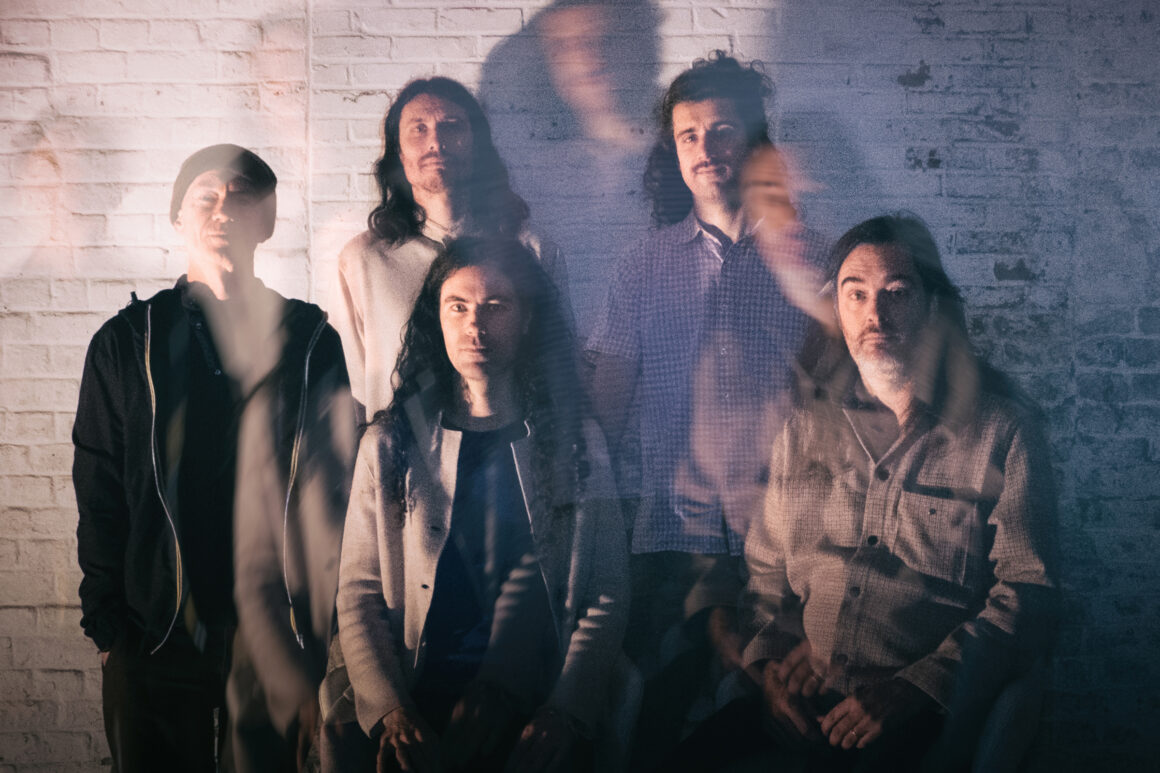
With their 2025 record Kinetic, Black Flower follow the injunction to take change as their guiding principle. »When you are stuck, something has to move, physically or mentally, so that you can find your way back to a healthier state,« says saxophonist Nathan Daems. The mind sets the body in motion – and vice versa. This movement can be heard. And it is the beginning of this band.
Motions
Kinetic

Magma Black Vinyl Edition
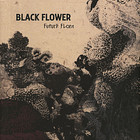
Future Flora
More than ten years ago, the Belgians began on Abyssinia Afterlife with a sound nourished by Ethio-jazz. Since the 1950s, this form of jazz has combined influences from traditional Ethiopian music with hard bop and modal jazz.
In the West, the genre became known through a film by the US director Jim Jarmusch: the crooked and melancholic road movie »Broken Flowers« is carried by songs by Mulatu Astatke, the founding father of Ethio-jazz.
It cannot go far enough
For Nathan Daems, this sound was a welcome point of access for artistic renewal. Daems once studied saxophone at a jazz conservatoire. There he found neither the crookedness, nor the melancholy, nor the groove in which the two come together. The jazz combos he played in served none of that. Then he discovered Ethio-jazz. »And I found what I had been looking for.«
Around 2012, Black Flower came together as a band. With it, the point was »to find a way of making music for a standing or dancing audience that still possesses enough emotional depth and what one might perhaps call oriental melancholy«. In their first set, consisting of pieces by Mulatu Astatke, Budos Band and Getatchew Mekurya, they opened a jazz jam session at the time. »When we eventually began writing our own pieces, Ethio-jazz was initially our most important inspiration,« says Daems. »We never wanted to let ourselves be limited by it, though.«
Constant development as order
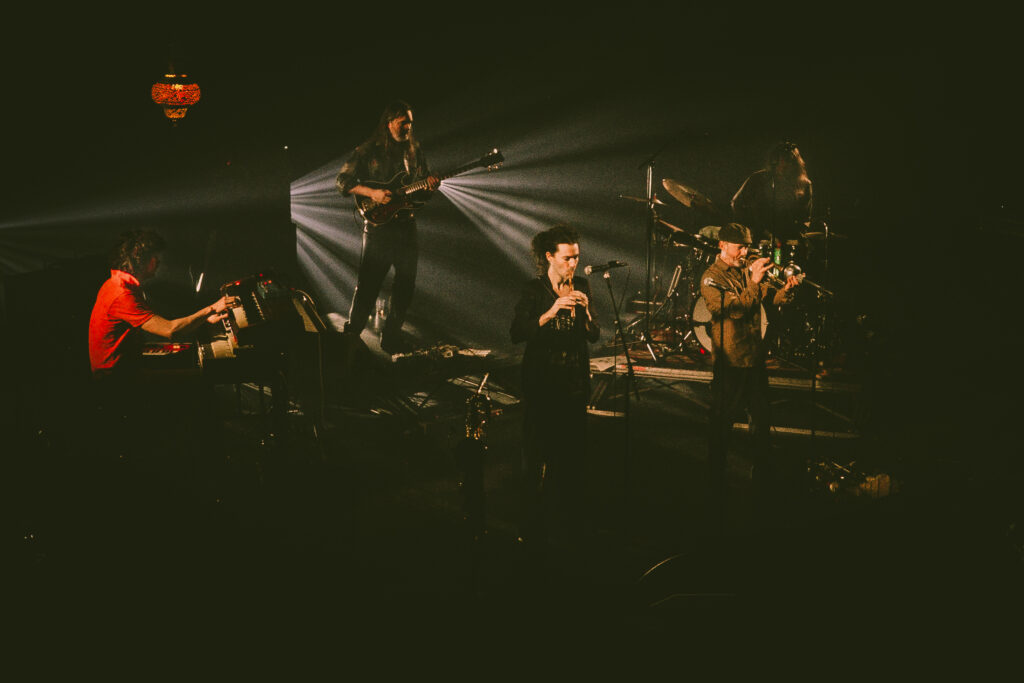
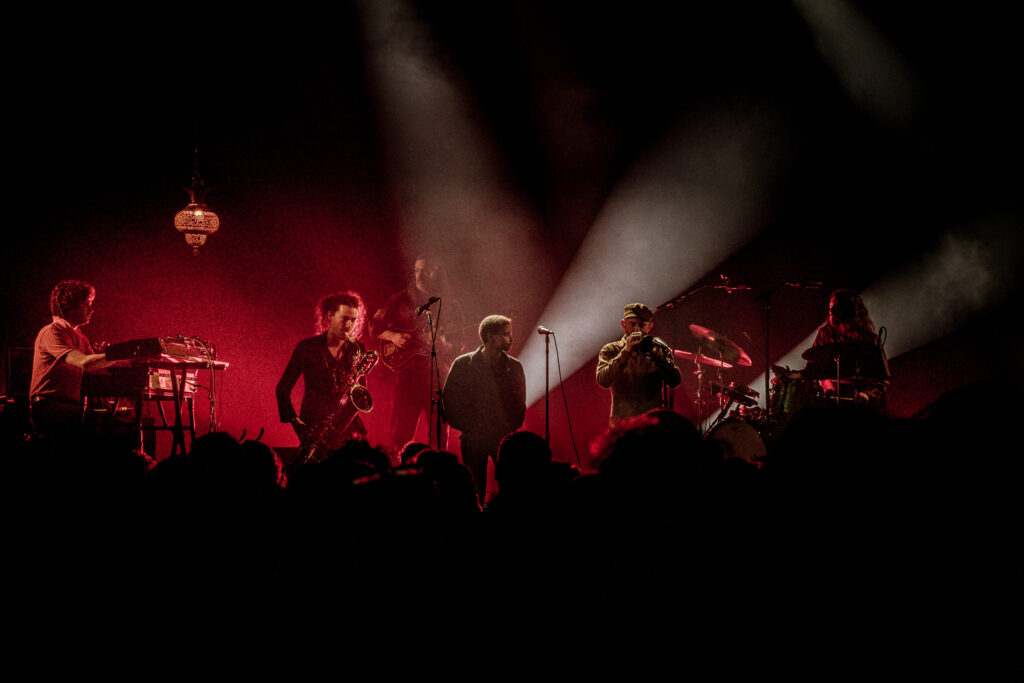
Today, alongside Daems, the band consists of Jon Birdsong on cornet, Simon Segers on drums, Filip Vandebril on bass and Karel Cuelenaere on keys. In the sound of their current album, Afrobeat, psychedelia and dub mix together. On »Violet Drift«, Black Flower start from a calm posture before »Conundrums« ensnares everything with an uncanny groove. The essence always remains Ethio-jazz and western jazz, but there is so much more: »We have pieces with a strong influence from Turkish music or music from the Balkans, even from La Réunion, Kurdistan, India or Brazil,« says Daems.
In the first half of the 20th century, Daems says, jazz was shaped by a clear set of harmonic and rhythmic ideas. The boundaries became more porous in the 1960s, as cultural exchange increased worldwide. The sound changed, the essence remained. Improvisation and the openness to »absorb external influences into a constantly evolving musical language«.
»Nature does what it does because it is what it is. It does not try to be something else. And what sets nature in motion? Itself.«
Nathan Daems
»The press can attach labels such as Ethio-jazz to us, which is good because it draws people’s attention to us, but deep down we know that these labels are only fiction.« With Black Flower, this attitude never forms into a spirituality removed from the world. Rather, this mindset is the ordering principle for the Belgians.
What is the driving force behind it? »Nature does what it does because it is what it is. It does not try to be something else. And what sets nature in motion? Itself,« says Daems. »Applied to me personally, my answers would probably be: positivity, inspiration and the need for beauty.« There is only one way there: always to take a new one.