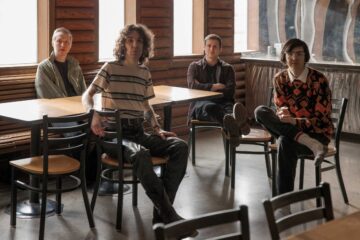

If you have Sky Girl in your life, it can happen anywhere. While having a drink with friends, or sitting under an apple tree, or on a walk when the clouds just look some kind of way: suddenly you think of it. Suddenly, Sky Girl comes to mind. How amazing it is, how special. And how strange it is—how much these unlikely songs manage to blend with your own memories. All these images and atmospheres. But also the feelings. Was it your own past, or was it Sky Girl?
This compilation of weirdly beautiful songs was released in 2016. Julien Dechery and DJ Sundae hunted them down and put them together. Though even here, the facts quickly fall short again. Putting them together. That’s not what it was. Interwoven, perhaps. Thrown into the wind in perfect order; and then it comes in from all sides, pricking and stirring things up from every direction.

Sky Girl
Christian incantations. Bedroom pop, kitchen-counter wave, »acid loner folk« Recorded between 1961 and 1991. All in different parts of the world. All these little places. And yet it’s as if these songs were meant to stand side by side, in their own odd catchiness.
In addition to their melodiousness, it is their sentimentality—and their mostly naive expression—that holds these pieces together. You want to be a sensitive counterpart to these songs—they’re so raw, they seem so genuine, and the specificity of their descriptions is so intimate. You’re right there, in the car »driving through the canyon«; or when he touches her hand for the first time; or, of course, when the coffee went cold, »on the esplanade«.
You could practically dust off these songs—they’re so tangible, so steeped in personal history. These moments happened. You can feel it.And that’s why they don’t have to be about loss to make it palpable. Loss: the direct kind, the acute kind, the kind tied to a specific time or person. But also the universal kind—the kind woven into the fabric of human experience, the inevitable kind, the kind that’s always, always there.
»I don’t do happy songs very well«, singer Joyce Heath said, probably explaining how her song »I wouldn’t dream of it« came together.
In our little story about Sky Girl, others have their say. The two collectors and compilers. Label founder and true believer Michael Kucyk. Filmmaker and communicator Glen Goetze. And the three artists: Linda Smith, Scott Seskind, and Karen Marks.
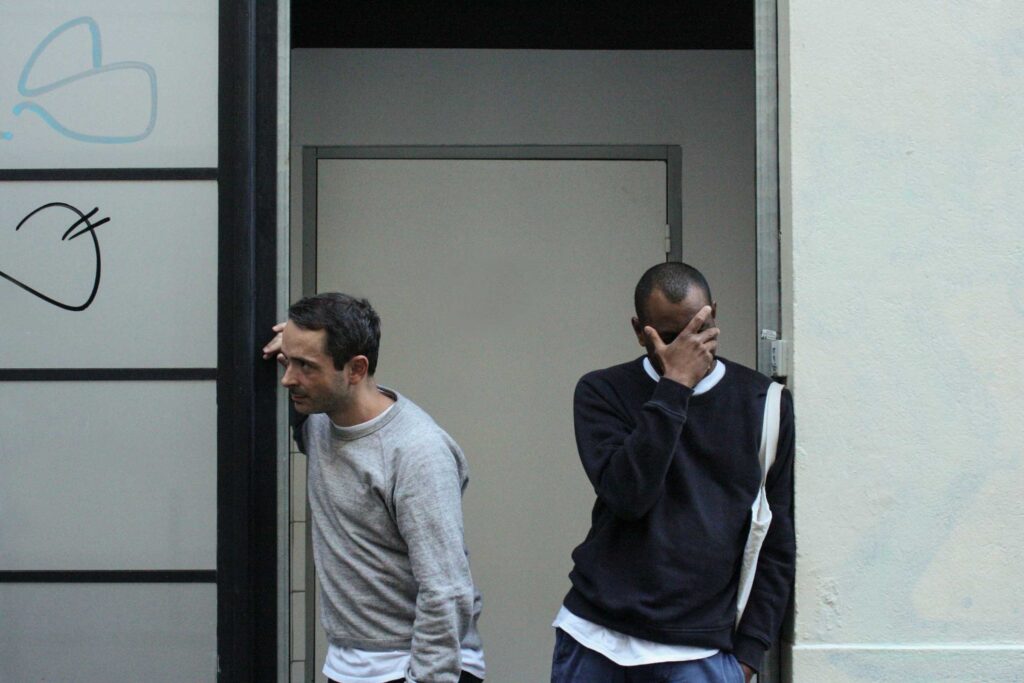
DJ Sundae:I think everything started when I met Cosmo Vitelli in Paris and we began swapping music. I remember bringing the Joe Tossini LP and other private-press releases, like Tommy Mandel, to his studio to rip them. He suggested that it could be nice to compile these under-the-radar tracks.
Around the same time, I met Julien, who was into exactly the same kind of records, which was pretty unexpected for me at the time — from original hip-hop samples to Japanese ambient music, indie rock and, of course, private-press folk rock. We clicked right away.
Julien Dechery: We had quite similar backgrounds, musical affinities and sensibilities, as well as the same kind of curiosity. We were also quite surprised to realize that there were some fairly obscure tracks that we both already knew.
DJ Sundae: Our initial idea was to compile mostly private-press records (a bit like Dante Carfagna’s great Personal Space compilation), but it quickly evolved into something broader, based more on the vibe of the songs and the fragility of their production and recordings.
Michael Kucyk: I happened to be in Paris just as I was starting the label and met Laurent and Julien through our mutual friend Misha Hollenbach (P.A.M.), who had designed the artwork for their prototype CD. They mentioned they hadn’t included a tracklisting because they hoped to license it properly one day, and I volunteered without a moment’s hesitation.
Wow, Mom!
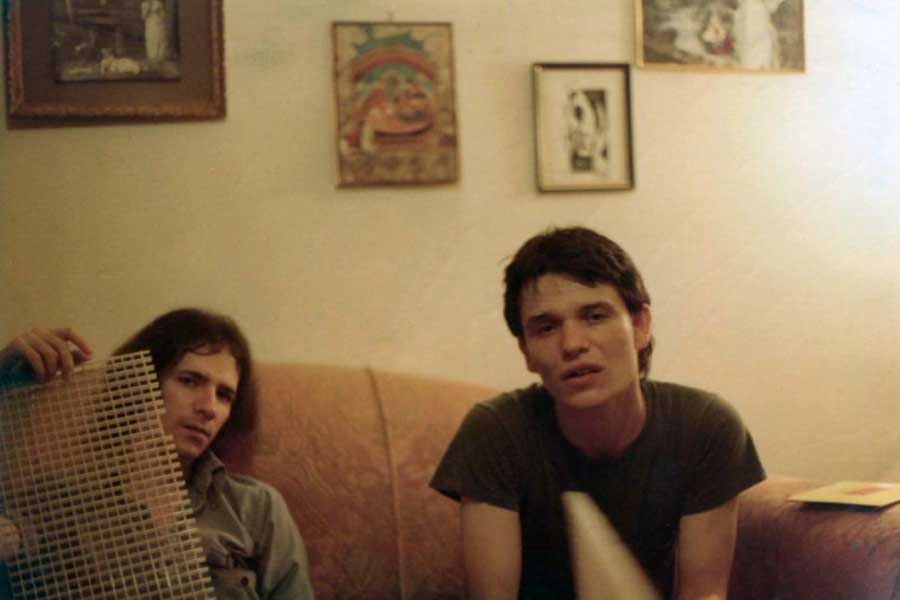
Linda Smith: I was probably at home checking emails. I was happy to receive the invite from Efficient Space. There wasn’t very much awareness of my music that I knew about, especially overseas, and it seemed somewhat surprising.
Karen Marks: I just got an email one day. I didn’t know who they were or where it had come from, but I must have liked what they wrote because I’d had other requests that I’d ignored. I passed it on to my friend Greg Macainsh from Skyhooks, who has a pretty good radar for whether people are serious or not. They passed the test.
And then the next thing, six months later, I got a CD and a vinyl copy of Sky Girl in the mail. Much to my surprise, because I didn’t really think much would come of it. I put the CD on in my car and loved the whole thing. It was perfect. I was really thrilled that I was involved.
I was in Paris with my children and knew that Sky Girl was being sold at Colette, which was quite impressive. We went in and I asked, »Have you got Sky Girl?« The guy told me in French that it had sold out. I remember my children looking at me and going, »Wow, Mum!«
Little Rooms without a home
Julien Dechery: It’s more a compilation of feelings than a project defined by one particular genre or style. Also, one of the things I’m the most proud of is that, even though the songs are quite obscure and the project could seem quite niche or slightly elitist on paper, I don’t think it feels that way when you actually listen to it. There’s something very immediate and accessible about it.
Michael Kucyk: You just blissfully surrender to its emotional pull. Songs that have only been there for a minute, yet somehow seem to know you intrinsically, reading you like a book and reanimating lost memories they were never part of. The intensity is really some kind of sorcery.
DJ Sundae: Ivan Smagghe put it very well in the liner notes when he described Sky Girl as »little rooms without a home, homemade jewels that did not need others to shine in the sun. There is no pretentiousness here, just flashes.«
Glenn Goetze: Those songs are held together by deeply resonant melancholy that we’ve all felt but are unable to articulate as well as Sky Girl does. It seemed to me that in most cases this special, almost indescribably emotive music they’d made wasn’t really by accident, but rather these were all quite sensitive, unique artists in their own right who didn’t ever do it for recognition and were just tapping into something quite universal that had to come out. They all came from different places and backgrounds but that real, unfiltered artistry and lack of recognition were both something they shared.
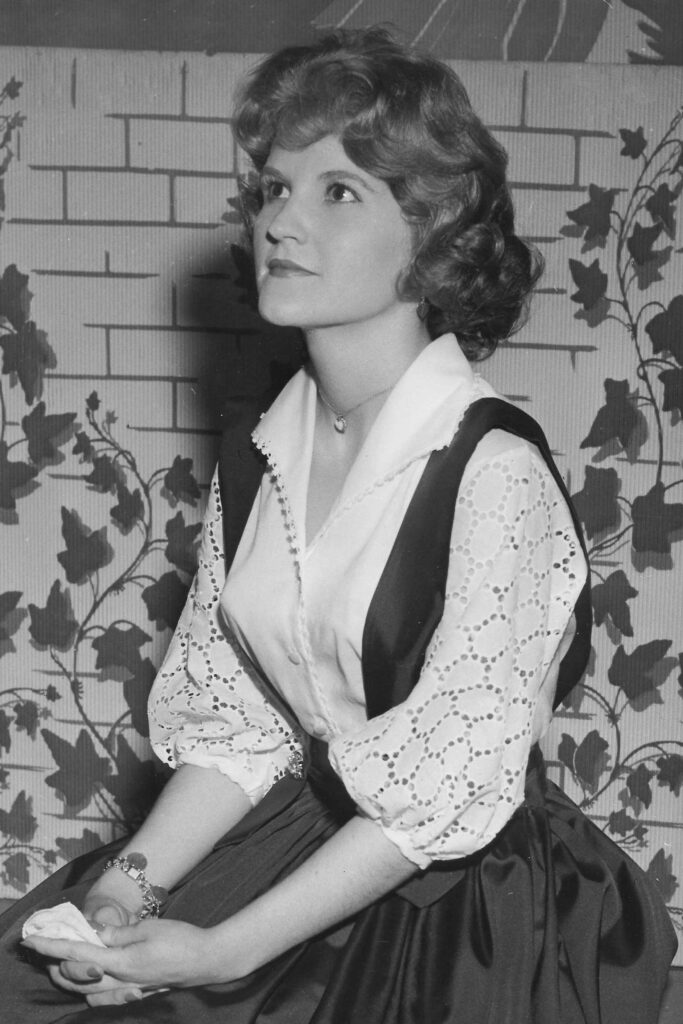
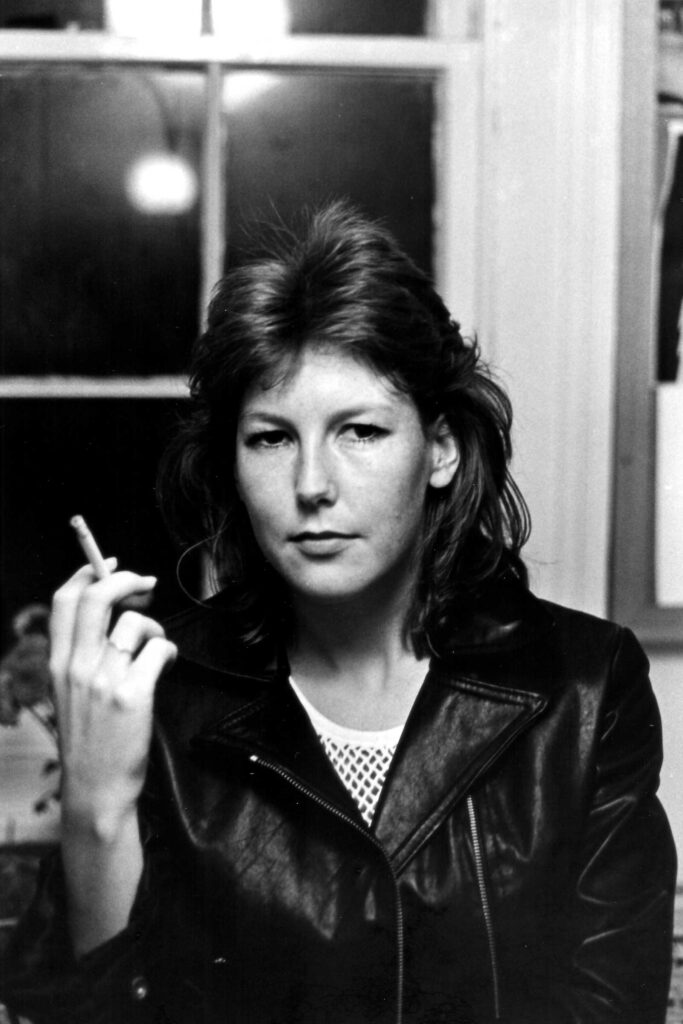
Back in the days
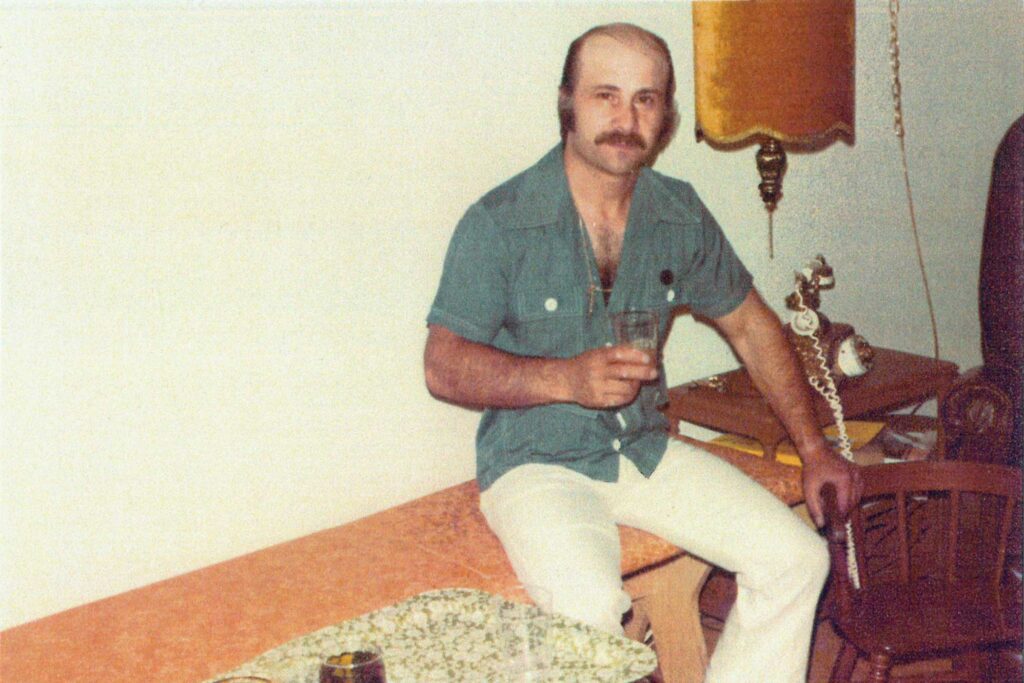
Scott Seskind: I’m now 66. I was 31 back then. I was living with my wife and five-year-old son in an apartment in Boulder, Colorado, and working the night shift at an inpatient psychiatric facility. At the time, I was writing a lot and still hoping I might have a career as a singer-songwriter. Writing and singing were forms of self-expression for me. I recorded the song, like all the songs on my two albums, at home on a small Tascam four-track cassette recorder.
Linda Smith: I rented a room in a friend’s house at the time and had already started recording with an 8 track reel to reel machine, a Fostex R8. The 4 track cassette method I’d used previously didn’t allow for enough separate tracks. I performed live very rarely, and preferred to work on music by creating most of the tracks myself. I was never a full time musician, so to speak, but I didn’t consider music a hobby as such.
Karen Marks: After managing the Boys Next Door, I took up Adelaide punk band JAB, which eventually led me to Models, formed by JAB’s Johnny Crash and Ash Wednesday with Sean Kelly and Mark Ferrie. Ash and I jumped ship in 1980. At the time he was living in a warehouse on Brunswick Street in Fitzroy, and we’d while away the hours up there mucking around with musical instruments. I had this fabulous little synthesiser called an EDP Caterpillar, which had all these different sounds.
Ash had this William Burroughs-style approach to writing. I was grabbing things from TV and writing down phrases. We were really just tinkering around with different musical ideas and wrote a few songs during that period.. We weren’t doing anything with any particular intention. We just did it.
Wonder & Regret
Scott Seskind: I’m not happy with my musical career. I was hoping to be successful. I regret not collaborating with people in different aspects of the music business. I tried to do too much by myself. I regret being so easily defeated.
Linda Smith: While I did hope for more listeners over the years, I never thought of fame and fortune in the usual sense. I didn’t play live, didn’t tour, didn’t have a band, and didn’t have a record contract. I liked writing and recording songs. My expectations and ambitions were not big. Now that I am actually playing live shows and doing short tours in my older age, I wish I’d had more interest in that aspect when I was younger and in better shape. But there was little audience interest then and working full time offered little time for that.
Karen Marks: I often wonder, if I’d had the confidence or been more ambitious, whether I should have shopped it around to English labels. If I’d taken it seriously enough, who knows what might have happened?
A different kind of future
Michael Kucyk: I guess the impact of the compilation that I witnessed most firsthand was with Karen Marks, who I now live just a few suburbs away from. ‘Cold Café’ resurfacing really opened the door to an entirely new chapter in her career. She went on to be championed by Fever Ray, Jarvis Cocker and Beach House, featured in a Thrasher skate film, guested on The Do!! You!!! Show on NTS, became the subject of an ABC TV documentary and ultimately played her first-ever headline show to a full house at Melbourne Town Hall. It’s been wild to watch it all unfold, and I’m really proud that we could play a small part in Karen reclaiming an important piece of her own legacy.
Karen Marks: In the end, it’s probably happened in the best way it possibly could have. I didn’t have to sell my soul, and the music found its way back to the surface. If a song resonates, you can’t keep it down. Somehow it finds its way up again.
Linda Smith: Sky Girl brought the kind of attention I’d never really had before. I think it may have actually allowed me to think of myself as a musician again. [When »I So Liked Spring« was used in »Forever«], it was the first time I ever made any substantial money from my music. (I hope it’s not the last!) I was able to pay off my car with money from the song license; it seemed possible to imagine a different kind of future for myself.

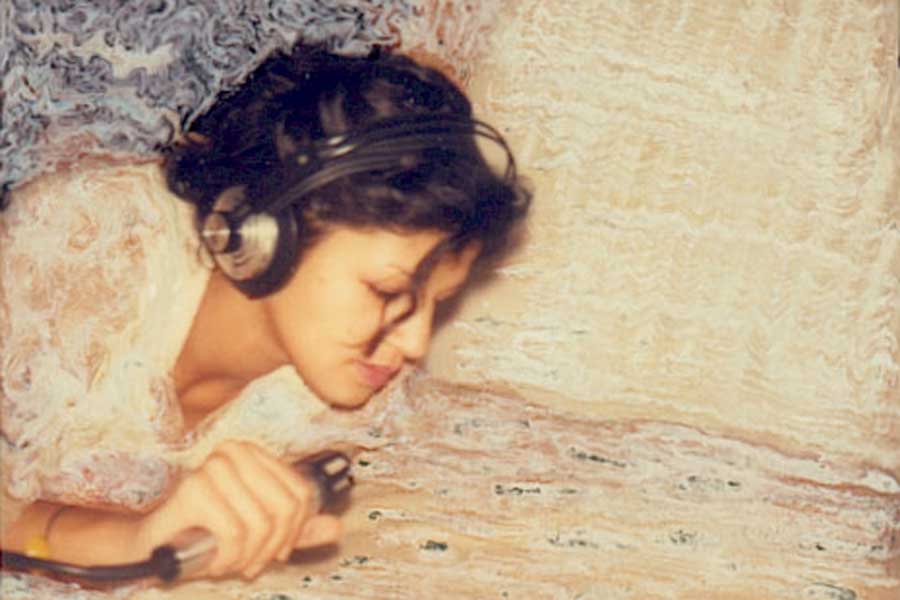
Years pass
Linda Smith: I retired from regular employment in 2021. Beginning in 2023, I’ve been able to tour parts of the US, UK, Italy, and Japan. I also recorded a collaborative album of songs called A Passing Cloud with my friend Nancy Andrews (Grapefruit/Gertrude), and released an album of instrumentals. I’m currently working on more recordings and plan a tour of Australia, and possibly Europe, next year.
Karen Marks: “Cold Café” would be in a drawer if the guys hadn’t found it. I’m eternally grateful for that because I wasn’t going to do anything with it. Now we’re planning to get back into the studio to finish an album, then play a few select shows around Australia and overseas.
Michael Kucyk: Sky Girl reminds me of a simpler time, when Efficient Space was run on blind luck and, as it was only our second release, everything felt rather new and exciting. I was too naive to anticipate the response it would have. I was unemployed back then, so I could only afford to press the 2LP in the smallest batches, which would immediately sell out, forcing me to beg and borrow to make more. Coming off the back of our first record, a ’90s Australian backroom house 12”, Sky Girl really established Efficient Space’s broad scope, while rewriting what a compilation could be. I’m eternally grateful that both the artists and Julien and Laurent were willing to take a chance on me. While I haven’t returned to Paris since, I still count Julien and Laurent as dear friends and an endless source of inspiration. Julien worked with us again soon after on the Sebastian Gandera archive, while Sundae has just finished a stunning new compilation for the label, Nothing Ever Was.
Scott Seskind: I’m doing social work with inmates at my local jail, I’m riding a bike, I’m watering my garden, having dinner with my wife, staying in touch with my children, grandchildren and old friends, and visiting my mother-in-law who just started on hospice.