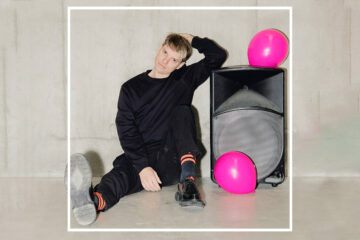
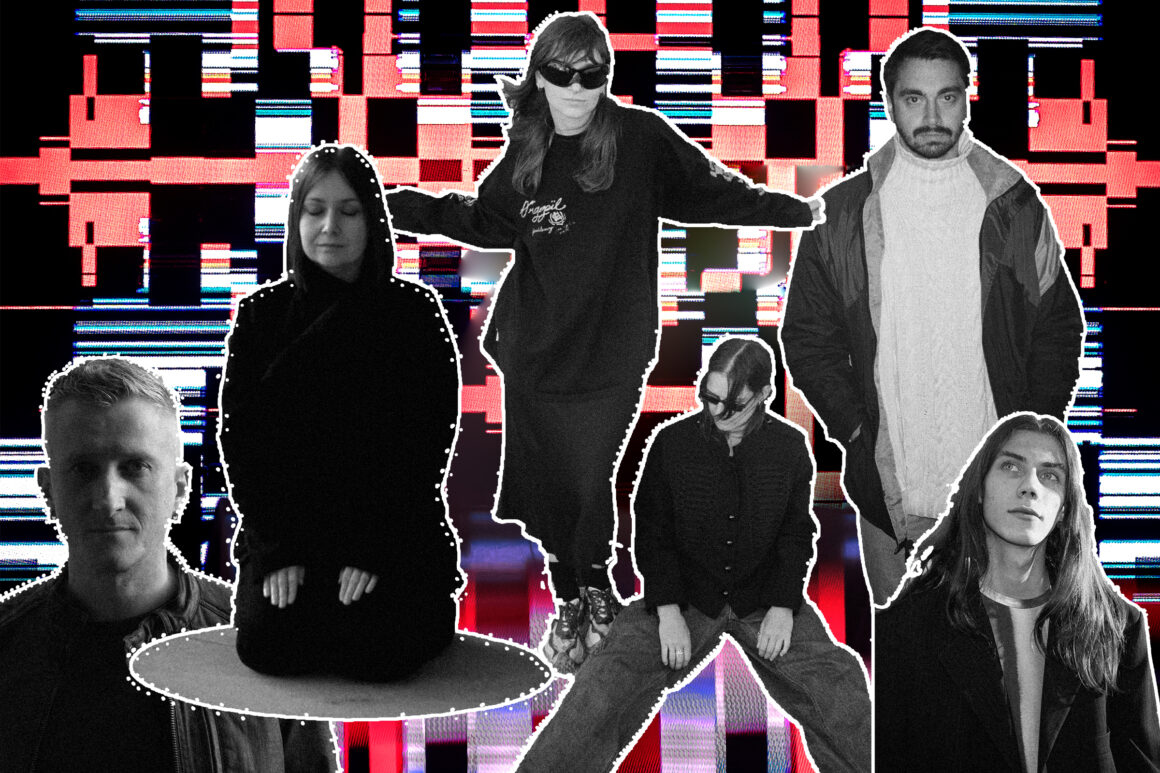
Neukölln, Boddinstraße, on a Saturday in the spring. Two people dressed in an industrial style emerge from the subway, their open smiles offering a charming contrast to the coolness of their outfits: Kateryna Zavoloka and Dmytro Fedorenko. Although they’re each established as solo acts (as Zavoloka and Kotra or Variát), they prefer to do everything together, they explain on their way to a nearby café.
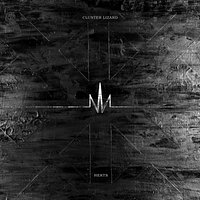
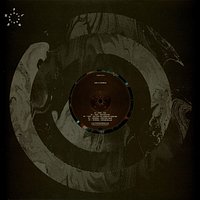
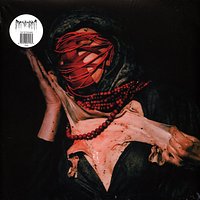
Since the late ’90s, they’ve been organizing concerts and festivals in Kyiv, shaping the experimental music scene far beyond the city’s borders. They speak modestly about their work, which, however, speaks volumes on its own: their outlook on the world and on music always go hand in hand. Take, for example, the 2021 album Star Corsair by their duo Cluster Lizard, which is reminiscent of musicians from the Berlin School but is significantly more techno-driven and darker. It is dedicated to the Ukrainian dissident and writer Oles Berdnyk and features an eight-pointed star – a national symbol of Ukraine – on the cover. Or take the track Blind Fury, recently released as a video: a cautionary behemoth straddling noise, techno, and industrial, built around original video footage of Ukrainian soldiers on the front lines.
To understand the authenticity in Cluster Lizard’s music – as well as Ukrainian music scenes in general – one must consider the country’s history. Here, culture and resistance have been inseparable, even just over the past hundred years. From the Executed Renaissance of the 1930s, during which hundreds of writers, artists, and intellectuals were murdered under the Stalinist regime, to the looting of museums and the bombing of cultural sites, as well as the near-total eradication of Ukrainian-Jewish culture by the Nazis, and on to the repression and cultural homogenization under Soviet rule: despite all adversities, a distinct Ukrainian culture was able to continue to develop.
Singing until liberation
The 1960s generation rebelled against Socialist Realism and, through Samvydav and Tamvydav, found ways to circulate banned Ukrainian poetry and manifestos against Russification. The Stilyagi smuggled jazz records on X-ray films. Mustache Funk gave rise to patriotic folk music. It is precisely in the midst of the suffering caused by war and oppression that music plays a major role, as exemplified by the lament “Plywe katscha po Tyssyni” (“A Duckling Swims in the Tisza”), which became the anthem of the Euromaidan but is still played today at the funerals of fallen soldiers. “Resistance is not only structural in nature, but also intimate, embodied, and sometimes smuggled,” writes author Gianmarco Del Re in his book Ukrainian Field Notes.
» Imagine North Rhine-Westphalia – only if they’d locked up and tortured Stockhausen back then.«
Dmytro Filatov
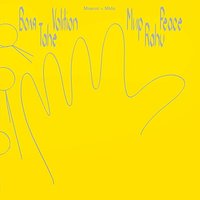
And this resistance is also embodied in Cluster Lizard’s furious, driving guitars and synths. At the same time, it isn’t limited to their music. “I wake up every morning and ask myself what I can do for my country,” says Kateryna Zavoloka. She and Fedorenko saw coming that the hype surrounding Ukrainian culture in Germany wouldn’t last forever. That’s another reason they founded I Shall Sing Until My Land Is Free, a project whose regular releases are meant to remind people that war is still raging in Ukraine, and whose proceeds they use to support Ukraine’s defensive efforts and aid organizations. The project is named after a song by the British tribal music pioneer Muslimgauze, who continues to stir controversy to this day because of his radical anti-Zionist stance and album titles such as Hamas Arc or Vote Hezbollah. Fedorenko says he doesn’t know whether Muslimgauze actually supported terrorist organizations. They’re simply big fans of his music. I Shall Sing Until My Land Is Free was originally intended to be just a temporary project. In the meantime, it has sadly evolved into a label featuring artists from all over the world, including the Japanese noise legend Merzbow.
Counterpoint to the point of collapse
Steglitz, late March. I reached out to the band Machukha for an interview; they’re currently making a name for themselves far beyond the metal scene. This is mainly because they’re an outstanding live band: their mix of black metal, hardcore, and post-metal is, even at its most unbridled moments, wonderfully intimate. It has recently taken them to festivals as diverse as Fusion, About Pop, and Rockstadt Extreme Fest. Only bassist and saxophonist Mykola Lebed shows up for the interview. He explains that the other band members are either not from Ukraine or don’t have time. The only original founding member, singer Natalya, is currently busy printing T-shirts for the next tour. Because there are no comparable support programs for musicians in Ukraine, DIY culture isn’t just a cool image; it’s mostly a necessity. So at Machukha, too, everything is done in-house: from merch to costumes to directing the music videos.
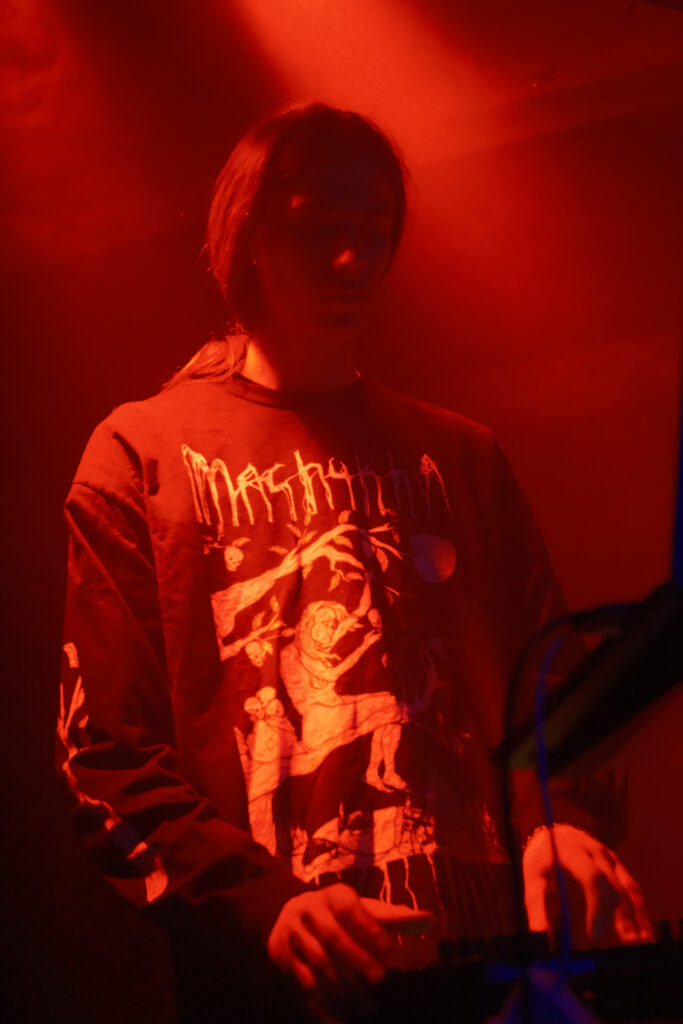

The past few years have taken their toll on Lebed: “As a Ukrainian, I’m a target, in a sense. Fear haunts me wherever I go.” This sense of hopeless unease is also palpable in Machukha’s music – whether in the lyrics that speak of mental health struggles, in the ostentatious sobbing on stage, or in the music videos for their sole album to date, Mochari, which, in their ability to evoke both aesthetic comfort and brutal associations with war, are at times almost unbearable. Machukha doesn’t use slogans, yet nothing remains vague. Rather, the band has created its own artistic language that speaks to anyone with a conscience. This stylistic finesse can also be attributed to the band members’ diverse life and cultural experiences. Lebed, who has lived in Rivne, Kyiv, Vienna, Hanover, and Berlin, repeatedly encounters political superficiality: “In Germany, it’s totally cool to talk about communism, but in Ukraine, it’s not cool to talk about communism. You have to understand the different experiences under the various political regimes before you can discuss which one is good and which one is bad.”
The American-Palestinian literary theorist Edward W. Said describes the quality of being simultaneously aware of multiple cultures in his essay “Reflections on Exile.” He aptly uses a term from music theory to describe this awareness: contrapuntal – that is, when several independent melodies sound simultaneously. Machukha’s music embodies, if you will, both sides of such a contrapuntal awareness: it can produce extraordinary art, but at the same time, it is a state of inner turmoil. Lebed explains that, above all, the concerts are always an emotional feat for the band. Sometimes they push individual members to the point of collapse after the show.
Breaking free of the victim role – irrationally
One of the first hot summer days in late May. Musician and event promoter Dmytro Filatov, in his early 20s, is sitting on a park bench in Steglitz. He has just finished a night shift at his part-time job at ACUD. Before lighting his first cigarette, he asks if it’s okay and says to feel free to interrupt him at any time if it is not. Filatov is from Kramatorsk in the Donetsk Oblast in eastern Ukraine, the region right on the front lines that has been particularly hard-hit by the war. Speaking about his hometown region, he says: “If I had to describe the Donetsk Oblast to someone here who’s never been there, I’d say: Imagine North Rhine-Westphalia – only if they’d locked up and tortured Stockhausen back then. So, basically, just a totally fucked-up, post-industrial society.”
Filatov is currently in the midst of preparations for the third anniversary of his collective, Burre Crew, which is set to be celebrated next weekend at the Panke club. Initially, Burre sought to raise the profile of alternative Ukrainian acts in Berlin. This approach changed over time. “When the Russian invasion began, there were a multitude of projects aimed at representing Ukrainian culture. That was wonderful and a privilege,” explains Filatov. “But it also puts you in a position with limited agency. As an artist and as a collective, I don’t want to be forced into the role of a victim. I believe many Syrian, Iranian, or Palestinian artists have similar experiences and share a similar relationship with institutions.”
That’s why the Burre Crew has shifted its focus to bringing together international, non-commercial music and fighting against government and religious structures that pit people against one another. Filatov says he hasn’t received any funding for the events so far. While financing through ticket sales hasn’t always worked out, that doesn’t faze him: “I’ve made a lot of irrational, weird decisions. I plan to keep going this way.” In doing so, he embodies precisely the kind of courageous DIY attitude that has been lacking in many parts of Berlin, a city battered by cultural policy in recent years. This is also evident a week later at the Burre birthday party at the Panke, which, while not drawing massive crowds, impresses with its forward-thinking lineup: in addition to Filatov himself and the aforementioned Cluster Lizard, the British techno DJ Soraya performs, among others, and the Egyptian producer ZULI plays a magnificent, complex live set.
The message is (almost): good vibes
GAEL and Skungal could be described as a sort of superheroine duo of the Berlin techno scene, at least when you consider how quickly they’ve established themselves on the regular lineups of clubs like Berghain, Tresor, ÆDEN, and RSO. Skungal is a resident DJ at Tresor with her sets blending acid, hard groove, and hard techno, while GAEL is known for a psychedelic, more organic sound. The two really hit their stride, especially in their B2B sets. GAEL had to cancel the interview for health reasons, so we’re conducting it via email.
Neither of them answers questions about the war or those with political or socially critical undertones. “There is a strong expectation today that artists constantly translate their work into political statements, and I’m not always comfortable with that pressure,” explains GAEL, who was born in Russia and grew up in Ukraine. “I don’t see myself as a representative of an entire country or a political position through my work. It’s important that Ukrainian culture is perceived as something deeper and more diverse than just its connection to the war.”
“It’s important that Ukrainian culture is perceived as something deeper and more diverse than just its connection to the war.”
GAEL
By diversity, the two are referring, for example, to the respective musical scenes that shaped them as artists. For Skungal, it’s her former favorite club in her hometown of Odesa, DSK Port, which no longer exists. That’s also where she first met GAEL, who later became her partner both personally and professionally. GAEL found her own sound as a DJ at the legendary queer-activist club K41 in Kyiv – but it wasn’t until she moved to Berlin that she began focusing more on techno. Explaining the difference between the Ukrainian and Berlin techno scenes, Skungal says: “I think we share the same love for electronic music and going out in general, but I can tell that people here take partying a little bit more relaxed. Sometimes going out in Kyiv was like going on a fashion show.” Nevertheless, the two still feel constrained by musical trends even in Berlin. That’s why they co-founded the label Noise Daughters, which aims to celebrate the diversity and complexity of techno regardless of trends while simultaneously promoting female artists. The same positive energy that GAEL and Skungal exude in their B2B sets comes through in their email responses. GAEL does, however, let a bit of unease shine through: “I’m not very optimistic about the world right now,” she writes. “But I still find meaning in small human connections and in the fact that people continue to create things despite everything. Maybe hope for me is less about optimism and more about continuing anyway and trying different approaches.”
Collective Synergy
Work on this text gets completed in September, and the war in Ukraine is still raging. In an Instagram post accompanying a photo of a bombed-out house in Kramatorsk, Dmytro Filatov writes: “I no longer recognize my own hometown.” Meanwhile, statements like his are barely heard in public discourse in Germany – the attention is focused on other issues. The outlook for creative professionals in Berlin is bleak. It is considered unlikely that the new election winner, Die Linke, will be able to push through its planned measures to strengthen the cultural scene.
Where do Ukrainian artists find their energy in this complex situation? How do they manage to remain creative amid pain, loss, homesickness, and the difficult struggle to get by and persevere? In my conversations with them and at their events and concerts, I’ve noticed their remarkable sense of solidarity and mutual support that transcends genre boundaries. They attend each other’s concerts, speak highly of one another, connect people, teach each other how to play instruments, and help one another out as if it were the most natural thing in the world. Even though some of them have very different views on art, they are united by the idea of art as an unconditional bond between people and therefore as a counterpoint to war.