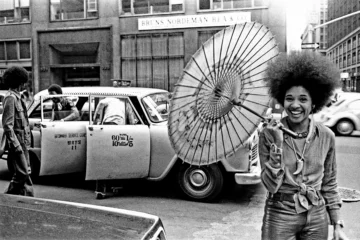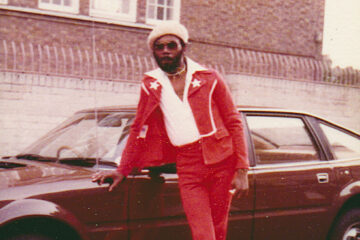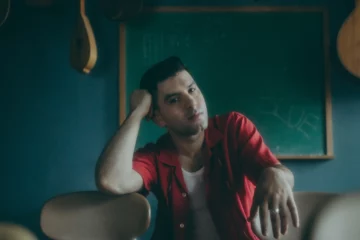
A Seat at the Table, The Life of Pablo, Views, Blonde: 2016 was a blockbuster year, if not the last great year in pop music. That was probably one reason why, in early 2026, people were posting nostalgic throwbacks on Instagram by the thousands under the hashtag #BringBack2016. But why should we? Is it because back then, not everything had yet fragmented into micro-niches, but culture was (at least in the Western world) still somewhat of a shared good? Because the realities of the far-right’s rise, Brexit, and Trump were only beginning to emerge, but had not yet materialised? Because there was still hope that pop culture could offer resistance to social erosion and political escalations?
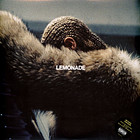
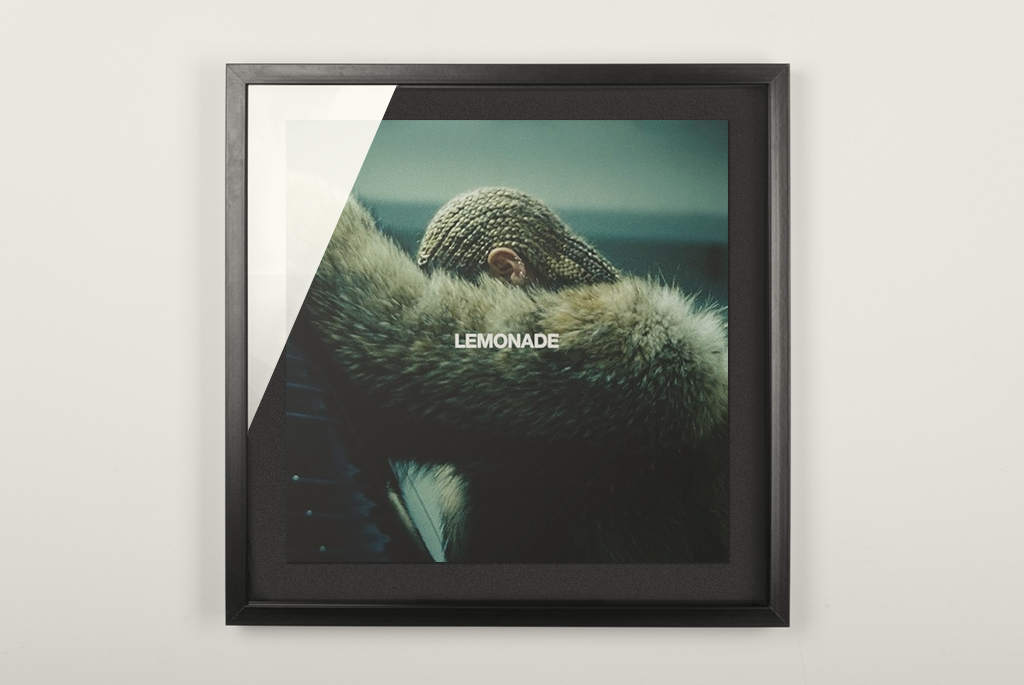
No other album captured the pop-cultural unity, the euphoric political mood, and hence the misplaced poptimism of that year quite like Beyoncé’s Lemonade. While the Beyhive swarmed to uncover the identity of »Becky with the good hair,« the »Formation« video begat a thousand thinkpieces, and it seemed clear to everyone that the personal story of emancipation—whether fictional or not—of a betrayed woman told through the prism of the Kübler-Ross model held profound significance. Life had handed lemons not only to Beyoncé and the Black population of the U.S., but to the whole world. Now the time had come to make »Lemonade.« This album turned the principle of hope into a total work of art.
After Beyoncé had already released a visual album in 2013 which defined every Instagram hashtag for the years to follow, Lemonade offered a storyline where there had previously been only slogans. Lemonade was both a cornucopia and a meat grinder, establishing musical-historical and stylistic continuities on the one hand, yet representing a singular discontinuity on the other. The stylistic range spans from country to trap, from piano ballads to quasi-hauntological reggae tracks. This album offered material for twelve top spots on various genre playlists or just as many Grammys (of which Beyoncé won two and was nominated for six more). Pop has rarely sounded as virtuosic as it does here.
Despite all the sugar, the lemonade still tastes sour
The credits for »Lemonade« are, accordingly, as long and convoluted as the terms and conditions of a cell phone provider. They included names such as James Blake, Jack White, The Weeknd, the Dixie Chicks, Kendrick Lamar, and Diplo, plus samples from the Lomax archives, material by the Yeah Yeah Yeahs, OutKast, King fucking Crimson, and a birthday speech by Jay-Z’s grandmother Hattie White. And there are the videos with more sampled material from Malcolm X, poet Warsan Shire, and others. These songs stood on their own as mini-blockbusters in radio and YouTube format, while simultaneously being integrated into a multimedia monolith. Naturally, this kept the world occupied for at least a few months.
Before Childish Gambino condensed the same concept into a single video with »This Is America,« all of this made »Lemonade« the biggest music-industrial marketing coup of the 2010s, and Beyoncé made no secret of it. Cutthroat materialism is the modus operandi of this album, which constantly revolves around the »grind« and »them commas and them decimals,« and whose protagonist called herself a »black Bill Gates in the making.« This was by no means at odds with the political statement she made with her Black Panther salute at the Super Bowl: During the 2010s, the distinction between the personal and the political became increasingly blurred, which is why individual achievements could be sold as collective victories.
The slogan »Bring Back 2016« may refer to the progressive cultural discourse of the last great year in pop and thus, indirectly, the greatest album of that year. Yet this poptimism rings hollow.
Yet Lemonade is not merely an emancipatory statement, but also an expression of all the problems that accompany every effort toward emancipation. Amidst the juxtaposition of hanging heads and raised middle fingers, between »What a wicked way to treat the girl that loves you« and »When he fucks me good, I take his ass to Red Lobster,« or at the heart of a disturbing reckoning like »Daddy Lessons,« lies the paradox of every declaration of independence: Anyone who wants to break free from something must first work through it. Lines like »I ain’t thinking ‘bout you« reveal the fundamental contradiction in terms that shapes the entire album: despite all the sugar, this lemonade still tastes sour.
In hindsight, this album from an era that is now being romanticised is all the more ambiguous because it is being romanticised. The slogan »Bring Back 2016« may refer to the progressive cultural discourse of the last great year in pop and thus, indirectly, the greatest album of that year. Yet this poptimism rings hollow. Those who call for a return to 2016 may primarily want to feel pop-cultural unity and sense a new euphoric political mood, but they are also implicitly calling for a Trump re-election—even though we’re still living through the results of his last one. Ten years after »Lemonade,« it should be clear that the personal and the political, individual achievements and collective victories, are not the same thing.
What makes »Lemonade« an important album that transcends its time is therefore not just that—as is particularly evident in the case of »Formation«—this was simply visionary music. It is also the fact that all the ambivalence of nostalgic retrospection is already embedded within it: That combative spirit of optimism did not pave the way towards a better world, but instead got lost in a grueling cultural war. Progressive pop was defeated by regressive populism, and the principle of hope was first sold and then ultimately abandoned. Anyone who longs for that has drawn the wrong lessons from »Lemonade.«