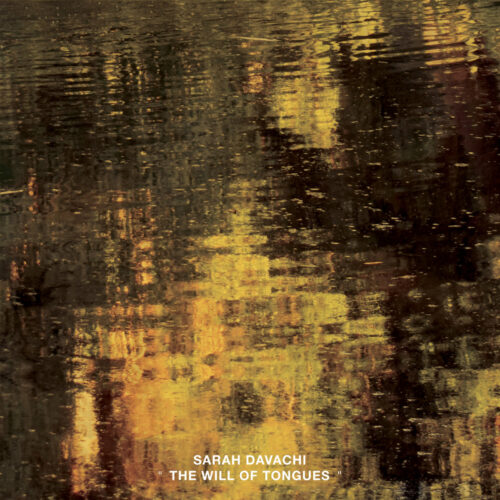
For an artist whose music often moves slowly, Sarah Davachi is pretty prolific. Since 2020 alone, the US-based Canadian has released well over a dozen albums featuring solo compositions and/or collaborative works. Clocking in at more than two hours, The Will of Tongues is one of her most expansive albums. Besides five organ pieces, it also includes compositions for choirs and microtonal ensembles as well as an electro-acoustic piece. It is undoubtedly one of the most diverse records in her vast discography.
Davachi’s music is more interested in textures and timbre than narrative structures, drawing on different traditions that range from old and renaissance to minimal music and spectralism, drone, and the lineage from early electronics to contemporary ambient. The Will of Tongues is a showcase of how Davachi combines and synthesises these different influences in her own work in ways that feel intuitive rather than conceptual. This in turn makes even the most maximalist long-form pieces on it feel intimate.
With the exception of the relatively short and ethereal vocal pieces, Davachi crafts slowly unfolding gentle dronescapes across these 13 compositions. Akin to Éliane Radigue and other masters of contemplative explorations of sounds, hers is music that invites but doesn’t force deep listening—just as suitable as a background soundtrack for the quiet hours of the day as it is for full immersion. Despite its sprawling length, The Will of Tongues cements Davachi’s standing as one of the most accessible contemporary composers out there.