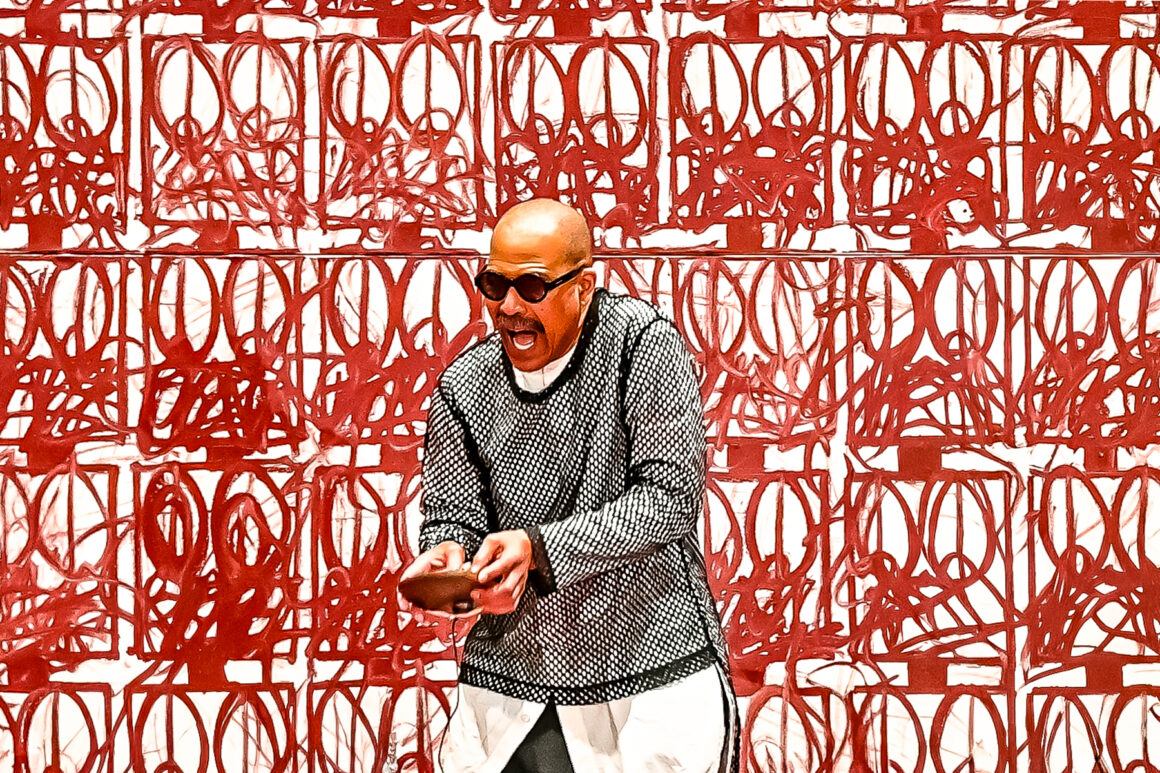
If you’re enthralled by Jazz, you’ve probably listened to Kahil El’Zabar – possibly without knowing. The multi-instrumentalist worked with various luminaries of the last 50 years. He recorded, amongst others, with Pharao Sanders, Archie Shepp, and Wadada Leo Smith. He performed with Dizzy Gillespie, Stevie Wonder, and Cannonball Adderley. El’Zabar was Nina Simone’s drummer and designed her head-dress. His discography spans more than 70 recordings.
But El’Zabar’s influence is not limited to Jazz. He had a hand in the composition of the Broadway version of the Lion King. Musicians from Hip-Hop, Neo-Soul, House, and EDM refer to El’Zabar as an influence, i.e. The Roots, Yasiin Bey, or Osunlade. Furthermore, the discourse surrounding music culture would be rather different without him. El’Zabar enmeshed himself in West African traditions, influenced the concept of »Great Black Music«, and engaged himself in the Association for the Advancement of Creative Musicians (AACM). He received a PhD, did his time on various councils and boards and pushes the importance of Black History Month like few others. For 53 years, he toured every February. In short: Kahil El’Zabar is one of those artists whose place in future historiographies of music is guaranteed.
Against the backdrop of such a biography, any self-description turns into a balancing act, caught between fanfaronade and false modesty. During our talk, which we undertook online, Kahil El’Zabar expressed himself with careful deliberation. Often, he closed his eyes, frowned and enunciated every word as if it had to be carved in stone immediately. When referring to his art, he was humble. But when referring to the context in which this art must take place, he spoke with the confidence of a field-tested general. He knows what is at stake.
Let The Spirit Out Live At "Mu" London
Open Me, A Higher Consciousness Of Sound And Spirit
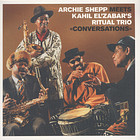
Conversations
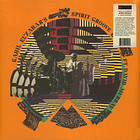
Kahil El'zabar's Spirit Groove
Your group is called the Ethnic Heritage Ensemble. But you have a specific understanding of the term »ethnic«.
Kahil El’Zabar: In anthropology, »ethnic« is usually associated with the cultural roots of an historical community. Because the African-American experience is considered somewhat of a new experience historically – it spans »merely« 400 years compared to the thousands and thousands of years that some other cultures can be traced – some people forget that every people has an ethnic heritage. Blues and Jazz and Gospel not just genres. Anthropologically, they are the ethnic heritage of the African-American. I’m actually the first person to express that through my musical form. And that’s in respect to all ethnicities, not just the black ethnicity. I’m saying that all human experience and the stories that come from that are valuable. And that the African-American story is no less valuable than anyone else’s.
So, an »ethnic heritage« is something universal, relatable and valuable to anyone?
Yes, absolutely.
You just raised various motifs that are related to a political engagement of yours. You’ve been a co-founder of the National Campaign for the Freedom of Expression, which was founded in 1990. How does your political engagement relate to your artistic practice?
My political aspirations are a reaction to cultural repressions. Back in 1990, for the first time in the history of the American constitution, a curator was arrested for his choice of art. He had put up an exhibition of Robert Mapplethorpe in Cincinnati [i.e. photographs feat. homoerotic and BDSM-sujets]. Artists and academics like me came together to organize, to protect against what we felt was unfair censorship. My belief is that expression is a gift of will and intended for each person individually. And if there are ways in which that is infringed upon or taken away, wherever in the world, I consider that unjust and I will react in support. Every human being’s natural inclination to express themselves in language, in art, in color, in emotion, that’s the beauty of the multiplicity of our human experience. It’s always been an important aspect in my pursuit as an artist to learn how to express myself honestly, to express myself with intelligence, to express myself with sincerity.
»When you find yourself in the long struggle against oppression, you must find peace of mind.«
Kahil El’ Zabar
In other interviews, you’ve specifically credited the Association for the Advancement of Creative Musicians (AACM) with being a cradle for fostering this freedom of expression. Are you still taking free expression not as something that is given but something that has to be nurtured?
Yes. We will not know anything about each other if we don’t have the ability to express ourselves. I have been an academician, I have been an artist, I’ve been a parent, and in all of these areas, I look at what I’ve tried to share with others to see if those sharings are valuable. World-class artists like Corey Wilkes, Isaiah Collier or Junius Paul, visual artists, like Rashid Johnson, took up things that I have expressed and that I now see expressed so excellently through them. I know that it works, by example.
Then you also see yourself as a mentor?
Yes. I was very fortunate, I’ve had Dizzy Gillespie as a mentor, I’ve had Nina Simone as a mentor, I’ve had Cannonball Adderley as a mentor, all the elders in the AACM. So, I’ve had extremely fine examples of those who with intelligence have learned their craft and shared aspects of it, in order that others should grow. So, I believe I should follow the same tradition.
Maybe we could look at the other side of this process. The freedom of expression seems to be very much on the threat in the US right now, with attacks on artistic institutions, with political oppression, white supremacy being somewhat part of official government policy. How do you see your own role in this mess?
I wrote a composition over 30 years ago for my group The Ritual Trio that many critics didn’t understand. It is titled »Renaissance of the Resistance«. It appears to be a very calm, slow-moving song. So, people argued, how could this be resistance when we feel no franticness, when we feel no anger? But if you are in a long race against oppression, you must find the calmness of your spirit to gain clarity of how you move. Otherwise, you will miss the opportunity to refuel and intelligently find the ways to get beyond aggression. This this moment in the American society, when noble individuals of intent, of care, of love must find a calmness in the storm, to redirect the energy toward a more productive future. We are moving towards a very chaotic state. But nothing lasts forever. That’s a law in physics. I don’t know how long this time will last, but there will be a time after and there will also be a retribution for improper, illegal efforts that have been taken to abuse human freedoms. There will be a rekindling, there will be a global reshaping. We are in the catharsis.
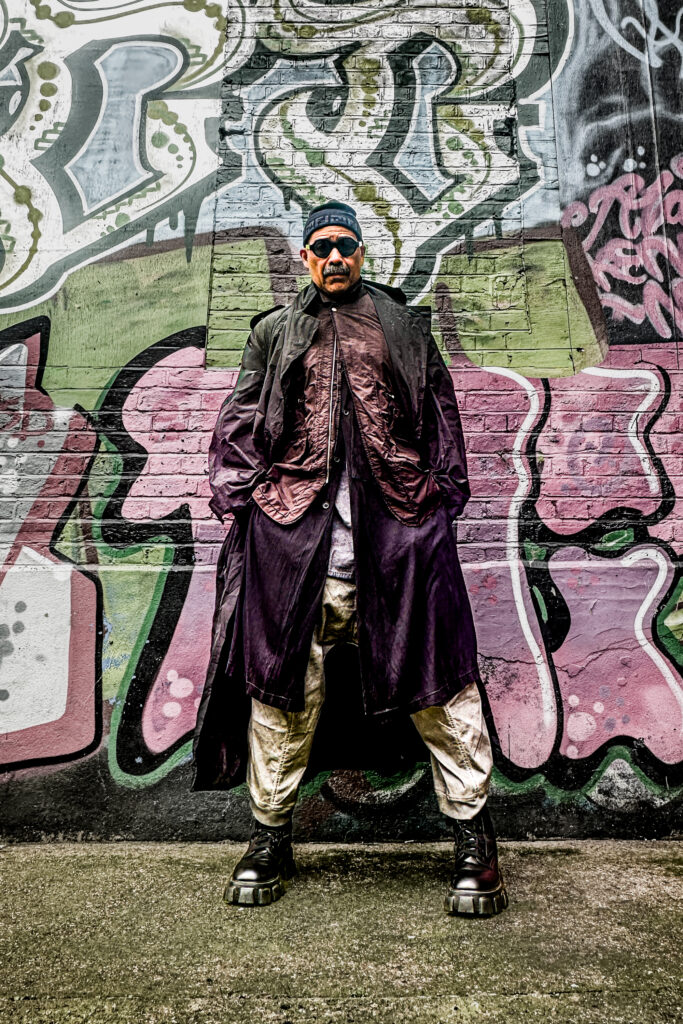
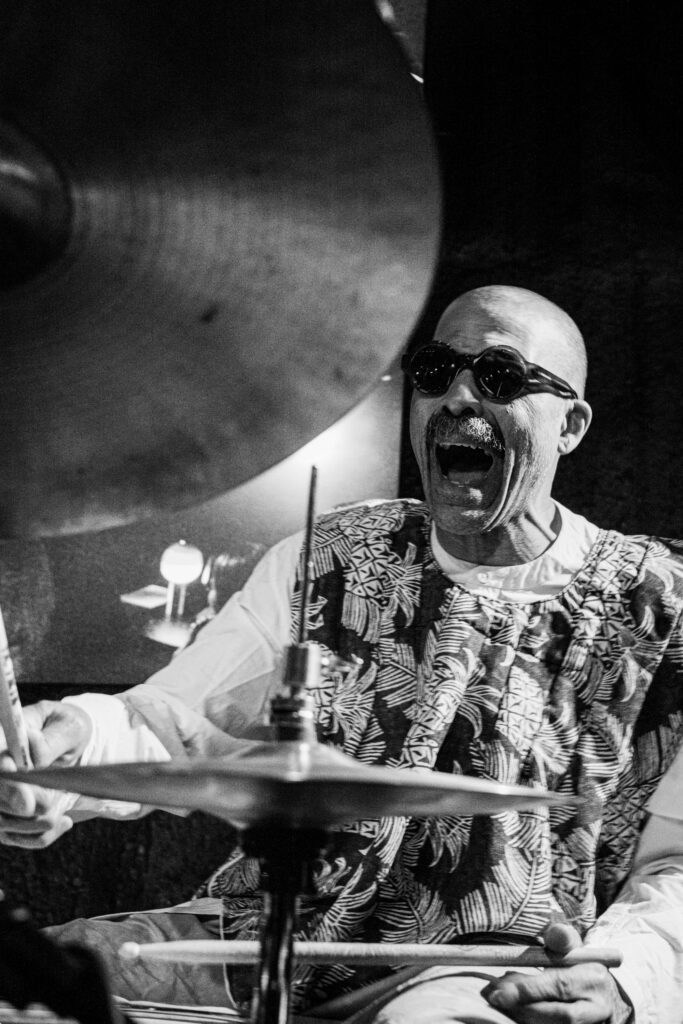
Just to reiterate further on that: during the tail end of the first Trump presidency, you released your album, »America the Beautiful«, which was somewhat celebratory…
It was introspective.
Introspective. Can you elaborate more on that phrase?
I’ll give you the idea of how the recording was conceived. During the George Floyd protest in Chicago, my own children, young adults, were a part of the leadership for the protest. In the Chicago newspaper there was a photo of my youngest son being hit with a baton by the police. It put such a scar in my heart. In 1968 and ‘69, I was in the same position as my son. So, I had a talk with my children saying that I was proud that they stood up for what they believed in, but they also had to be intelligent about how to position themselves. »Don’t stand in the front of the line, son. Stand back a little bit so you can see what’s going on.« And my artistic response to this was to at the ills of the American society. Let’s look at the history and then let’s reimagine the possibility of something better. So, from the worst to the best. In »America the Beautiful«, I took the theme of the composition [note: a sort of unofficial national hymn from 1895] and put it in a Blues scale to change the tonality of that melody. You get a solemn energy. It is intent of aspiring to a higher ideal.
»I believe we need to find new ways of remaining human.«
Kahil El Zabar
And is this idea something you still want to foster today?
Oh, absolutely. We need rugged individuals who redefine their idea of opportunity – not to control others, not to be the wealthiest person in the world, but to be kind, to be loving, to be collaborative and open. These are the values that I think a true artist works for. Because they can’t acquire the level of beauty and intelligence unless they humbled themselves to their art and therefore learned the importance of sacrifice. As we move more in automation and technology and robotics, it’s obvious that labor will not be the issue for the future human being. The human being will become something else. We’re not thinking about it enough. We’re reacting and are intimidated by this new technological age, but we need creative invention of lifestyle where we can reaffirm human value outside the comparisons that corporates are trying to intimidate us into. No! The mind has no limits. And art helps open the mind. Music helps open the mind.
In an interview with German newspaper Die Zeit you are quoted saying: »The older I get the more I have to learn.« What are you looking forward to learn next?
I’m 73. I’m obviously not from the Hip-Hop generation. But I’ve learned the rhythms, I’ve learned the grooves, I changed my way of playing because younger people like Justin Dillard or Makaya McCracven showed me something. And at the same time, I’ve shown all of those artists how to swing. I’ve shown them what came to me, through Dizzy Gillespie, or came to me to the AACM. Growing is important. That was the same with Duke Ellington. He had written all this incredible music in the 20s, 30s, 40s. But then he reinvented himself on »Money Jungle«. Because Ellington listened to Thelonius Monk, who was influenced by him. And this allowed Ellington to reinterpret his style through Monk. There are many examples of artists bending time by letting go of what they think they know and be excited about what they don’t know yet.
Related reviews

Kahil El'Zabar
Let The Spirit Out: Live At »mu« London
Naima Nefertari & Angel Bat Dawid
Journey To Nabta Play
Various Artists
Spirit of France
Kahil El'zabar Quartet
A Time For Healing
It’s an admirable attitude.
I don’t think we’re going to get away from the creative intent of advancing science. But I think we have to find ways to stay human. In this whole next cycle, if we are smart, we’ll innovate connections in technology from the human value system, reinterpret as well as innovate ways to communicate qualities and skills that can translate to harmony more so than war. We have that opportunity. Now, we have to take action.