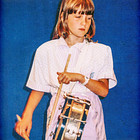
A little girl in front of a blue background, a marching drum around her neck. That is the cover of Karen Willems’ 2025 album A Fool’s Guide to Reality. The girl’s gaze is directed sideways and downward; absent-mindedly, she looks off-frame.
It is an apt image for the music of the Belgian drummer and composer. For in her music both are present – and much more besides: the urgency of the marching drum and the dreaminess of her gaze.
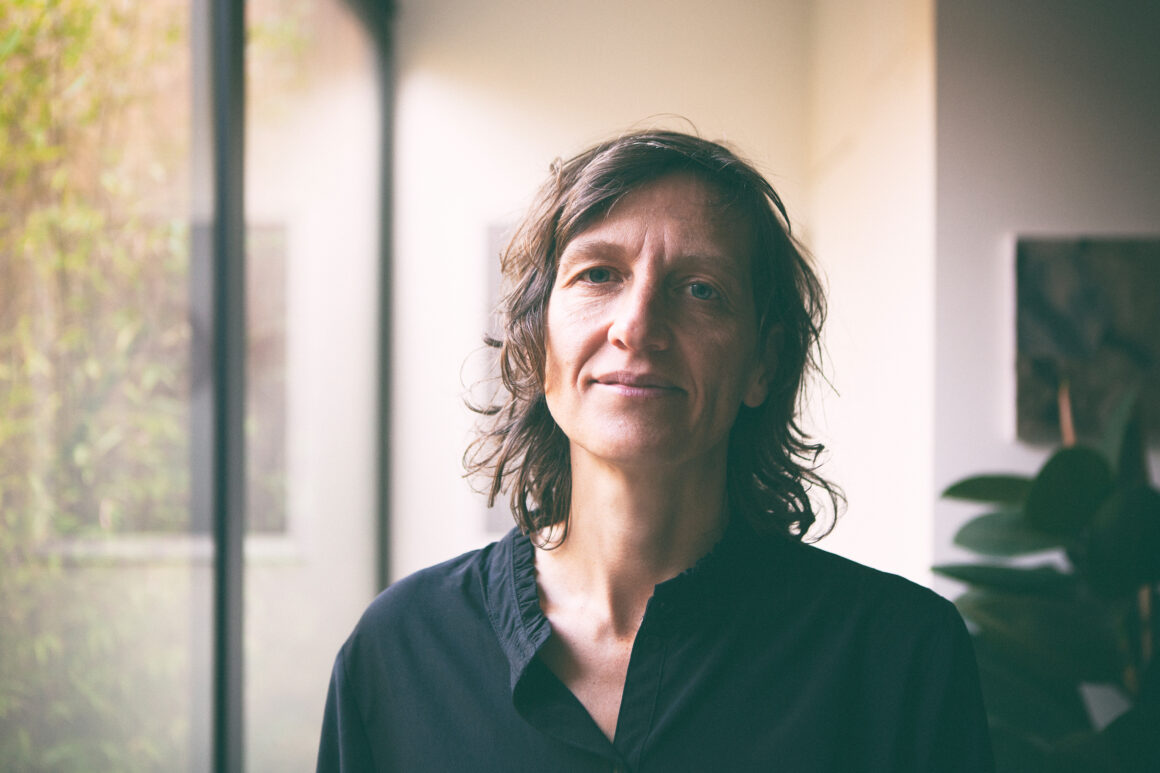
»When I make music, I have no plan,« says Willems. The result is music between electronica, ambient, sound art and experimental pop.

Warmth and tension
As when, in the track »Jeu Mikado«, the shaking of the sticks from the game of skill named in the title becomes the structuring percussion element, around which things then creak and rustle. Now and then, a child gurgles.
In many of her pieces, Willems draws on field recordings. This creates a closeness, a warmth, which in turn stands in an exciting contrast to the compositional approach, which certainly has something avant-gardist about it.
With her first solo project Inwolves, she was already releasing, from 2012 onwards, looming and yet strangely calming sounds between post-punk and atmospheric drones. With Terre Sol, she later began another series of releases, in 2020, as a four-piece band. The double LP Grichte (2022) is sonically divided in two. The first part follows on from her solo works: hypnotic drumming with percussive eruptions meets field recordings.
»If someone knocks over their glass, that changes my playing too.«
Karen Willems
In the second part, by contrast, she lays out a warm carpet of sound: jazzy, slightly psychedelic, with large images opening up throughout. In the interplay with three saxophonists, a joy in playing reveals itself that also shapes the accessible album Juju (2024). In the overflowing track »Fuzzy Williams«, for instance, after the hammered intro, a recurring, fairly weighty saxophone motif provides orientation amid the many branches that open up in just three and a half minutes.
On her current solo album Fancy Cannot Cheat (2026), by contrast, more ambient-like textures meet stumbling beats and her changeable voice.
The drums have long since ceased to be her main instrument. Alongside toys, the list of instruments includes cooking pots, a zither, synthesisers and much more. Willems explains: »I work with objects, with melodies. By now, I use my voice more often. I regard it as an additional instrument.«
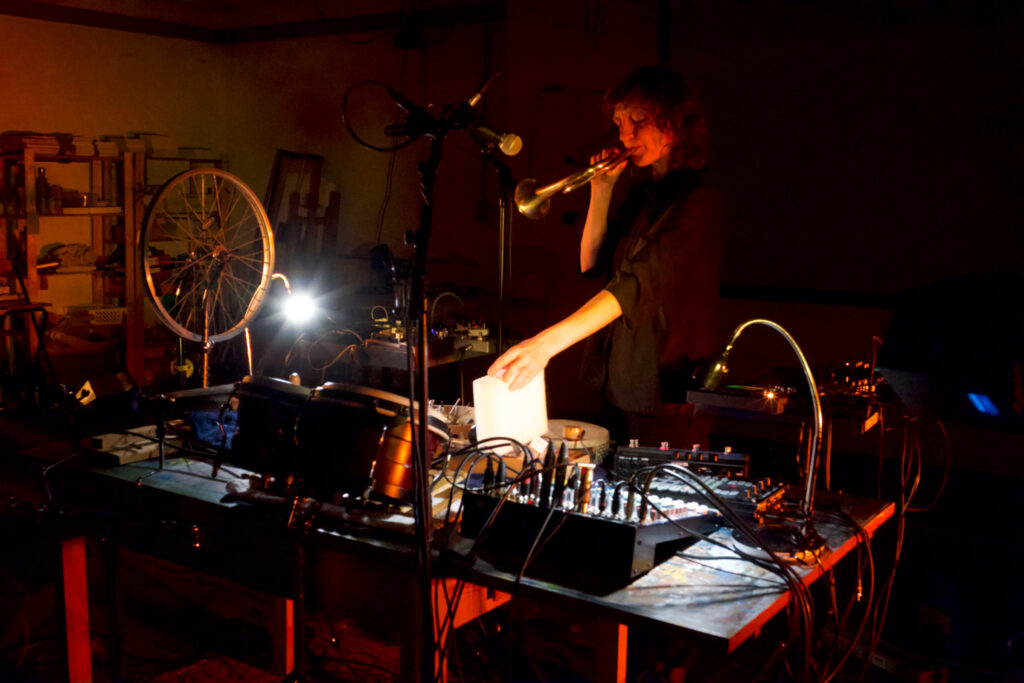
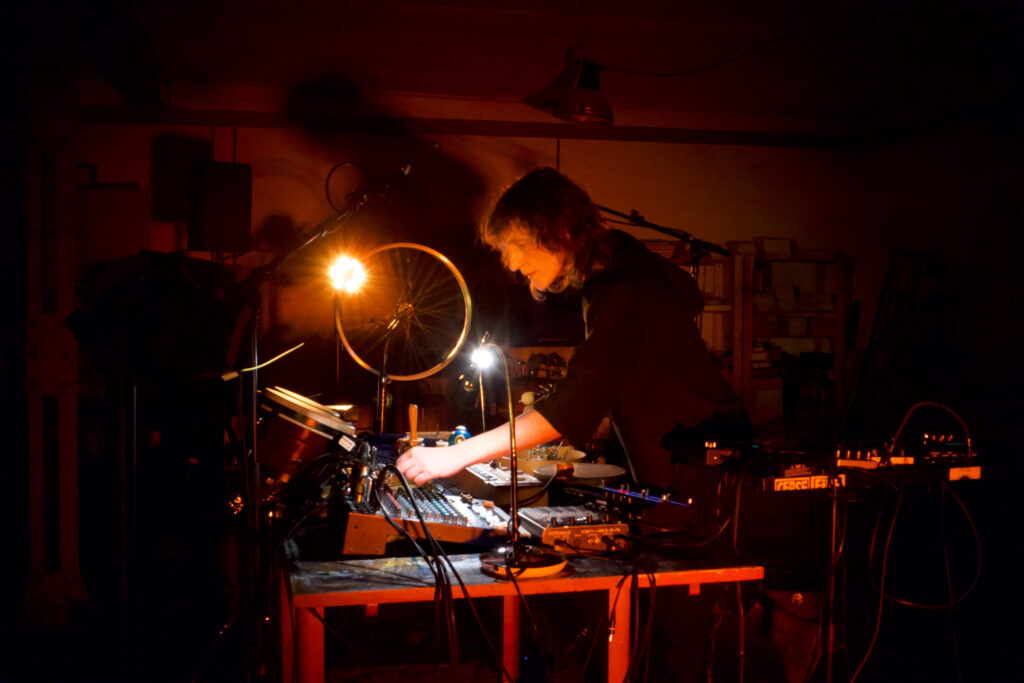
Real-time music
As a child, Willems did in fact play in a brass band in the Belgian provinces. When, in her mid-twenties, she was confined to the house for half a year after a serious accident, she decided to make music her profession. At first, she moved within the Belgian rock scene, playing, for example, with the band collective Zita Swoon. At the same time, she discovered improvised music for herself. It is these two strands of her musical socialisation that continue to shape her work to this day.
»I want people to come because my music makes them feel something – not because I fulfil any expectations of a genre. That is why I like concerts: you are so close to one another. If someone knocks over their glass, that changes my playing too.« The wonderful thing about Willems’ albums is this: that immediacy, which not least recalls real-time music, shines through on her records as well. They are full of falling glasses. And closeness.