
Jakub Juhás wrote his bachelor thesis on Throbbing Gristle and focused on works by La Monte Young and Yasunao Tone for his Master’s. Taking a glance at the catalogue of his label mappa, it is clear that he has neither abandoned the iconoclastic DIY spirit of the former nor gotten out of touch with »the concepts of infinity, radical minimalism, and glitch« that piqued his interest in the latter. Over the past decade, mappa has become a platform for anarchic sound art, elaborate field recordings, contemporary composition, and lately even a few releases that could be categorised as pop music if you squint your ears a little.
Pohreb
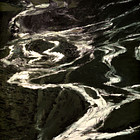
Aspect Of What
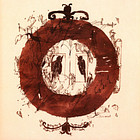
Sing Nightingale

Kleine Freuden
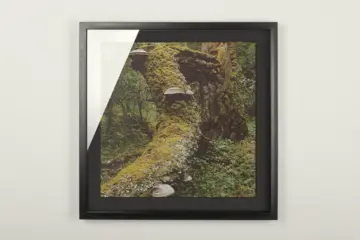
The label was started by Juhás together with his friend Zoltán Czakó in late 2015. »I was shaping out my very rose-tinted and very DIY ideas about how I wanted the label to come across to the audience, which scenes I wanted to connect, who to approach, how to fund it, and what distribution would look like,« says Juhás. »I took it seriously in the sense that I wanted to put a lot of energy into it and not just do it for one, two, or three years.« The first release came courtesy of US-American sound artist Jeph Jerman in early 2016. »34°111’3″N 111°95’4″W« was released on cassette that came with objects collected by the artist himsel
It was a programmatic release in more than one way. Firstly, Czakó’s visual design carefully updated the DIY aesthetics for the 21st century, while the album itself resonated deeply with Juhás’ interests. »I’m interested in soundscapes and environments that most people consider peripheral, on the edge, or even beyond the edge of attention,« he says. »I’m fascinated by people for whom that ›periphery‹ is the centre of the universe.« Jerman’s recordings of the sonic environment of an old windmill near his home in the Sonora Desert in Texas thus served as the perfect mission statement for mappa.
»I was shaping out my very rose-tinted and very DIY ideas about how I wanted the label to come across to the audience«.
Jakub Juhás
Field recordings such as Jerman’s continue to play a vital role in in the label’s catalogue almost a decade later. Forward-thinking artists such as Alexandra Spence, Manja Ristić and Lucie Vítková have released albums through the label, drawing heavily on environmental sounds for their releases. This reflects Juhás’ interest in what he calls »the emancipation of silence« in genres such as onkyō or lowercase as well as on labels like Wandelweiser and Another Timbre. However, Juhás emphasises that silence can take on different forms.
He cites the »porous rhythms« in the compositions of post-minimal composer Sarah Hennies and Chilean experimentalist Cristián Alvear’s work with the guitar as examples of how silence can become integral to the compositional process. »There is also the type of silence that weaves through more organic or sometimes more synthetic textures; a kind of silence which is shaped by tensions and releases of elastic sonic material,« he adds. The lush worldbuilding exercises of Andrew Oda or Kensho Nakamura put this on full display.
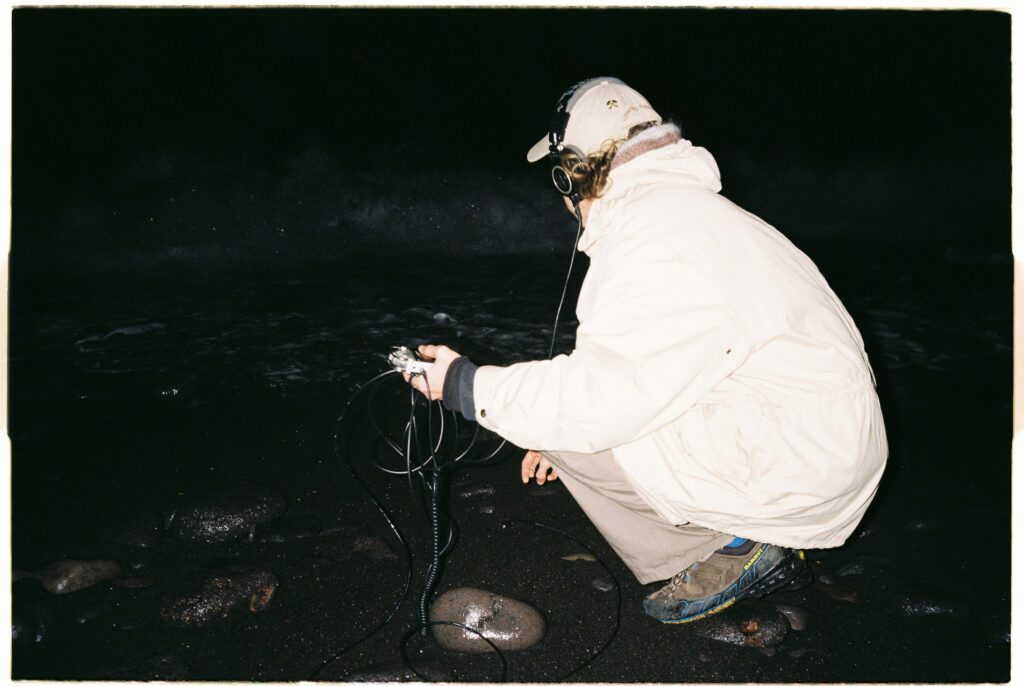
Artificial bird music, pop & politics
Over time, the stylistic palette of mappa has broadened. Whether it’s Cucina Povera’s vocal sound poetry, the post-kosmische aesthetics of Baldruin, Pfägens’ guitar dronescapes or a 32-track compilation chock-full of »Synthetic Bird Music,« mappa is musically as boundless as its decidedly international roster. Lately, Adela Mede, Plume Girl or claire rousay & Gretchen Korsmo have even opened up a dialogue with popular forms of music. »It shows that there are no clear boundaries between experimental and pop,« notes Juhás. »The world would be a sadder place if such mixing and mutual influence didn’t happen.«
The same can be said about mappa as an instrument of community-building. After Zoltán Czakó made the mutual and amicable decision to leave things to Juhás as the sole label owner, he has forged many connections within his native country Slovakia and around the world. Other labels such as Warm Winters Ltd., whose owner Adam Badí Donoval has released on mappa and has mastered a variety of releases, the Czech Skupina run by Ján Solčáni as well as Jonáš Gruska’s LOM project are close collaborators. »It’s a family that, no matter what, keeps the scene alive even in the toughest political conditions,« says Juhás.
Imprints such as these form loose constellations as platforms for artists from Eastern Europe, a region that historically has been ignored by Western audiences and the music industry. What’s more, the label cannot rely anymore on support in its home country of Slovakia, whose government under Robert Fico is becoming increasingly authoritarian and hostile towards cultural actors. »Occasionally, I was able to release Slovak artists thanks to local support from the Slovak Arts Council,« Juhás notes. »Unfortunately, this fund, like the entire cultural sector, has been systematically attacked and dismantled over the past year.«
»The world would be a sadder place if such mixing and mutual influence didn’t happen«.
Jakub Juhás
Juhás expects mappa to slow down in the near future. He has recently relocated to Portugal and will focus more extensively on his activities as a fiction writer, though of course also this is deeply intertwined with his work in music. »I’m currently working on my third book, focused on various stories from the past and future, all centered around a specific sound or sound environment,« he explains. The act of listening intently and deeply, after all, can also be understood as one of learning—a way of reading the world with your ears, something also facilitated by the output of mappa in the past ten years.
When Juhás says that he he hopes that the label’s catalogue will be received as »a fictional decolonial map that reveals unexpected connections and parallels,« much like a »sonic map« of legendary science fiction writer Ursula K. Le Guin’s »Earthsea« series, it becomes apparent just how much his label work is driven by the desire to transcend borders—sonic and musical ones as much as geographical, cultural, or social ones. »The goal of mappa is to bring attention to places often outside the spotlight whose stories deserve to be heard and told,« as he puts it. Not an easy feat, and yet this label pulls it off seemingly with ease.