What follows: a five-year-old song.
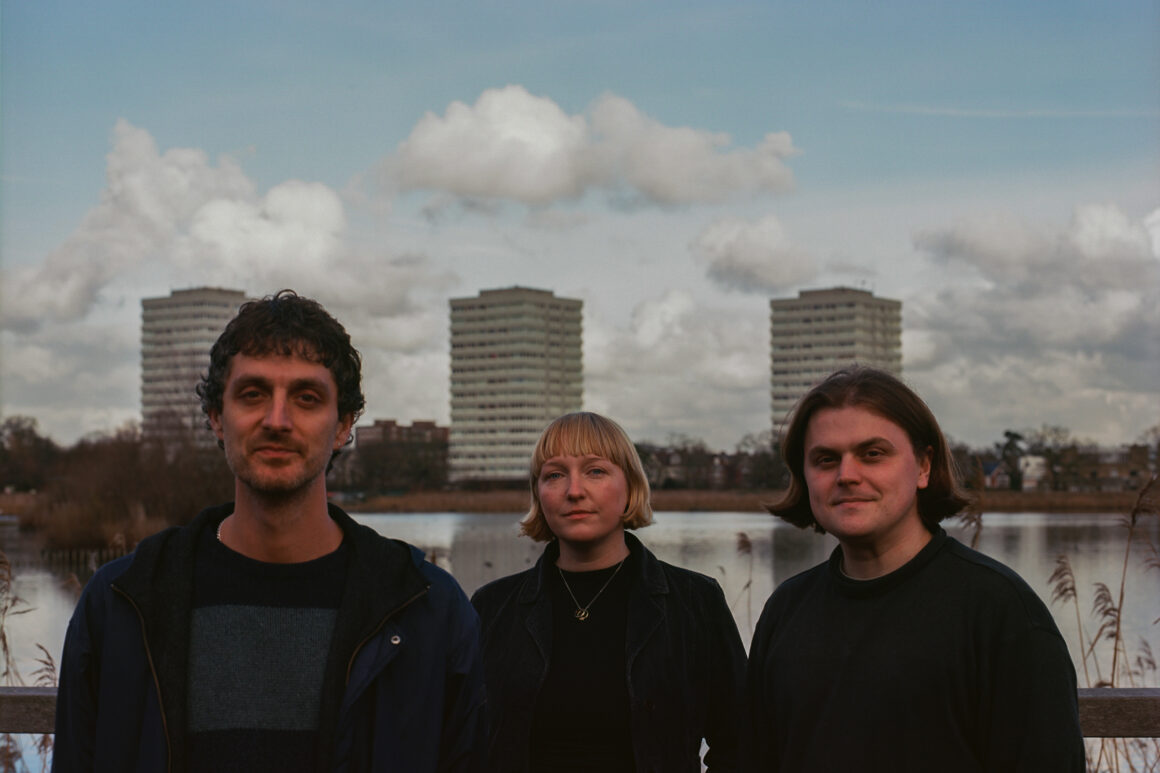
That the particular nature of a band’s music should be discussed here through »Done Before«, when that band has just released a new album, is the result of a process that had no internal logic. Roughly: retreated into music because of the inadequacy of one’s surroundings, had no plan because of the inadequacy of the self, became a music journalist, discovered Kiran Sande, ate out of Kiran Sande’s hand on principle, visited him in his record shop, was recommended Tara Clerkin Trio by him, and later, during lockdown, in wet autumn-evening light falling into the living room, experienced fullness while listening to »Done Before«.
A person’s attention. Where the gaze falls and what it actively takes up and perceives. What it gathers with that, which connections it draws between infinite, entirely arbitrary discoveries. That is, of course, actually the most banal thing in the world.
But that which is oddly specific is, in 2026, a good more valuable than one might first think.
A first quote: »The thing that makes you most real to yourself, is the thing you notice.«
It is by the writer Rachel Cusk.
One thing does not lead to another
First: nothing. A first crackle after, wait, nine seconds. After 18, an object is dragged across a surface. After 26 seconds it goes: plop. Perhaps the arrival of an arse on a stool.
And then, hesitantly, the piano playing begins. As though someone were testing the temperature of a lake with their toes and quickly realising that it, the temperature, is entirely glorious, whereupon that person, out of joy, begins very gently to flick small drops of water with their foot on to the calf of the other leg. Drops in sunlight. The fingertips begin to play with the water, ankles are wetted, stomach and neck. And then, at 1:25, the piece glides off, the swimmer dives in and immediately finds a swing.
An even piano loop like even strokes. A loop that rises like a small wave, but at the same time, barely audibly, swerves. It is at once primordial-round and wobbly. After just under two minutes, Tara Clerkin simply begins to sing. »Your eyes reflect the sky/only half the time.« From 3:18, double bass and violin arrive, oddly awkwardly, taking their time to find their place, until at some point they do thread themselves into the song that was already there. The singing then continues – and begins again at the same time. A canon emerges, and the piece coils around itself.
The death of the good unpredictability
Can AI one day make art that moves us? So far, it does not. Why? One can answer that briefly: it has no spirit. Everyone knows what is meant. But… what is meant? What is spirit supposed to be? It is easier to say what it is not. Spirit cannot be explained. Its products cannot be traced back to a coherent chain of sequences. That is why spirit cannot be reproduced.
What moves us is shot through with it. Because there is still something there. Something else, beside what can be named.
Precisely for this, the sense is increasingly being lost. The space to perceive it at all is shrinking. That of course has something to do with the timing and information density of everyday life under capitalism. But it is also, careful now, a spiritual problem. There is less and less willingness to imagine the world first as something completely undefined and to enter into open engagement with it. There is a lack of willingness to risk the undertaking of living without derivation and targeted guidance. Anyone interested in what that feels like: ask a queer friend.
World machine
Meet the young Alemannic boy, Hartmut Rosa. The sociologist has once again described this rampant condition wonderfully. In his recent book Situation und Konstellation, he describes how the Thermomix takes the personal note out of cooking, how Google Maps means one may reach the destination while remaining completely alien to the world along the way. He describes how children playing with Lego increasingly follow a blueprint rather than designing structures out of their heads. The same pattern everywhere. Judging, weighing up, erring, learning – actual engagement: it’s just not happening. One lets the system take over.
Rosa describes this as the transition from a society of action to a society of execution. Whoever executes already has the answer, or believes they do. Where no engagement with the task at hand is necessary, no friction arises. One gets through – without anything concerning one. But without friction, no resonance. And without resonance, no dialogue that sands down the spaces within one’s own thinking. This is an algorithmic society with a mechanistic worldview. Everything is an apparatus. A is followed by B. In between: nothing.
When you do not choose the finished thing, everything is only just beginning
Where was it again? Ah yes, recently in the New Yorker. There, the American author Hanif Abdurraqib wrote the following: »I want to embrace minor discomforts if doing so can make me feel slightly more alive and engaged in the world.«
In the poet May Sarton, one reads: »The first hour of the day I spend enjoying the air and watching for miracles.«
What beautiful counterproposals to machine-based life. Minor discomforts. Watching for miracles. Different things, certainly. But one thing unites them: they have a sense of the unfinished. That which does not run smoothly – and that which may not even exist yet. These are the absolute counter-movements to mere execution and the thoughtless taking note of a calculation. A then becomes whatever emerges from one’s own attentive engagement with things.
And there we are again, relieved exhalation from the audience, with music. With art as a whole, if one wants. Because somewhere in our furrowed, abandoned bodies, condemned to function, there is a living, incorruptible point that grows when friction arises.
More people are getting this again. #frictionmaxxing is what they call it.
Which brings us to a related term.
Frisson who, Frisson what?
»When that chord is not quite what we expect, it gives you a little bit of an emotional frisson.«
The music psychologist John Sloboda says that the brain hears music and, in doing so, constantly does what it simply cannot stop itself from doing: it looks for patterns. When, into the pattern one has just believed oneself to have grasped, a chord breaks in that is not quite the expected one, this small, sometimes barely perceptible emotional shiver arises. Called frisson. Minor discomforts. Miracles. The body reports: I am still here.
From ~GoodArt, one is shot out of a kind of trance in which one has internalised things as they are and taken them as whole. It knocks one’s assumptions out of the unconscious. One understands that one stands completely free before a world that has no inscribed meaning at all. It frees one from newsfeed-shit-cloggedness and reminds one, turning away from the society of execution and towards Rilke, to live with the questions again.
One does not get this reminder from 10000 Hours of Lo-Fi beats to study to. A genre that has long ceased to describe a listening habit and now describes a relationship to the world.
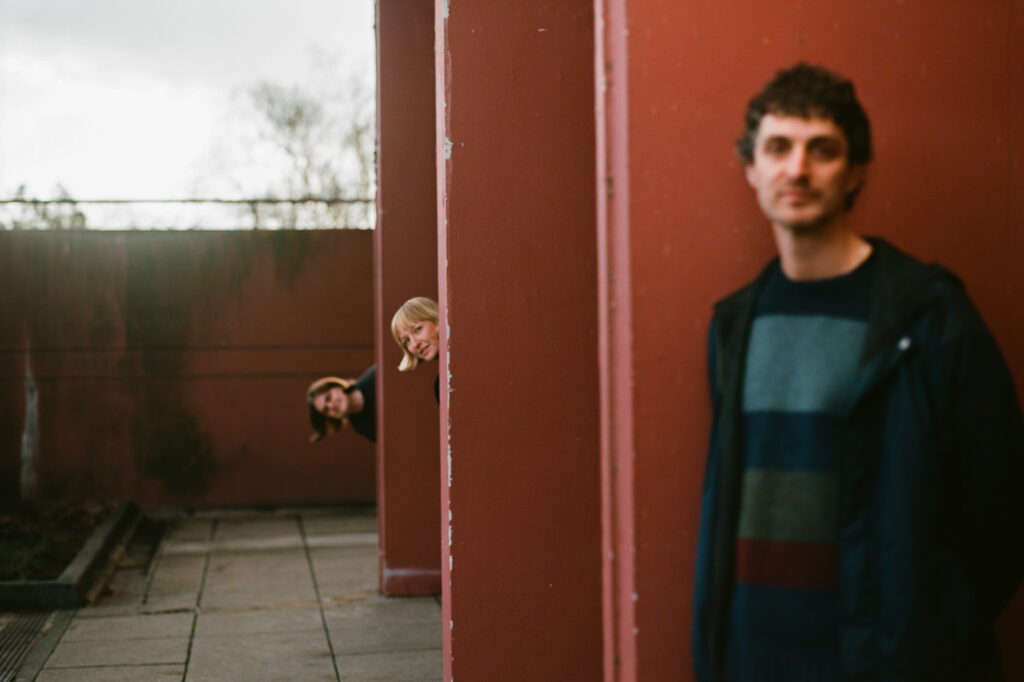
With Tara Clerkin Trio, one has this frisson constantly. And that is why their music is not simply very great, beautiful music, but a necessity. Precisely because this is not noise, free jazz or Bulgarian glottal singing. It is pop. But pop with these divine moments of irritation.
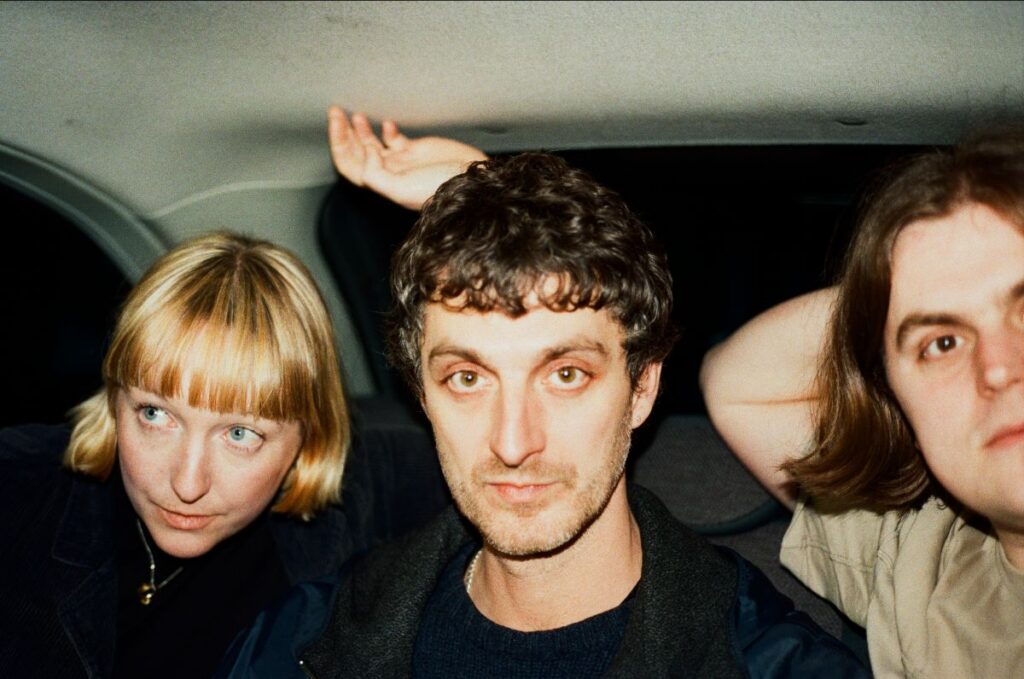
A Tara Clerkin moment
With Tara Clerkin Trio, one never thinks: logical. One thing never simply follows from another. There are always breaks.
The new album begins as though a person with no great understanding of notes or melody were trying to play Jingle Bells on an N64. Alongside it, piano playing like piles of leaves briefly whipped up by the wind beside the kerb.
Dragging your dreams down the same old streets.
On »Ups And Downs«, suddenly, Chipmunks bel canto over Twin Peaks jazz.
One might now think that this is nothing more than randomness, blowing fresh wind through the probability tree of popular culture. But that would be too cheap. The art of this music is that it sounds neither arbitrary nor comprehensible.
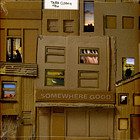
One senses there what was said at the beginning of this text about attention: this music is based on connections that three people have knotted from inspirations that are their own. You cannot fake this specificity. You cannot prompt Somewhere Good. This is not simply a juxtaposition of individual musical elements. Even if one names every single one, one has still not described the song. Because there is: something else in the pieces. Something that cannot be reconstructed at the push of a button and programmed for simple application: the funny, the great, the improbable subjectivity that always gives all things an additional layer because it cannot do otherwise.
The philosopher and Lacan-rebuffler Hélène Cixous recently said that all one had to do was read – but that this was the most difficult thing in the world. This can be extended to attention, to the reading of the world. One may assume that Tara Clerkin Trio consists of good readers of this kind.
It is as though every new choice of instrument, every entering melody, every passage unlocked a new region in the brain. One has still never been there before. It is a typical Tara Clerkin Trio moment. For a brief moment, one floats between all things, the categories dissolve, there are no questions any more – or all of them – and above all there is a very large yes to a completely unresolved situation. Before the brain once again enforces its pattern-recognition compulsion and grasps and categorises everything, one looks, on an entirely instinctive level and full of greed, into a still bright, completely open space and is filled with a feeling of… newness? It really is always only fractions of seconds, but in them it is as though one’s own experiential knowledge has, in the most glorious way, vanished, completely flown off and become irrelevant. There is no cognition either. One simply stands between two Tara Clerkin loops and knows – and knows it with the body – that the world is full of wonders.
Spiritual pop
In her podcast »Gott und die Welt«, another great boy, the »freelance POC« Wana Limar, speaks with Ahmad Milad Karimi, philosopher of religion. He drops this absolute banger: »To be spiritual means not being finished with the world. To be finished with the world means that I know how everything works. The moment I have so much knowledge – or believe I have it! – everything is clarified. Life, however, is the art of unavailability.«
Unavailability. Ah! That is the perfect counterpart to Rosa’s concept of execution. Unavailability is so not Thermomix-Google-Maps-AI-generated content.
Unavailability. That is the typical Tara Clerkin moment, that captures it even better. With every new musical decision, the band expands the map. But behind every lifted fog there appears no finality, only more sound one would never have anticipated. Every discovery stokes curiosity. You cannot have this music. You cannot take it and press a button and say: make this music again.
This is music you can only make if you lead a life of your own.
This piece was originally written in German; some quotations are translated from German-language sources rather than taken from existing English editions.