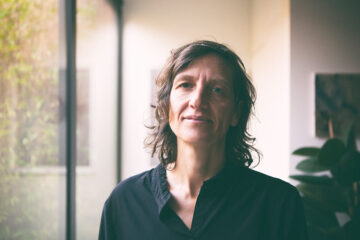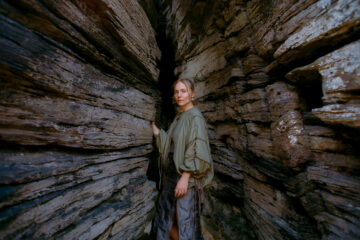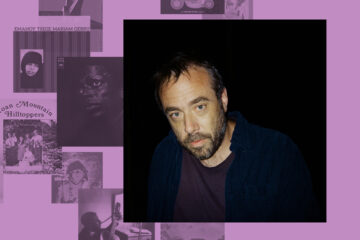
When they founded New Amsterdam in 2007, composers Judd Greenstein, Sarah Kirkland Snider, and William Brittelle wanted to do things differently and make a difference while they were at it. »When NewAm started, there was a more clearly defined sense of genre in the music world,« says Greenstein. With New Amsterdam, the trio wanted to break away from the narrow confines of genres especially within the contemporary classical music scene, and dedicate themselves to »genre fluidity« instead. As Snider puts it: »We support artists whose music doesn’t necessarily fit neatly into pre-defined aesthetic movements or the classically paradigmatic way of doing things.«
The Arch
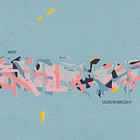
Nest Yellow Colored
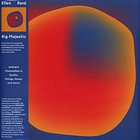
Big Majestic
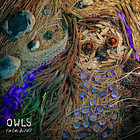
Rare Birds
Early releases included albums by and with reedist and composer Sam Sadigursky, the electro-acoustic duo itsnotyouitsme, Olga Bell, and the founders themselves—which means that jazz, ambient, art-pop, and contemporary classical music were rubbing shoulders in New Amsterdam’s catalogue from the start. This is not the only thing that made New Amsterdam stand out from the beginning. Its financial approach begs the question whether it is a label at all. Because while there exists a label that at least on paper for legal reasons is a for-profit company, New Amsterdam is also a non-profit organisation in charge of raising funds.
»We wanted to become a non-profit organisation because it was clear that having to monetise the records that we released would impact the choices we made about what to release,« says Greenstein. The label and the non-profit now work hand-in-hand to allow New Amsterdam to follow a different economic approach to releasing music. »Traditional labels function like a bank: They are loaning money to people who have to pay that money back,« explains Brittelle. However, New Amsterdam doesn’t cover recording costs and then asks artists to recoup them by sharing their revenue with the label.
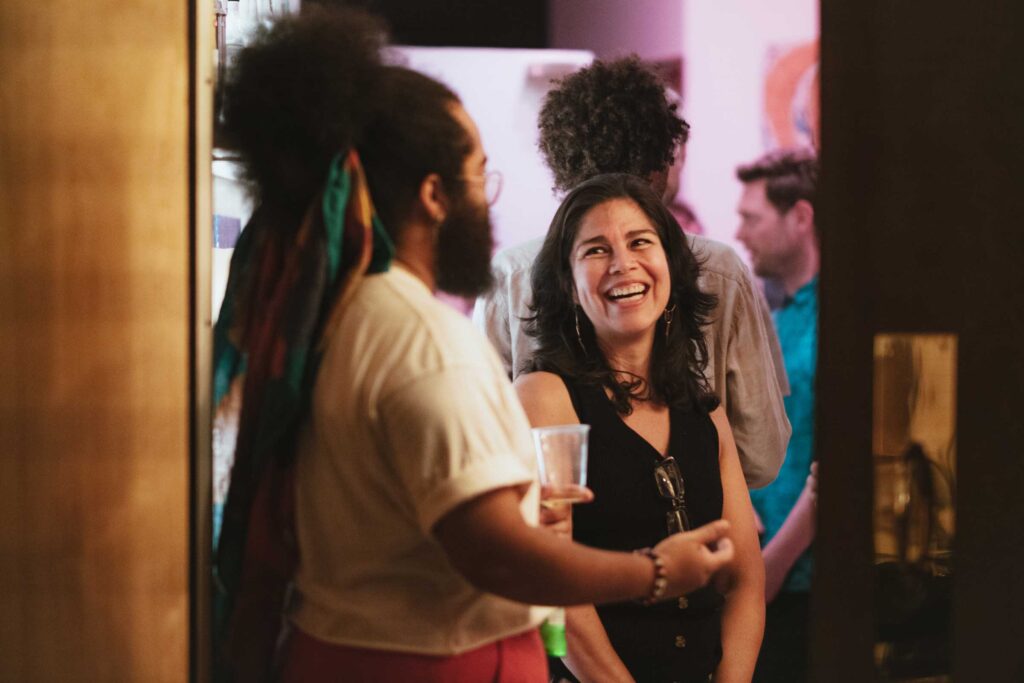
Attracting in a different way
Instead, artists produce their own records and pay the label roughly a third of administrative costs, the rest of which are raised through the non-profit. This means that artists do not have to pay back anything to the label, and in fact can get total control of their own masters. »We allow artists to retain 100% of any sales-related revenue,« confirms Snider. This is unusual, but only felt logical to the founders: »We are artists ourselves and wanted to create a label that we would feel fairly, honorably, and respectfully represented by.« Naturally, this approach as well as New Amsterdam’s open-minded musical approach have attracted a lot of forward-thinking musicians to the label.
Over the years, New Amsterdam has helped Arooj Aftab release her break-through albums Siren Islands and Vulture Prince while also providing a platform for records between the extraordinary jazz guitarist Mary Halvorson and collaborators such as multi-instrumentalist Robbie Lee or Deerhoof guitarist John Dieterich. It is where Pulitzer Prize awardee Caroline Shaw released her first albums, the beguiling 1-bit music of Tristan Perich, and a solo record by Battles’ Tyondai Braxton among many others. It also was instrumental in reintroducing the work of Julius Eastman to a wider audience through the release of Jace Clayton’s »The Julius Eastman Memory Depot.«
»In a period of immense political turmoil, artists are going to have more personal and political projects to share«.
Judd Greenstein
When New Amsterdam doubled down on this and released the inaugural record in an on-going recording series by the New York ensemble Wild Up tackling Eastman’s work, this was unusual. »We don’t normally do work that has been previously recorded, and we don’t typically do work by composers who are not part of the process in some way,« says Greenstein. »But it felt like an appropriately special moment to say: ›You know what? This is a time when New Amsterdam is doing something outside of our normal zone of operation.‹« After Clayton had critically engaged with the institutional fetishisation of Eastman as a Black and gay composer, Wild Up now lets his music speak for itself.
Other recent releases have addressed the nexus between the personal and political more outright, like Dorian Wood’s sprawling Canto de Todes or Andrew Yee’s Trans Requiem. »It is not surprising that in a period of immense political turmoil, artists are going to have more personal and political projects to share,« notes Greenstein. To ensure that the next generation of artists will have a chance to make their voices heard, New Amsterdam launched the Composer’s Lab in 2017, an annual workshop programme for new talents, who nowadays are even offered a chance to release their records through New Amsterdam essentially for free. This is something else that a traditional label would not usually do.
But perhaps it would be wrong to think about New Amsterdam as a label, and rather consider it a collective of people who want to do things differently, and make a difference while they are at it.