
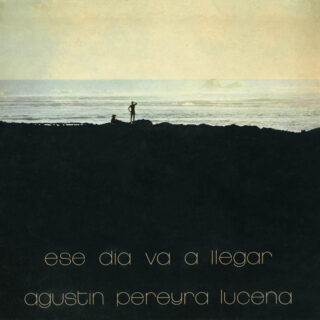
Oh, an Argentinian answer to Getz/Gilberto? Agustín Pereyra Lucena’s 1975 album Ese Dia Va a Llegar begins very much as an homage. On »Hace Pocos Años«, the guitarist yields the melody to a soft saxophone that recalls Stan Getz’s bossa nova phase. It even continues with a version of »Chica De Ipanema«. Pereyra Lucena picks out the melody with restraint, almost modestly; his improvisations show deep respect for the material, and he forbids himself any wild finger-flicking. More generally, he and his small band remain wonderfully controlled, whether on Brazilian classics or original compositions.
Tim Caspar Boehme
This EP frames, like a prologue and epilogue, Alabaster DePlume’s album A Blade Because A Blade Is Whole (2025). While the five instrumental tracks on Dear Children ..., recorded in a Brooklyn studio with bassist Shahzad Ismaily and drummer Tcheser Holme, capture the live energy of the US tour – the contemplative, crackling warmth of DePlume’s saxophone meeting a hovering drive – the three elegiac tracks on the prologue Cremisan from 2024, previously released only digitally, carry a markedly more wistful quality.
Stephanie Grimm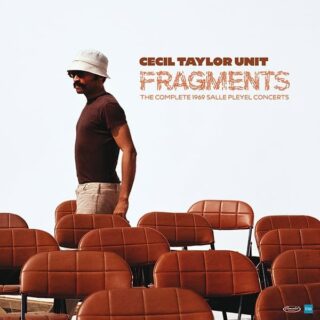
A Free Jazz monster rises from obscurity after decades. This previously unreleased live recording from the Paris Jazz Festival in 1969 presents, across three LPs, two different versions of Cecil Taylor’s monumental composition »Fragments Of A Dedication To Duke Ellington«. Pianist Cecil Taylor, saxophonists Sam Rivers and Jimmy Lyons, and drummer Andrew Cyrille combine intense, chaotic high-energy improvisation with composed structures, sounding in the process like a gigantic noise orchestra.
Albert Koch
Anyone who discovered Ethel Cain through last year’s doomy drone record may be surprised by her musical beginnings. For RSD, her mini-album Inbred, originally released in 2021, is appearing on vinyl for the first time. Across just six tracks, the range of an exceptional artist becomes more than clear. Songs moving between delicately imagined goth pop, dragging trip-hop and fogbound americana go to great lengths to tease a talent that continues to produce extraordinary music to this day.
Christopher Hunold
With his debut 1983, Flying Lotus took instrumental hip-hop to a new level: a cosmos of beats shaped by jazz, funk and soul – and it really is a cosmos. At the heart of this cluster of stars, one can already feel the pulse that would later define FlyLo’s subsequent albums and the sound of his own label, Brainfeeder. From this point on, it was no longer only about sound and rhythm; from here on, the genre also became about spirituality and the otherworldly. אולי not the Big Bang as such, but certainly a big bang for this particular approach.
Björn Bischoff
Wooden spoons on cooking pots. That is what it sounds like – and that is how it is meant to sound. Half Japanese, founded in 1974 by brothers Jad and David Fair, have always turned dilettantism into a method. Then, in 1989/90, chaos became concept. We Are They Who Ache With Amorous Love is the result – 18 songs, 25 minutes, Van Morrison covered, Little Richard covered, Daniel Johnston involved. Kurt Cobain listened to it on headphones in shopping malls – it ranked number 37 among his favourite albums. »If people could hear this music right now, they'd melt.« Now finally available on vinyl again.
Sebastian Hinz
Virgin, 1976: the label of Mike Oldfield and Tangerine Dream discovers Jamaica. With the Front Line series, it brings Jamaican artists to the British market. Crisis Time by I-Roy documents this collision: toasting as a mode of expression, voice as instrument, on equal footing with the dub rhythms beneath it. Yowls, bays, screams. An anticipation of dancehall. Fifty years later, reissued on Charly, remastered, with liner notes by reggae writer John Masouri. I-Roy died in 1999, homeless and impoverished, in Kingston.
Sebastian Hinz
Still got a Maximum Joy shirt in the wardrobe and take it out for regular walks? Then you should let yourself be seduced, quite literally, by the time- and colourless, bass-driven, slightly jazzy post-punk of Ludus and add The Seduction to your basket for this year’s RSD. Songs such as »My Cherry Is In Sherry« belong on every dancefloor on earth that likes to be supplied with sharpened guitars and driving drums. There are reasons why British no wave in the early 1980s produced essential purchases on a weekly basis. Ludus are one of them.
Christopher Hunold
No Zamrock without Ngozi Family. Guitarist Paul Ngozi and drummer/singer Chissy »Zebby« Tembo not only shaped Zambia’s independent music scene, but the sound of an entire genre. Gate Crash ’78 brings together the typically rough, distorted, ostinato guitar riffs with a polyrhythmic groove. Its extremely energetic, riff-driven guitar aesthetic in particular gives this long-forgotten album an extraordinary sonic force.
Aline Bosche
With Perfect Sound Forever from 1991, a genuine rarity returns to record shops. As a standalone EP, these seven tracks – recorded by original drummer Gary Young – are in fact being reissued for the very first time. Still a trio at that point, Pavement combine West Coast hardcore, lo-fi and DIY here, while songs such as »Debris Slide« already reveal the singular Pavement pop appeal that Malkmus, Kannberg and Young would fully articulate a short time later on their debut Slanted and Enchanted.
Martin Silbermann
For British producer Mark Pritchard, stylistic mixtures and ruptures of every kind are part of the daily routine. Under the pseudonym Troubleman, on his 2004 album Time Out of Mind he indulges his fondness for Brazilian bossa inflections and finely sampled easy-listening collages at medium and higher tempos. Sometimes with rattling breakbeats, but most beautifully on relaxed songs such as »Without You«, with guest Steve Spacek’s sandy falsetto floating over a delicately dabbed bassline.
Tim Caspar Boehme
Xmal Deutschland were among the most singular bands to shape the 4AD universe of the 1980s: a German post-punk group that suddenly found a central resonance within the British underground. The Complete Peel Sessions brings together, for the first time, their BBC recordings from 1982 to 1985. They make audible a band in rapid ascent, caught in momentary form. The sessions show just how precise and direct their shadowy sonic universe was – and why its afterglow remains palpable to this day.