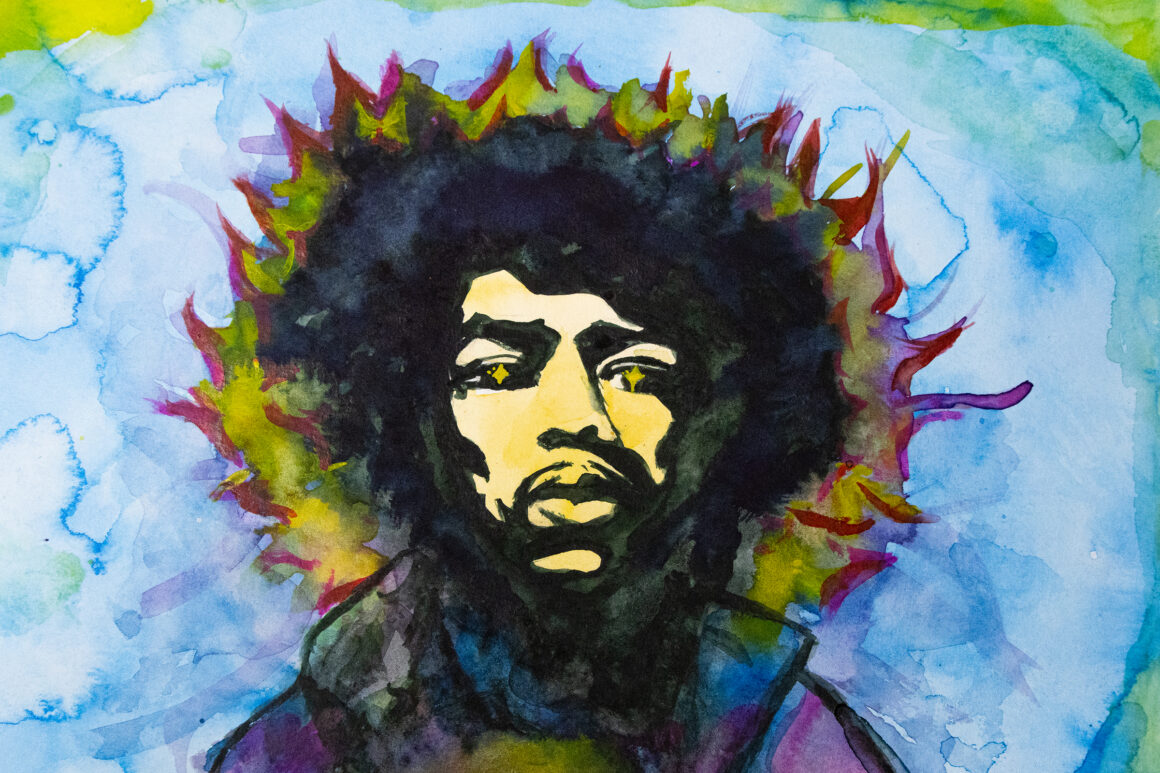
24 September, 60 years ago. Jimi Hendrix arrives in London. Aged 24 and in his native USA a nobody. In London, however, Hendrix quickly becomes a sensation. His playing and compositions, the breaks and arrangements, the showmanship, the charisma, the Afro-aura, the sheer way he did it. The way he handled – and manhandled – the guitar; he didn’t just play notes, he felt them and breathed them out, coupling chords and notes together like lovers in a wildly dishevelled king-sized bed. Intensely focused one moment, like a five-year-old who had just run away from a travelling circus a beat later.
Less than four years later, on 18 September 1970, Hendrix’s body – by then, in all likelihood, barely alive – is transferred from the Samarkand Hotel to St. Mary Abbots Hospital; there, following resuscitation efforts, the attending emergency physician pronounces the American dead at 12:45 p.m. So much for what sounds like facts.
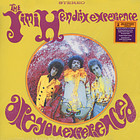
Are You Experienced
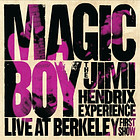
Magic Boy: The Jimi Hendrix Experience Live At Berkeley First Show
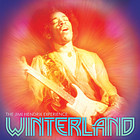
Winterland
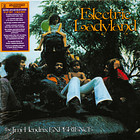
Electric Ladyland 50th Anniversary Deluxe Edition
Cool and exciting
Data is, after all, highly valuable. The figures are interesting, too. Even if the phenomenon of Jimi Hendrix is captured least of all that way: through the measurable. According to US record sales (RIAA figures), the three studio albums he recorded during his lifetime sold a combined 10 million copies; by comparison, Thriller alone is listed at 34 million, Hotel California at 28 million, Back in Black at 27 million, Led Zeppelin IV at 24 million, and The Wall at 23 million. Hendrix did not attain his status as a legend because of the numbers.
Back to 1966. As a trio, the newly formed Cream gave the blues – imported from the USA – a rockier edge and, much like jazz, made it more sophisticated. Almost refined. The eras of Elvis, Beat and Pop had been defined by 7-inch singles – ephemeral stuff meant for whistling along to and then forgetting. Then came the LP. The Beatles’ Revolver shattered the career moulds of the old guard. Even television was no longer black-and-white; Star Trek took off, and Jane Fonda moved on, zooming into the year 40,000 in Barbarella alongside Stones muse Anita Pallenberg and Marcel Marceau. The future – everything yet to come – still felt cool, exciting and full of possibility. With the public’s sensibilities heightened, the Beatles released Sgt. Pepper in 1967, complete with a gatefold sleeve. The album as a Gesamtkunstwerk – a total work of art. It was like a red carpet rolled out for Hendrix’s debut, Are You Experienced? The album was released in May 1967.
Less than a year after his arrival in London, then. Just days after landing, he was still jamming in clubs; then he was opening for Cream, followed by dates in France and at the Big Apple discotheque in Munich. By Whitsun, he was headlining in Berlin. The cost of admission? Six Deutsche Marks – the price of three packs of cigarettes – if bought in advance.
»One-off special guest appearance: Jimmy Hendrix with The Experience from London.« According to an eyewitness – a graduate of the Jack Kerouac School of Disembodied Poetics – several concertgoers wandered off into the Hasenheide park, just a short walk from the Club Neue Welt; among them was the cult author of the ’68 generation, Bernward Vesper, accompanied by his partner Gudrun Ensslin. They wandered for days.
The beginning of the spectacle
By now, Hendrix was performing essentially non-stop, including in the US, including with The Who, in a package tour with Cat Stevens, playing around 400 shows, sometimes even two gigs a day. At the same time, Hendrix’s trio continued recording in the studio. He used portable equipment – including a portable record player that allowed him to play the title track of the Beatles’ groundbreaking album just three days after its release. His playing technique was constantly evolving, as was the technology accompanying this mass phenomenon. Early on, he was seen placing WEM PA speakers on stage; he ordered the Marshall stacks – now the industry standard in heavy metal – from Jim Marshall, the former teacher of Experience drummer Mitch Mitchell.
All this – music brimming with energy, noise and nuanced, spine-tingling moments – took place before ever-growing audiences. The performances were explosive and fiery during the finale at Monterey Pop (the first baby of the Summer of Love), yet more poised and culminating in an overwhelming climax at Woodstock, where Hendrix appeared as the headline act. For 500,000, the audience sound system at Woodstock was professionalised to an incredible degree. Around 10,000 to 12,000 watts distributed across 16 speaker towers, with the speakers aimed separately at fans close by and those further away. The man responsible was the same one who had been at the mixing desk at the Newport Jazz Festival when the faithful booed Bob Dylan for switching to the electric guitar. Small world.


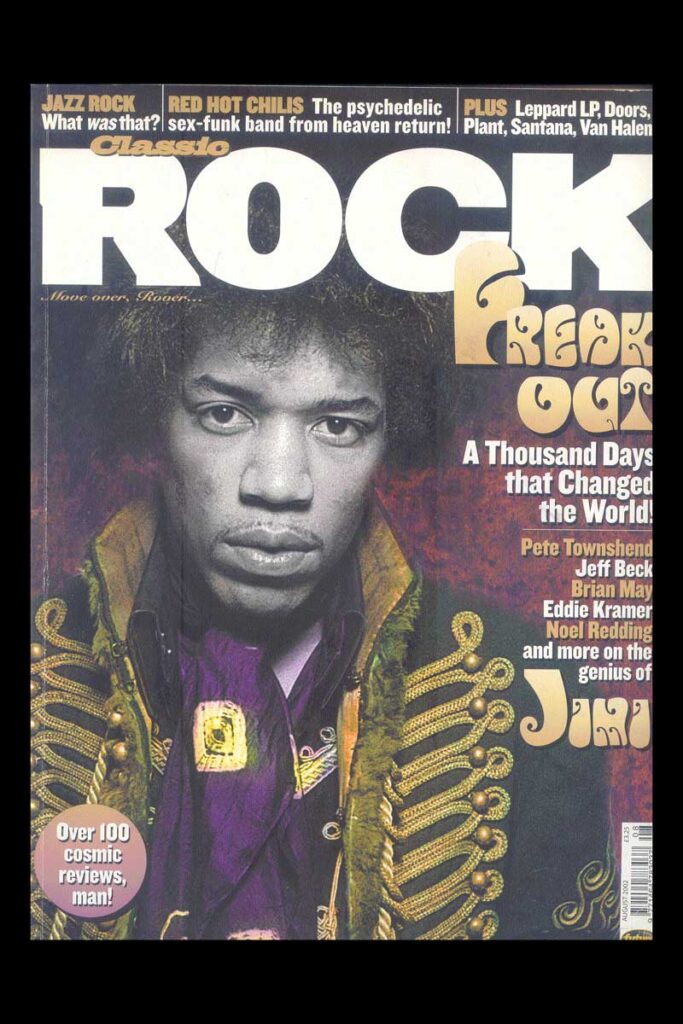
In retrospect, this served as the blueprint for mega-spectacle events – marking the transition from the Beat era to big business, particularly involving solo artists who were easier to manage than bands.
And Hendrix himself, amid all that? A charming conversationalist – shy, yet charismatic. A bundle of contradictions. Like the ultra-explosive sonic assaults next to arrangements as fluid as a running stream. Moreover, he was clearly an intense listener who analysed and immediately adopted whatever was worth keeping, refining it all and cranking up the volume and electrification – as anyone who ever played guitar with him discovered during conversation. Joni Mitchell, Frank Zappa, Bob Dylan, the Beatles and Pete Townshend expressed similar views. Quick on the uptake, with polyamorous listening habits. Fully present. Amps and tech, effects and astral theories – he dove into it all headfirst.
At that time, no musician earned as much as Hendrix, not a single band, not even Dylan or Elvis. Up to four managers at a time would siphon off or embezzle the cash. Hendrix was courted by opportunists and moths of the night, know-it-alls and leeches.
The guitar was already on fire anyway
Shortly after the 56th anniversary of his death – 18 September – someone commented on YouTube: »Just totally amazeing he died in 1970 and produced over 170 songs in his short life and here we are in 2026 and Jimmy still remains untouchable. His works and his skills were a real masterpiece.. but he left this world loved and his workings were well protected. He knew of his short comeings so this is why he strung his guitar strings up side down on purpose .so long after he left this world no one could play or copy… play his music. Ever not for note it will never happen r.i.p James marshal Hendrix your were a verry talented man.«
In 1970, it was put differently. Tony Palmer, in Electric Revolution, wrote: »Jimi Hendrix played his 240-volt guitar with his teeth, behind his back, or under his leg. Depending on his mood, he would smash it to pieces or set it on fire.« Right, a truly iconographic moment in the history of rock-as-pop: the white Stratocaster in flames – and, after the Monterey finale, reason for audiences and gawpers to wait for just that: when would he play the strings with his tongue, when would he smash the axe, or would they get to see him set it alight? A parade of stunts that distracted from the music itself. Frustration.
That said, let’s briefly recap: He burned his fingers at the London Astoria (March 31, 1967), torched »Wild Thing« at Monterey (June 18, 1967), and the remains of a Stratocaster set ablaze at the Miami Pop Festival (May 19, 1968) eventually ended up with Frank Zappa.
But the thing was, he was such a bitching guitar player that… that was enough. That was enough. And the other thing was distracting from that.
Lou Reed
»He played around the clock, you know,« recalled Lou Reed, whose own career with the Velvet Underground – same time, same place, Greenwich Village – got a boost via Andy Warhol. »His music, to me, was entertaining, as was his stage act for that matter. But the thing was, he was such a bitching guitar player that… that was enough. That was enough. And the other thing was distracting from that, and I think he realised that, too, and he wanted to get out of that and wanted people to just listen to the music. There is no end to what he could have done. But the situation he was placed in… you know, through either his record company, the management, the promoters, the publicity men, all those guys you have to deal with. Guys who’d say, ‘Hey Jimi, we got a tour, and you have to be here, there, here, there, and over there too; x number of people aren’t coming in, and you’d better do this and that; your bank balance is dropping to X; you want to build and run the Electric Ladyland studio… maybe that won’t work out.’ So I think, he had all these pressures on him.«
Not nearly burnt out yet
What remains are those four years – punctuated by distances, border crossings, and the kind of stress that makes you quickly lose track of where or why you’re waking up. Is it tomorrow, or just the end of time? What remains are three officially sanctioned studio albums featuring tapes running backwards, cartoon-like intros and – generally far too underrated – incredibly moving lyrics. The essential point: translating synaesthesia, comics or science fiction novels into music. Moods. Violet fog as a state of mind, and an audible attitude.
The end was unnecessary. There were plans involving Miles Davis; he was toying with the music of Handel, Bach, and the March from Tchaikovsky’s Nutcracker. He wanted to devote himself entirely to recording at his studio, Electric Ladyland – much like the Beatles did after 1966. There was still so much left to do, so much left that one might have done. Instead, others grew very rich after his death, without him there to object.
Early obituaries claimed he died at twenty-four. Others speculated he must have been burnt out — exhausted by the drugs, the excess, the success, the women, and the sleepless nights. John Mayall characterized the death as an unintentional overdose.² The verdict that stuck was: »suffocated on vomit after taking nine sleeping pills… whether by suicide or accident« (Der Spiegel 31/1974). The aftermath was truly ghastly. Deranged individuals spun grotesque theories. Eric Burdon, who jammed with Hendrix at Ronnie Scott’s Jazz Club on his final night: »He was always spirit-like, ghost-like, never letting anyone get close to him. He was just touching life – that was his secret of living – he never grabbed at anything.«
¹ Tony Palmer: electric revolution. Die Inside Story der Pop-Stars, translated from English by Klaus Budzinski. Verlag Bärmeier & Nikel, Frankfurt/Main.
² »Accidental Suicide« on John Mayall: Back to The Roots, Polydor 1971.