
The voice of pop’s great hope in 2011 is an outrage: all drawl and nasal complaint. A fragile whimper that pushes up dully through a densely knotted carpet of beats, twisting and turning its way out of technology’s chokehold, splitting itself apart and finally accompanying itself. Seemingly awkward, the singing balances on the displaced beat between inhuman robotic sounds and heart-warming falsetto. This metallic-sounding instrument belongs to the Briton James Blake, who, at just 22 years old, with a classical piano training and studies at London’s Goldsmiths College of Art behind him, was last year anointed by magazines and blogs alike as the saviour of electronic pop. With his self-titled album, he now shows impressively why.
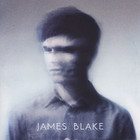
James Blake
Young lad, very British
Blake is a young lad, very much the very-British type: stocky, head shyly tucked between his shoulders, reddish tousled hair, pale skin – almost a little inconspicuous. The sort of person, one might think, who does not have many friends. A tinkerer, a nerd, an oddball. Or perhaps simply an ambitious loner, blessed in equal measure with musical self-possession and a hypnotic voice. For it is precisely through this perfect symbiosis of playful detail, the courage to leave meaningful gaps in the music, and the understated presence of his modified vocals that James Blake has given electronic music a voice and, once again, a face to a scene that has always flirted with anonymity.
They all strip dubstep of either its overthought quality or its commercialised character and furnish it with their own open-minded attitude.
Blake is also the standard-bearer of a genre that crystallised over the past year out of dubstep’s fraying consensus – Blake makes post-dubstep. It is a term used to describe the eclectic mode of a young generation of producers and DJs such as James Blake, Mount Kimbie, Pariah or Jamie xx, member of the British supergroup The xx. All of them strip dubstep of either its overthought quality or its commercialised character and furnish it with their own open-minded attitude. Basslines in the tonal colour of a sawmill, syncopated beat scaffolds – all these typical features are now only faintly discernible as a discreet frame of reference.
The yin and yang of wobble madness
James Blake paved his way onto the hype lists with three EP releases. While the Klavierwerke EP paid homage more to classical piano schooling, CMYK and The Bells Sketch offered a neatly compiled status report on Blake’s formation between classic garage, chart-proven R’n’B and atmospheric dubstep. Here he clipped and twisted sampled vocal fragments beyond recognition; there he placed minor chords precisely on the beat.
So personal and honest has the voice in electronic music rarely sounded.
Blake pursues the fusion of these detail-driven approaches on his debut as well. The opener »Unluck« already sets out the route. Asynchronous sound bits in a muffled timbre stand in for the snare, with stumbling synths held in check only by clattering hi-hats. What reads on paper like pure dissonance sounds on record as natural as can be. No beat is predictable, no note where it ought to be. The playful glitch of »I Never Learnt To Share« screws itself deeper into the ear with every passing second and mutates into shimmering wobble madness. The music resembles an ever-faster whirlpool of beats and sounds, which James Blake skilfully constructs around his voice and sometimes even loses himself within – or, as in »The Wilhelm Scream«, is simply overwhelmed by them. It is hardly surprising that, with his own distinct approach, James Blake is well on his way to securing a lasting place in the musical cosmos as a point of reference. It is the more and the less. The everything and the nothing. Blake gives the music its space. It is able to develop.
Wonderful shivers
Of course, electronic music has always been capable of stirring emotion – but in music conceived for dancing in clubs, a tendency towards euphoria and towards a major-key thread has never been easy to deny. If James Blake now gives this music a melancholic twist and in doing so strikes such a nerve, that is something special. The best example is surely the first single, »Limit To Your Love«. It is a refined cover of Feist’s song of the same name: soulful vocals reduced to the bare minimum, beautifully dusky sub-bass, breathed piano chords and a substantial amount of silence.
Freilich: Elektronische Musik hat schon immer auch emotionalisiert – aber der Hang zum euphorischen und dem roten Faden in Form einer Dur-Färbung war bei einer für den Tanz im Club konzeptionierten Musik nie von der Hand zu weisen. Wenn James Blake dieser Musik nun einen melancholischen Dreh gibt und damit so den Nerv der Zeit trifft, dann ist das schon besonders. Das beste Beispiel hierfür ist mit Sicherheit die erste Single »Limit To Your Love«. Sie ist eine raffinierte Cover-Version des gleichnamigen Stücks von Feist: Soulige, auf das Nötigste reduzierte, Vocals, herrlich schummernde Subbässe, hingehauchte Klavierakkorde und eine gehörige Portion Stille.
On his debut, Blake asks, »Give me my month.« Why so modest? If we are honest, it may well become his year.
Here he does not sound quite as unconventional as he does on the rest of the album. It is a Trojan horse that Blake has saddled there – consciously or unconsciously, mind you. Leslie Feist’s refined songwriting qualities are paired with Blake’s own, and in some ways generally valid, musical zeitgeist of 2011. With something like that, one reaches more than just the people who bought the 500-copy pressing of his first EP. The consistent three-step path from Forkcast secret tip, through endorsement by the feuilletons, to becoming the broadest common denominator of the first quarter – one on which everyone except Der Spiegel could agree – was therefore only a matter of time.
Kid x
And yet, even if Blake must occasionally endure the charge of being a consensus artist, it remains astonishing how fully this 22-year-old oddball, with a laptop, effects units and – admittedly – enormous musical understanding, has hit the pulse of the moment so precisely that comparisons with watershed pop moments such as Radiohead’s Kid A or The xx’s xx are not far-fetched, but rather coherent and understandable. James Blake enacts the dehumanisation and simultaneous multiplication of his personalities into one larger whole – always accompanied by a sense of apparent detachment and yet complete awareness. James Blake articulates what many only feel dimly and manages to give sound to the unspoken. Of course, this is often vague and provisional, superficial and unconsidered.
Related reviews

But it is precisely this divergence that underpins the bold assumption made by the music press: that James Blake is the first singer-songwriter of the still-young digital natives. For he succeeds in capturing a particular kind of indecision while at the same time leaving it beautifully undefined. An almost irrefutable analogy for the characteristics of the twenty-somethings. His songs are not acts of self-location, but merely tendencies. At no point does his voice seem firmly anchored; rather, it feels its way forward cautiously and keeps every possibility open. The ease with which he has delivered such a dense and self-possessed album at this age is almost unsettling. On his debut, Blake asks, »Give me my month.« Why so modest? If we are honest, it may well become his year.