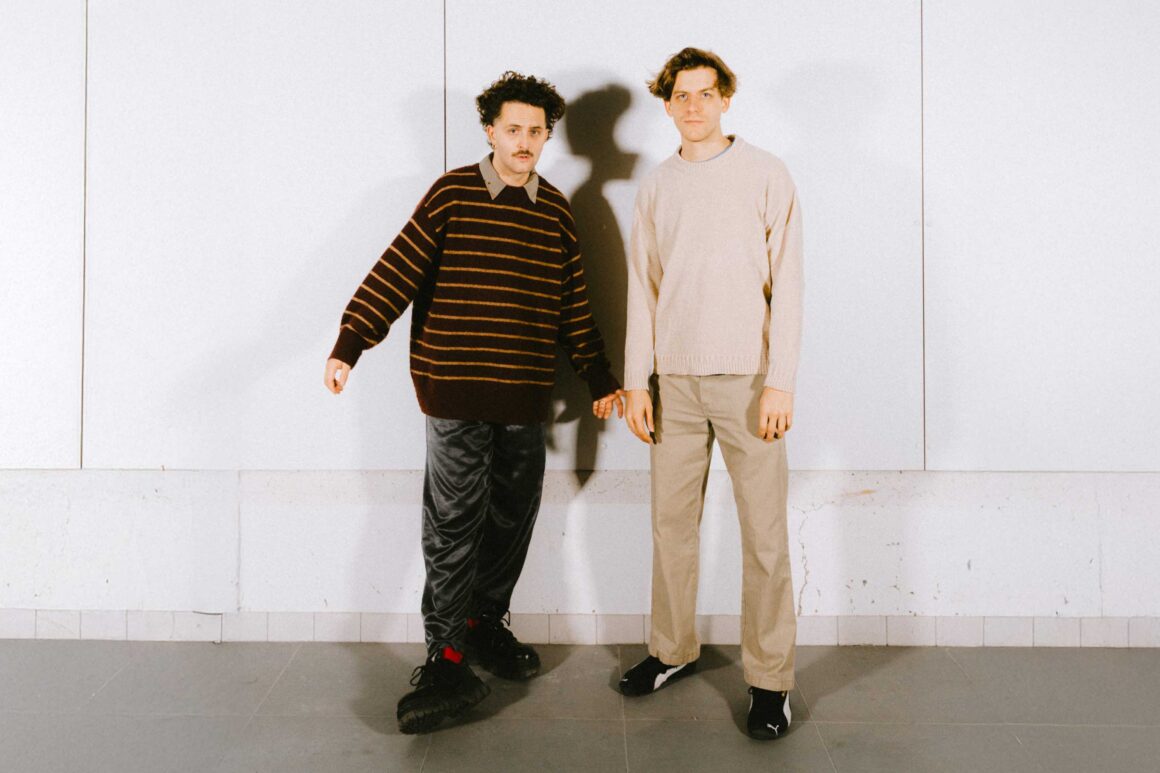
Belgium has chips, chocolate, surrealism and now this: a duo who studied jazz but are now tearing it apart and blending it with trance, hyperpop and musique concrète.
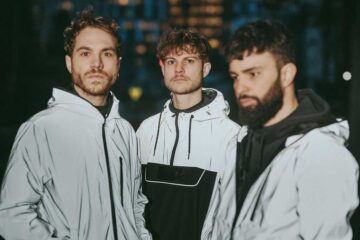
schntzl consists of two: Hendrik Lasure (piano, electronics) and Casper Van De Velde (drums, electronics). Both are deeply rooted in the Belgian jazz scene. Both have been busy for years shaking up the entire scene. What schntzl do can best be described as follows: a dismantling of established norms with a pronounced penchant for kitsch.
Kitsch and avant-garde, Dadaism and euphoria – and yes, even Belgian ’90s noise. At schntzl, this ›art and bric-a-brac‹ approach is simply part of the method.
Trance jazz
The origins, of course, still lie in jazz. Early albums and EPs draw on chamber music. A love of vintage synthesisers gives rise to poetic miniatures. Philip Glass is surely lurking somewhere in there, GoGo Penguin perhaps, Pierre Bastien most certainly.
schntzl’s self-titled debut album from 2016 received praise far beyond the world of classical jazz: the Flemish youth radio station StuBru played their single »Dame en Konijn«, and the Flemish Minister for Culture called schntzl the best band he had ever seen live.
On their third album, Holiday, released in 2023, the duo left their claustrophobic jazz framework behind, taking everyone by surprise – or at least DJs such as Lefto, Brussels’ Park radio station Kiosk Radio and the Schiev Festival. Holiday, some thought, was a sort of farewell letter to acoustic music, complete with pretty smudges and wet ink. Yet Lasure and Van De Velde had only just bought the fountain pen.
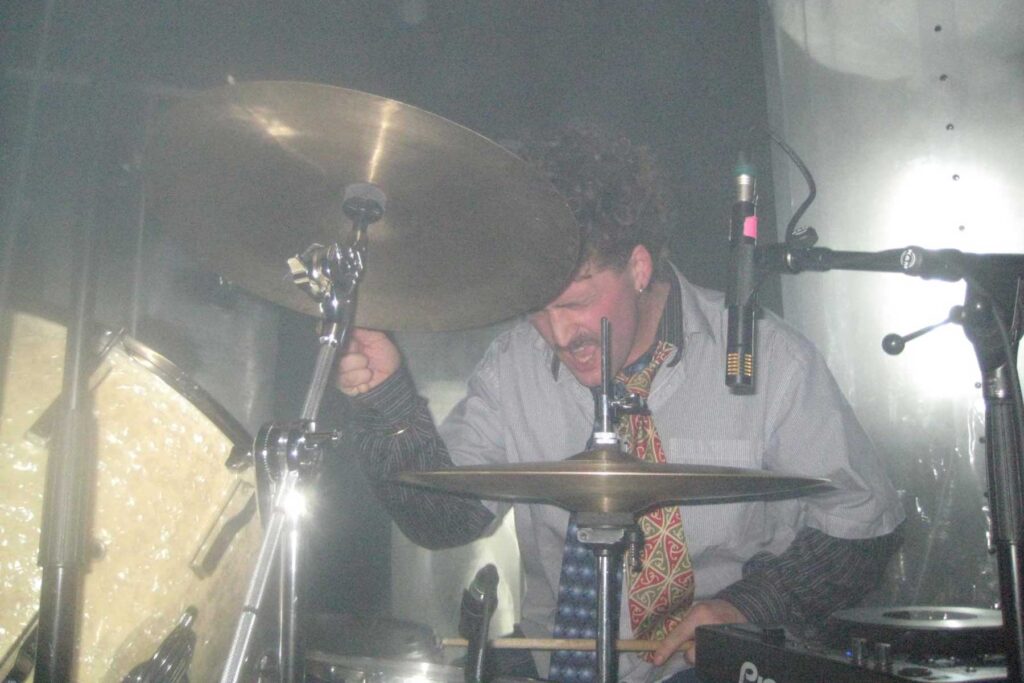
The Flemish Minister for Culture described schntzl as the best band he had ever seen live.
The sound: more sampling and digital sounds, big nineties-style synthesisers, whilst the drums are meant to sound rough. The common thread is their shared style of playing, their handling of rhythm in a constant push-and-pull, a few steps off the grid. And then, almost in passing, this brilliant line from Lasure: »We have a big appetite for kitsch and big emotions«.
Their new album Fata Morgana therefore feels like a dream within a high-resolution video game, full of simulated loopholes. Trance – not in the sense of a trip to India, but rather as a romanticised vision of what partying was like in the 90s – clashes with heavy distortion and live improvisation at CERN-speed.
Flood the zone with Kitsch
The points of reference that Schntzl cites in interviews: Still House Plants, Astrid Sonne and Hudson Mohawke on the drum and bass side; Oneohtrix Point Never, A. G. Cook, Hannah Diamond and Giant Claw on the electronic side. This is the coordinate system that indicates which corner of the room Schntzl is currently standing in.
Yet they’re not actually standing still. They’re constantly on the move. One moment in Brussels’ Royal Park, then at the Eurosonic Noorderslag festival. In between, a tour of Japan. Then again: an immersive 360-degree performance at the Wintercircus in Ghent. Career path: exploring new horizons.
What schntzl ultimately are: two musicians who take kitsch seriously, because they know that traditional seriousness on its own has never been interesting. schntzl have thus become a two-person orchestra that floods the jazz club with Belgian beer, because: why not? That’s consistency. Or simply the persistence to keep throwing everything you can against the wall, time and time again. Just to see what sticks.