Metal remains the music world’s largest niche. Metallica might be millionaires and an Iron Maiden shirt doesn’t raise any eyebrows like it did during the Satanic Panic. However, mainstream acceptance does not equal mainstream adoption: From nu metal to Deafheaven or Sleep Token, truly successful metal bands have always needed to compromise in order to reach a wider audience. Death metal is famously uncompromising, and yet it draws a lot of attention to itself—or rather, more precisely, two distinct versions of it.
This development is surprising because death metal has been mostly stagnant for the past decades. The genre was born in the mid-1980s from a variety of influences, and San Francisco band Possessed is usually credited with paving the way for it with 1985’s Seven Churches before Tampa group Death’s Scream Bloody Gore defined its sound and aesthetic: Faster, harder, bloodier than any other metal style; obsessed with violence and, well, gore. Death metal spread from Florida to Sweden and Finland, and soon the rest of the world. Up until 1993, the genre flourished and diversified.
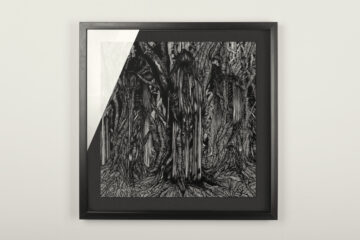
Hideous Aftermath White / Black Marbled Vinyl Edition
Retrodeath Recycledrandom Colored Vinyl Edition
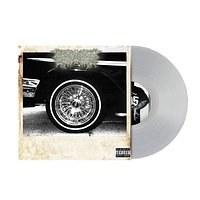
Peelingflesh
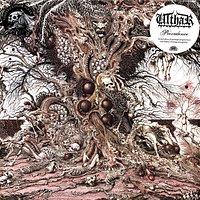
Providence Baby Pink/ Black Merge Vinyl Edition
However, in the following years it was increasingly faced with a familiar conundrum: Once a genre is fully defined, breaking with established traditions means breaking away from it. Death metal became more notorious for influencing controversial styles like deathcore or djent than it did for innovating. Today, swathes of bands indulge in the endless regurgitation of early-1990s musical and aesthetic parameters under the banner of old-school death metal. The genre may offer more than down-tuned guitars, hyperspeed-drumming, and »cookie monster« vocals, but even for some die-hard fans that is all there is to it.
But after years of leading a—fittingly—zombie-like existence, two almost diametrically-opposed interpretations of death metal have started to attract new audiences. Hardcore-influenced, gore-obsessed slam groups like Sanguisugabogg, Bonginator, Peeling Flesh or 200 Stab Wounds are having a moment, while more sophisticated bands like Tomb Mold and Blood Incantation appeal to Pitchfork readers and Fantano viewers. But why?
From Shock Value to Comedic Currency
Concerned parents had spent most of the 1980s listening to heavy metal records backwards in order to unveil the music’s hidden immoral messages. When death metal emerged, this became unnecessary: Death’s Scream Bloody Gore was essentially a work of B-movie slasher fanfiction, while groups like Deicide didn’t keep mum about their embrace of Satanism. But the more bands adapted these themes, the less shocking they seemed. Death metal became quite literally generic and, sometimes, plain silly.
Nothing better represents the transformation of shock value into comedic currency than Cannibal Corpse’s brief cameo in Jim Carrey’s 1994 comedy Ace Ventura. If a genre’s most popular band is used as a punchline by a silly blockbuster comedy, it is not controversial anymore, but in crisis. Death metal never fully grappled with this, only occasionally dabbling in self-parody. Bands like the weed-themed Cannabis Corpse doubled down on death metal having become a joke. And then came Sanguisugabogg.
From the start, the band from Ohio reproduced the genre’s clichés while greatly exaggerating them. The name—obviously presented as an especially illegible logo—is a compound of the Latin word for »leech« and the British slang term for »toilet« and hence still follows the death metal formula »something disgusting + something death-related« that gave birth to interchangeable band names like Coffin Rot and Tomb Mold. However, Sanguisugabogg not only mimic death metal tropes, but also treat them as memes.
The New Neanderthals
While myriads of young old-school death metal bands faithfully recreate the sound, feel, and look of bygone eras, bands like Sanguisugabogg represent an approach that Timotheus Vermeulen and Robin van den Akker, in a 2010 essay, dubbed »metamodern.« According to them, metamodernism »oscillates between a modern enthusiasm and a postmodern irony, […], purity and ambiguity.« Sanguisugabogg and others are driven by a sincere love for the genre and its generic parameters, but engage ironically with its contents.
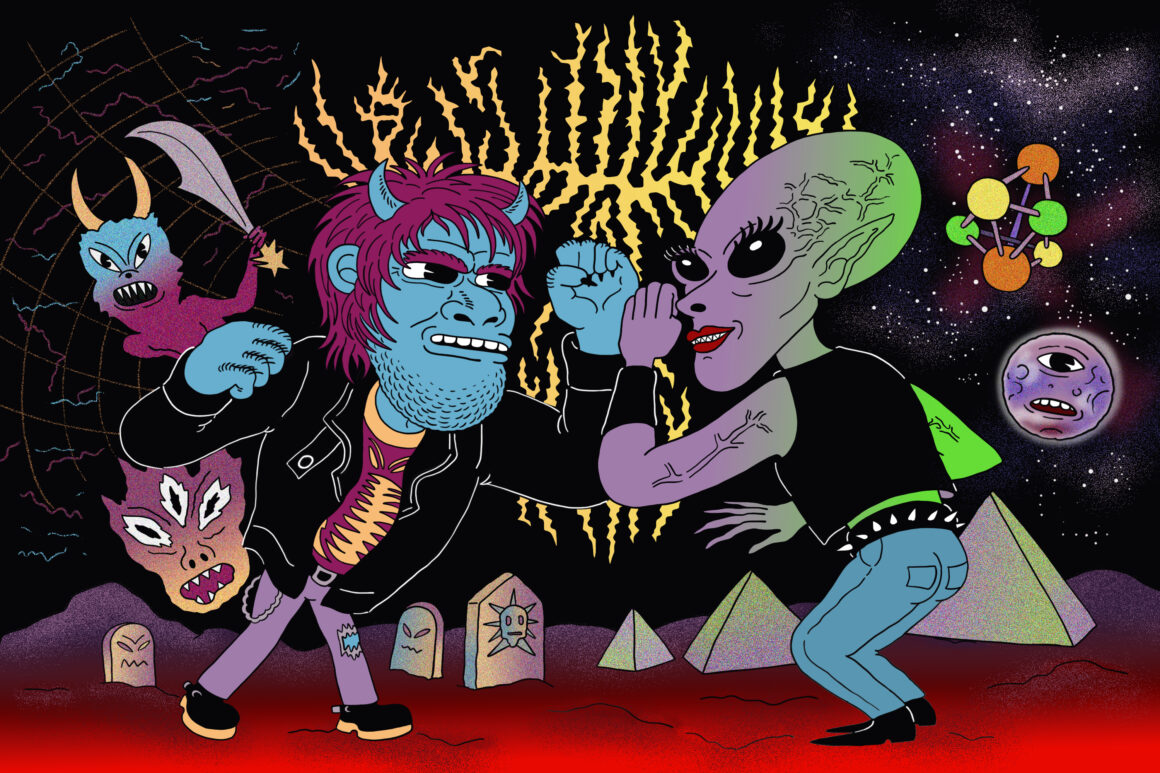
This became especially pertinent with the 2021 music video that turned the band into a hard-to-pronounce household name outside the scene. Inspired by 2000s-style animation à la South Park and Salad Fingers, it opens with a shot of two Beavis and Butthead clones seeing on the TV news that marihuana has gone extinct. It ends with a gun duel between Vladimir Putin and Xi Jinping. Of course the song, told from the perspective of a new-born flesh-craving zombie, is called »Dead as Shit.« Naturally.
Slow, chugging, and excessively brutal, »Dead as Shit« is a prime example of caveman death metal. The term used to describe an attitude rather than a sound—primitive, but deadly serious stuff. While it is still applied to slasher-sampling groups from Mortician to Fulci, also slam groups like Sanguisugabogg and their meta-modern contemporaries—Bonginator, 200 Stab Wounds, Peeling Flesh, et al—have been labelled thusly. Alongside labels like Maggot Stomp (tagline: »caveman shit for neanderthals«), they represent a paradigm shift towards a memetic understanding of death metal.
Serious and silly at once, these bands are easily approachable for outsiders. Death metal is one of the most gatekept genres, but for the enjoyment of the new caveman death metal, only the most basic knowledge is required: As a comically exaggerated proponent of death metal, Sanguisugabogg represent its essence in this sense. However funny they are, their music still offers all the brutality and blood that you want from the genre.
It does not seem coincidental that the rise of the metamodern cavemen corresponded with the beginning of a global pandemic and increasingly more wars. It zooms in on these horrors, but remains detached enough so that listeners can amuse themselves to death in the face of it all.
Onward to Absolute Elsewhere
The metamodern Neanderthals are not alone. So-called cosmic death metal has also drawn a lot of outside attention to it. The term is applied to a wide variety of bands that do not necessarily sound identical: Chthe’ilist, Artificial Brain, Ulthar, Cryptic Shift, or Wharflurch are to varying degrees technical and complex in the tradition of Demilich, incorporate doom elements into their sound à la Incantation, and/or flirt with synth-heavy prog rock.
What really ties these bands together are the themes that were added to the death metal canon in the 1990s by bands like Nocturnus and Timeghoul: They revel in tales of Lovecraftian horror, sci-fi tropes, or lore about ancient alien civilizations. The rule of thumb is that if a band is called Astral Tomb or an album Planetary Clairvoyance, it is probably part of this movement, which first took shape in the mid-2010s and whose figureheads include the Polaris Music Prize-nominated and Pitchfork-approved Tomb Mold.
The successes of these metal bands mirror that of the horror revival in film and dark fantasy in literature that were also propelled by the pandemic and other crises and can similarly be understood as commentary on the state of this world or an opportunity to escape it for a while, depending on how serious you take them.
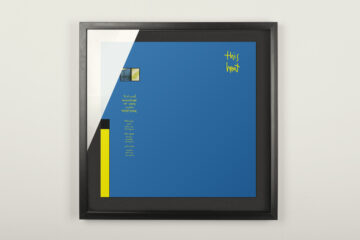
The Canadian band’s success pales in comparison to that of Blood Incantation. The Denver group’s first EPs and their 2016 debut album Starspawn earned them both respect and followers in the scene with a psychedelic take on death metal that was heavily influenced by avant-garde and progressive death metal icons from Gorguts to Lykathea Aflame. It was 2019’s Hidden History of the Human Race, complete with lyrics about the Giza pyramids’ alleged function as alien power plants, that introduced them to a wider audience.
Again it was shortly after the start of the pandemic—amidst multiple economic, social, and political crises—that Blood Incantation really took off and received growing attention from non-metalheads. Their 2022 Timewave Zero mini LP saw them embrace an ambient sound heavily indebted to the Berlin School, i.e. kosmische krautrockers like Tangerine Dream, before 2024’s Absolute Elsewhere merged those two aesthetics across two meandering long-form compositions. It did so with resounding success.
The critically-acclaimed Absolute Elsewhere combined the propulsion of old-school death metal with prog rock pathos, krautrock reveries, orientalist fantasies, and even a surprise visit into dub territory—a cross between Nespithe, Zeit, and Echoes, and then some. It is a multi-faceted rollercoaster of an album whose lyrics (choice quote: »Open the stargate!«) about transcendental journeying come off as both dead-serious and—unintendedly—silly at once; accidentally metamodern. Obviously, Absolute Elsewhere was meme’d to death.
After Laughter
This uncomfortably ties Blood Incantation to their caveman contemporaries: They are just as over the top, and that makes for great entertainment. Even though they represent a more earnest and ambitious movement within death metal, they ultimately provide just more fantasy: Absolute Elsewhere, as its title spells out very clearly, is a work of totalising escapism. That is an integral part of its appeal to genre tourists, who on a musical level can enjoy this record precisely because it is not a pure death metal album.
With different means, both the metamodern Neanderthals and ancient aliens of death metal either sublimate the everyday violence into downright ridiculous splatter fests or transcend it by resorting to cosmological escapism. Their successes mirror that of the horror revival in film and dark fantasy in literature that were also propelled by the pandemic and other crises and can similarly be understood as commentary on the state of this world or an opportunity to escape it for a while, depending on how serious you take them.
While other currents or single bands continue to offer new perspectives on an old genre, outsiders amusing themselves to death (metal) once more means that the genre’s post-1993 crisis persists. What seems certain for now is that its brush with mainstream interest will be brief, and what remains to be seen is whether something new will emerge. It could provide more than mere entertainment and escapism. After all, these are brutal times. Brutal music should have a lot to say about them.