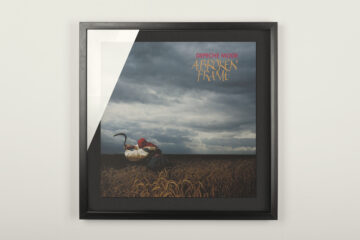
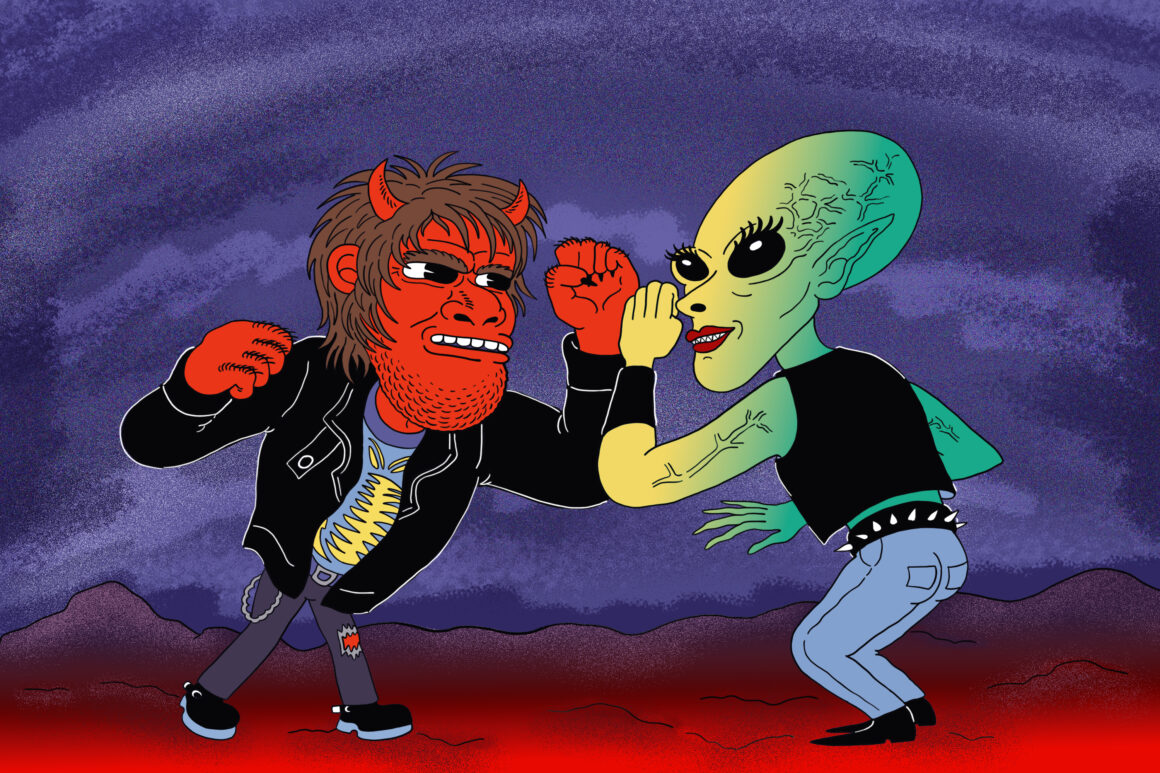
Even people who have never even read the Wikipedia entry for death metal will at least know that the music is fast and brutal, the artists are mostly guys with long hair, and the lyrics are usually gross. All of this is true, but it is also not the whole story. Death metal is an international phenomenon that emerged in the mid-1980s as an even more extreme response to thrash metal in the US—specifically, Tampa in Florida—and Sweden—Stockholm and Gothenburg, primarily—where it was in dialogue with the country’s punk and hardcore scene. It also fell on fertile ground in Finland, Eastern Europe, and Latin America.

However, death metal is not only geographically wide-reaching, but also stylistically diverse. Most of its many different subgenres were established in the first formative years between the release of the first defining death metal albums and circa 1993, after which styles such as brutal, technical, or progressive death metal were refined rather than redefined by following generations. This led to years of relative stasis and outright conservatism. However, thanks to contemporary caveman death metal groups like Sanguisugabogg and the successes of cosmic progenitors such as Blood Incantation, there is a renewed interest in death metal.
While it is still unclear whether or not this will give way to a phase of renewal akin to the paradigm shift in black metal after the early 2010s, when that genre became briefly hip, the present moment necessitates it to look back on the developments so far. To understand where death metal might be heading next, it is imperative to comprehend where it has come from. We reconstruct the genre’s history with 15 albums that have become death metal milestones.
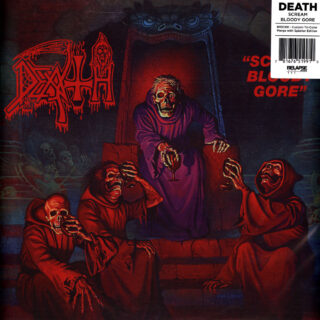
After Possessed had paved the way with 1985’s Seven Churches, Floridian band Death released the foundational US-American death metal album. Single-handedly written by mastermind Chuck Schuldiner and recorded only with the help of drummer Chris Reifert and producer Randy Burns (no relation to the death metal producer, Scott Burns), Scream Bloody Gore defined the aesthetic and themes of early death metal. It was faster, louder, more intense, and certainly more violent than anything before.
Kristoffer Cornils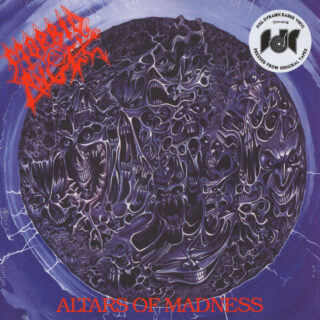
Like Death and other seminal US-American death metal bands, Morbid Angel were founded in Tampa and thrived thanks to the competitive spirit in the city. Guitarist Trey Azagthoth had written some of the material for this album in 1986, but it wasn’t until bassist and vocalist David Vincent joined the group that Morbid Angel found the perfect balance between musical complexity and sonic rawness. This made Altars of Madness one of the most influential and, frankly, best death metal albums of all times.
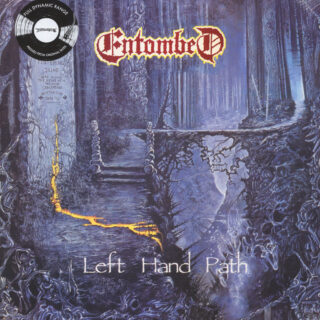
What Tampa and the Morrisound Studios with producer Scott Burns were to US-American death metal, Stockholm and Tomas Skogsberg’s Sunlight Studio were to its Swedish counterpart. This is where Entombed, successor to pioneering group Nihilist, recorded the defining Swedish death metal album. Left Hand Path highlights both the punk influences of the genre and its ambitions to forge a unique aesthetic. Entombed succeeded, not only because Leif Cuzner’s »buzzsaw« guitar sound became iconic in its own right.
Kristoffer Cornils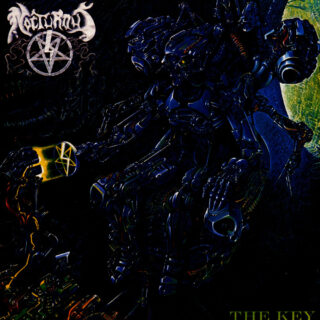
Drummer and vocalist Mike Browning was a founding member of Morbid Angel, but left the band before they released their debut album Altars of Madness. However, just a year later his new band Nocturnus put out one of the most daring and unusual death metal albums of its time: With its occult sci-fi themes and heavy use of synthesizers, The Key was an instant success and became a cornerstone in early death metal. It remains hugely influential for the current wave of cosmic death metal.
Kristoffer Cornils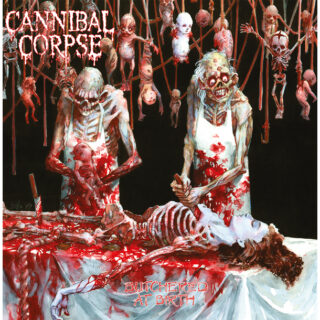
New York’s Cannibal Corpse is easily the most famous death metal band of them all, thanks in no small part due to Jim Carrey, who featured the band briefly in his 1994 blockbuster Ace Ventura. As it turned out, the comedian was able to recite the lyrics to »Rancid Amputation,« a stand-out song from their sophomore album Butchered at Birth, when he met the band. With its scrappy riffs, thundering basslines, and break-neck drumming, this album defined the so-called brutal death metal sound.
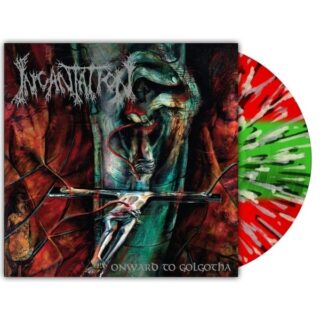
The only depth with which death metal was concerned in its early years was that of wounds. This changed with Onward to Golgotha, the 1992 debut by New Jersey’s Incantation. The group had started out as a thrash metal outfit before splitting into two, with some members leaving the band to form the black metal band Profanatica. These eleven songs were also influenced by grindcore and black metal, but more than anything else perfected the symbiosis of death and doom metal that had been spearheaded by Autopsy and the like.
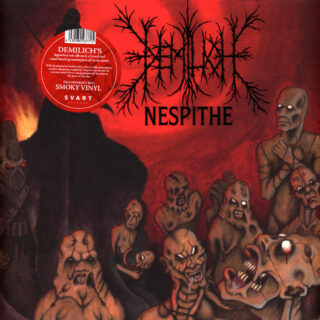
Finland became an early hotbed for death metal innovation. With their complex song structures and intricate playing, Demilich were pioneers of what would later be called technical death metal. Their 1993 debut album Nespithe cemented their standing as one of the most advanced bands in the genre. More than 30 years later, it is still considered a classic, though genre outsiders might struggle with Antti Boman’s idiosyncratic vocal style: He sounds as if he is burping his way through these eleven songs.
Kristoffer Cornils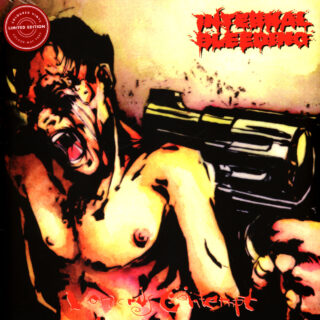
Suffocation are usually credited with pioneering the hardcore-inspired slam death metal sound, but it was New York’s Internal Bleeding that perfected the formula. Their 1995 debut album Voracious Contempt was indebted to the hardcore/metal crossover bands of that era and not ashamed to wear its hip-hop influences on its sleeve. After years of diversification in death metal, Internal Bleeding offered a less sophisticated take on the genre than most of its predecessors, but gave birth to an entire subgenre.
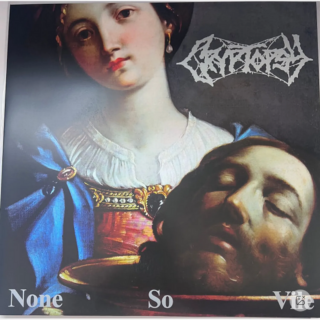
Cryptopsy found the perfect middle ground between technical complexity and unfettered brutality on their second LP None So Vile. Threading together two different tendencies in death metal, the Canadian band managed to sound exciting in a situation of post-1993 stasis. Especially in regard to the gruesome (though unintelligible) lyrics, None So Vile is something of a thinking death metal fan’s Butchered at Birth—though that would also undersell it: For many, it is the quintessential death metal album.
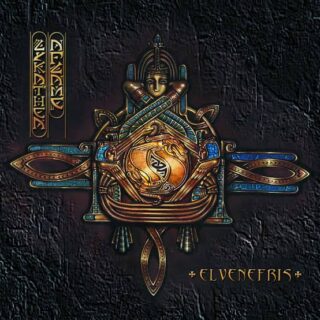
Progressive death metal was spearheaded by bands like Death and Edge of Sanity; today, it is mostly associated with groups such as Opeth. However, the subgenre truly peaked with Elvenefris—the only record released by the Czech band Lykathea Aflame, previously called Appalling Spawn. Across its eleven sprawling tracks, it oscillates between technical precision and utmost brutality, prettiness and melancholy. This provided the blueprint for proggier cosmic death metal bands like Tomb Mold and Blood Incantation.
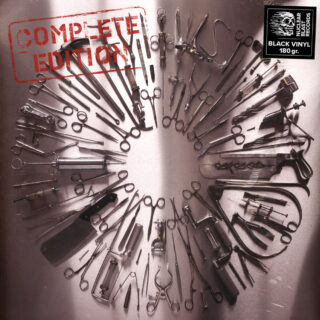
Carcass are credited with pioneering the hybrid genre goregrind on 1988’s Reek of Putrefaction. The band’s 2013 comeback album Surgical Steel is a different beast altogether. Having broken up after 1996’s death-and-roll masterpiece Swansong, the British group picked up on the melodic death metal sound of the 1993 album Heartwork. After Swedish groups like At the Gates or Dark Tranquility had made »melodeath« too famous for most death metal fans’ tastes, Surgical Steel offered a credible interpretation of it.
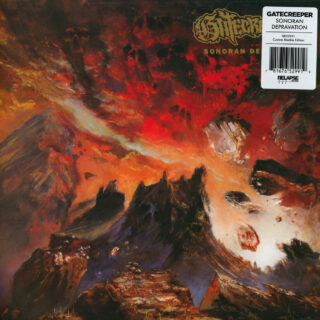
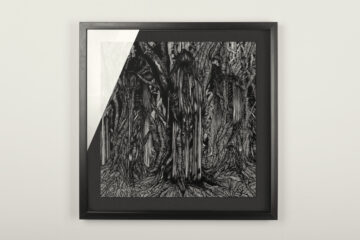
Gatecreeper are one of the most popular—and thus, inevitably, controversial—bands to emerge in the 2010s. At the very least, they offer a perfect example of the genre’s post-modern crisis. Picking up on death metal’s love affair with hardcore, the Swedish sound, and old-school orthodoxy, the Arizona band was pure recombinatory pastiche. They paved the way for a new generation for which death metal isn’t a living subculture, but primarily a music style that you can perfect by following YouTube guitar tutorials.
Kristoffer Cornils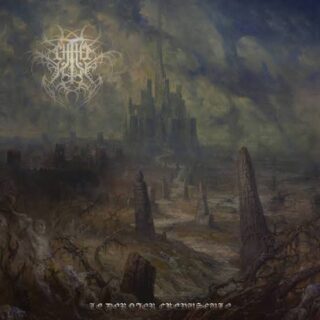
The 2010s also gave rise to bands that took a leaf from the books written by Nocturnus and Timeghoul in the early 1990s. The brainchild of Québécois multi-instrumentalist Phil Tougas, Chthe’ilist is one of a growing number of his bands that are interconnected through elaborate lore. Le dernier crépuscule is indebted to Demilich, but with its prog rock-inspired (read: very loose) song structures pushed the envelope of what death metal could be. It became an important stepping stone for the budding cosmic death metal movement.
Kristoffer Cornils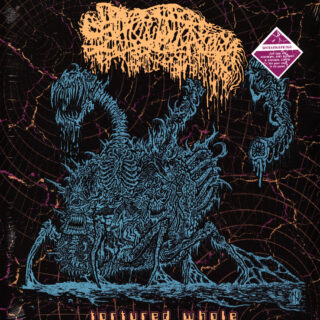
Sanguisugabogg debuted in 2019 on the influential Maggot Stomp label with an EP that, while completely forgettable, showcased the sparse-yet-cavernous, simple-and-to-the-point style. It would win them a contract with major indie metal label Century Media—the signing of which, of course, became part of the storyline of a music video that also featured a »cock monster.« Released amidst the pandemic, 2021’s Tortured Whole is the album on which caveman death metal became metamodern and won over an outsider audience.
Kristoffer Cornils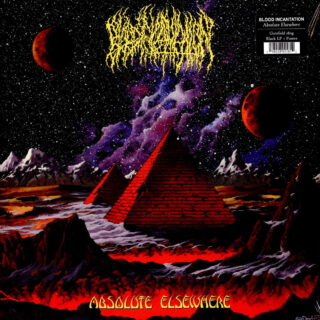
Blood Incantation were already the torchbearers of cosmic death metal when they released Absolute Elsewhere in 2024, but the album’s success exceeded all expectations: The music video for the song »The Stargate« has been viewed about 750.000 times at the time of writing. This wouldn’t be remarkable if it weren’t 20 minutes long and the piece wouldn’t traverse at least five different genres. As excessive as it was eclectic, Absolute Elsewhere has undeniably opened the death metal stargate for hordes of curious outsiders.