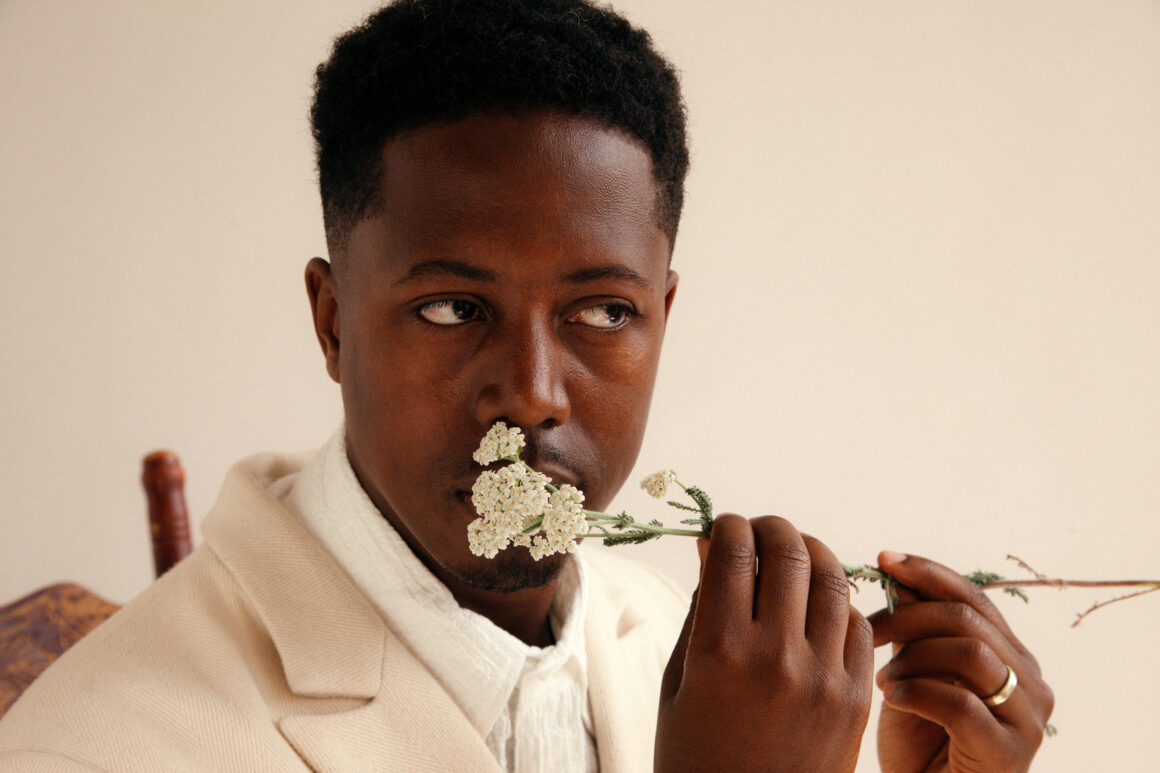
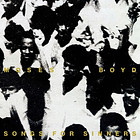
“It should feel like walking into a church in South London at the weekend,” says Moses Boyd about his new album Songs For Sinners. He is also referring to the so-called “Kitchen Choir”: members of his family whom, as the name suggests, he recorded in his kitchen for the album. The project is not only a tribute to his upbringing and the church as his first point of contact with music; it is the result of a creative process spanning years, if not decades.
Boyd’s musical upbringing began with gospel, but soon branched out in a wide variety of directions. At some point, the jazz conservatoire and the underground club joined the church. As a drummer, producer, composer and DJ, he is one of the pioneers of what we now call ‘UK Jazz’. Together with a generation of musicians such as Shabaka Hutchings, Yussef Dayes, Nubya Garcia, Ezra Collective and Theon Cross, he helped to redefine jazz.
“Of course, it’s heavily influenced by American jazz. But the difference between me and Robert Glasper is that Robert Glasper isn’t about sound system culture or Afrobeat, cumbia and soca.” The defining characteristic of his generation in London, he says, is the fusion of jazz with sound system culture and Afro-diasporic musical styles. “It’s like jazz that’s been to the Notting Hill Carnival.”
This required venues outside the established jazz clubs. One of these was Steez in Lewisham, an early club night where musicians, people from the art, film and fashion worlds – in other words, ‘all the cool kids’ – came together. “There are a few places where, before it became mainstream, we had the chance to experiment and play in front of people who really got it.” The audience had grown up with jungle raves and squats. “The way I play the drums isn’t particularly revolutionary.”
It was this ethos that also gave rise to their collaboration with saxophonist Binker Golding. The duo Binker and Moses won the MOBO Award for Best Jazz Act in 2015 and were hailed as the poster children of modern jazz for blending grime and Coltrane. His first solo release, Rye Lane Shuffle, proved once and for all that his music was less suited to Ronnie Scott’s than to the Boiler Room.
Life and understanding life
With Songs For Sinners, Boyd is now expanding his musical vocabulary to include a dimension that has been part of his musical upbringing from the very beginning: gospel. “This album is about capturing a feeling and writing songs.”
For the first time, Boyd has written all the lyrics for an album himself – because the story was too personal and the concept too specific to leave to anyone else. Songs For Sinners explores our relationship with faith: with searching and running away, with belief and doubt, with good and bad experiences. “Some people have positive experiences with faith and religion, whilst others have negative ones,” says Boyd. It is precisely this second side that he felt was missing from gospel music. “It’s never addressed: what about the people who’ve had bad experiences, and what are their stories like?”
‘What about people who have had bad experiences [with faith], and what are their stories?’
Moses Boyd
Boyd first came up with the idea for this sound when he was 16. At the time, however, he lacked the technical skills and self-confidence to bring it to life. Today, almost two decades later, the idea has finally reached the place it always intended to be: “I think I just had to live a bit and gain some real-life experience, develop a genuine connection to life, faith and humanity, and then let that flow back into my music.”
And so Songs For Sinners marks a return that simultaneously opens a new chapter. Gospel meets jazz, soundsystem culture meets electronic production, the church meets the dancefloor, and the voices of his family meet a musician who has spent much of his career blurring precisely these boundaries.