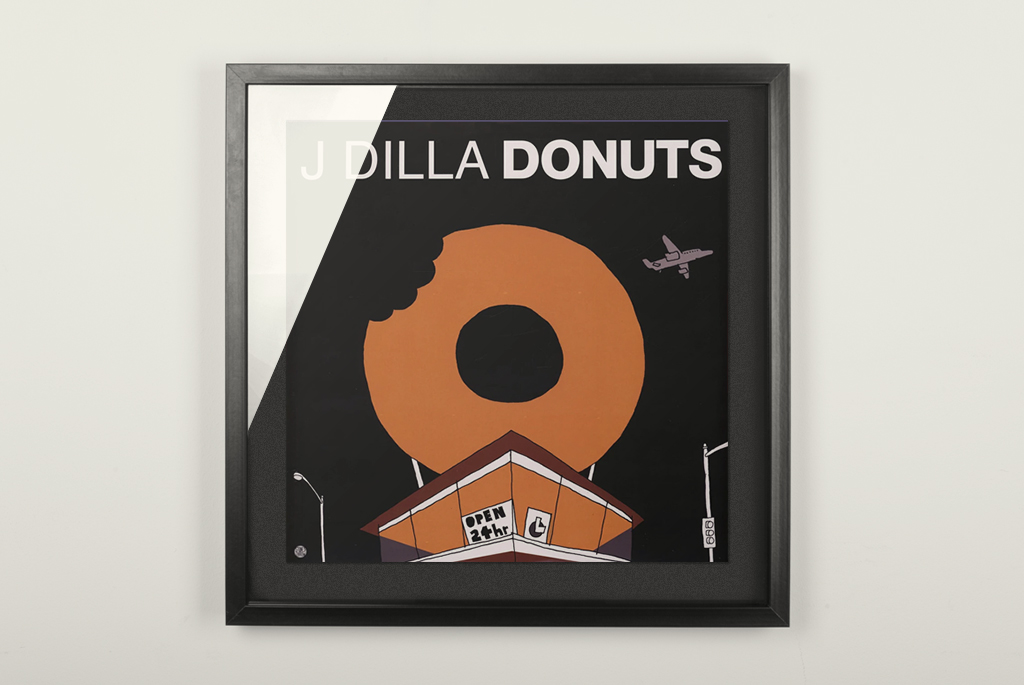
Because Donuts is the most famous album by the legendary hip-hop producer J Dilla, one might assume otherwise. Yet it does not stand in for the signature sound through which he first became known. His beats for The Pharcyde (»Runnin«, 1995), De La Soul (»Stakes Is High«, 1996) or Common (»The Light«, 2000) were marked above all by elegance and precision. Anyone seeking the original spark of the Detroit musician would do well to turn to Fantastic, Vol. 2, the album by his group Slum Village.
Donuts, however, pursued something else: radical renewal. Dan Charnas captures this brilliantly in Dilla Time: The Life and Afterlife of J Dilla, the Hip-Hop Producer Who Reinvented Rhythm. A few years ago, Pitchfork put it succinctly: »It sounds like he was busy quickly unlearning everything he’d taught himself just so he could have the experience of relearning it all again one last time.«
Which brings us to the tragic context surrounding Donuts. It was the last work the producer released during his lifetime, issued on 7 February 2006 – his 32nd birthday – just three days before his death from complications related to lupus. Yet Donuts is anything but a sombre record. It never feels heavy to listen to. It brims with joy and, yes, life.
One could read the fragmented, almost broken character of Donuts as a symbol of Dilla’s physical condition. But the album sounds far too alive for that. It consists of 31 densely packed loops – one for each year he lived – which together form an endless loop of their own. Almost every track runs directly into the next; the outro returns to the intro, and so on. Hence the circular pastry allusion in the title.
Timeless – in more than one sense
Donuts breathes. With each listen, it feels as though it is being produced in real time. To my ears, it is one of the most vital human–machine collaborations in pop history. As his illness intensified, Dilla may not have seen his life flashing before him so much as the distilled essence of his art form – crafting beats from disparate samples. He was the finest hip-hop producer because he understood, better than anyone, the emotional charge a beat can carry: »Workinonit« is a dancefloor groove-banger; »One Eleven« is beautiful and heart-rending; the following track, »Two Can Win«, sounds exuberant again. Donuts can be disorienting too – but that is part of its logic. At the end of his life, J Dilla sought to capture once more everything that music can make us feel.
While Dilla previously stood out primarily for his precise imprecision, his twisting of time becomes even more apparent on Donuts.
Where he had previously been defined by a kind of precise imprecision – beats nudged ahead of or behind the grid – his manipulation of time becomes even more pronounced here. What makes Donuts singular – and distinct from earlier masterpieces – is the way it handles temporal distortion. On the highlight »Time: The Donut of the Heart«, time itself seems to falter, the track tipping into slow motion as if reluctant to let go. In »Stop«, he brings time to a complete standstill for a split second before the beat drops back in.
Yes, Donuts is the greatest instrumental hip-hop album of all time. And yet it isn’t instrumental at all. It is filled to the brim with voices. Dilla, by many accounts not a particularly talkative man, sampled them with genius precision and lets them speak on his behalf. The voices provide the script; Dilla turned it into cinema. Often, the things we want to say are found in the hands of others – and so the circle closes.